








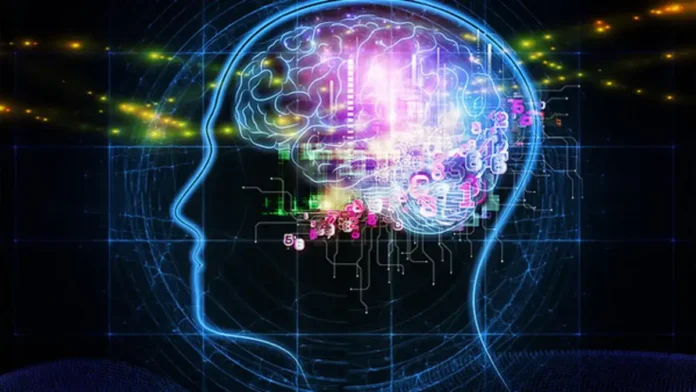

Scientists preparing to simulate the human brain on a supercomputer aim to model billions of neurons and trillions of synapses digitally. This research could revolutionize neuroscience, accelerate brain disease treatment, and inspire next-generation artificial intelligence by replicating how the human brain processes information.
KumDi.com
The effort to simulate human brain on a supercomputer marks one of the most ambitious scientific challenges of the modern era. By combining brain simulation technology with extreme-scale computing, scientists are attempting to digitally replicate human brain activity, unlocking new possibilities in neuroscience research, medical innovation, and artificial intelligence development.
The idea of simulating the human brain has fascinated scientists, philosophers, and technologists for decades. Often described as the most complex structure in the known universe, the human brain controls consciousness, memory, emotion, creativity, and decision-making. Today, that long-standing vision is approaching a critical milestone as scientists prepare to simulate brain-scale neural activity using some of the world’s most powerful supercomputers.
This effort represents far more than a technical challenge. It marks a convergence of neuroscience, artificial intelligence, high-performance computing, and data science, with implications that could reshape medicine, AI development, and our understanding of what it means to think and be conscious.
Table of Contents

Understanding the Scale of the Human Brain
To appreciate the significance of this project, it is essential to understand what scientists are attempting to model.
The human brain contains approximately 86 billion neurons, each forming thousands of connections known as synapses. Altogether, the brain operates through tens of trillions of synaptic connections, transmitting electrical and chemical signals at extraordinary speeds. Unlike traditional computers that process information sequentially, the brain functions as a massively parallel system, with countless processes occurring simultaneously.
This complexity is why simulating the brain has remained out of reach for so long. Even modern computers struggle to represent biological systems that operate across multiple spatial and temporal scales — from millisecond electrical spikes to long-term structural changes involved in learning and memory.
What It Means to Simulate the Human Brain on a Supercomputer
Simulating the human brain on a supercomputer involves digitally modeling large-scale neural activity, including how billions of neurons communicate through trillions of synaptic connections. Unlike traditional AI systems, these simulations aim to reflect biological brain behavior, allowing scientists to study cognition, learning, and neural disorders in a controlled computational environment.
Why Scientists Want to Simulate the Brain
Advancing Neuroscience Research
A digital brain model would allow scientists to test hypotheses that cannot be safely or ethically explored in living humans. Researchers could observe how neural circuits behave under controlled conditions, manipulate variables instantly, and explore how diseases alter brain activity over time.
Transforming Brain Disease Treatment
Neurological disorders such as Alzheimer’s disease, epilepsy, Parkinson’s disease, depression, and schizophrenia involve disruptions in neural networks. Large-scale simulations could help researchers identify early disease mechanisms, predict disease progression, and test treatment strategies before applying them to patients.
Accelerating Drug Development
Brain simulations could dramatically reduce the time and cost required to develop new medications. Instead of relying heavily on animal testing or trial-and-error clinical approaches, researchers could simulate drug effects on neural networks and refine treatments more efficiently.
Inspiring Next-Generation Artificial Intelligence
The human brain remains vastly more energy-efficient and adaptable than even the most advanced AI systems. By studying brain-scale simulations, engineers can develop brain-inspired algorithms and hardware that improve machine learning, robotics, and autonomous systems.
The Role of Supercomputers
Simulating a human brain requires computational power on an unprecedented scale. This is where exascale supercomputers — capable of performing more than one quintillion calculations per second — come into play.
Modern supercomputers allow researchers to:
- Process enormous neural datasets simultaneously
- Simulate billions of neurons and synapses
- Run complex models that evolve over time
- Test multiple brain configurations and conditions
These machines are not simply faster versions of ordinary computers. They are designed with advanced memory architectures, parallel processing systems, and specialized software that make large-scale brain simulations feasible for the first time.
Spiking Neural Networks: Mimicking Real Brain Activity
At the core of these simulations are spiking neural networks (SNNs) — computational models designed to more closely resemble biological neurons.
Unlike conventional artificial neural networks that rely on continuous values, spiking neurons communicate using discrete electrical pulses, similar to how real neurons fire. This approach allows simulations to capture:
- Timing-based neural communication
- Network synchronization
- Learning through spike-based plasticity
- Energy-efficient information processing
SNNs are considered a major step toward biologically realistic brain modeling and play a crucial role in bridging neuroscience and AI.
How Close Are We to a Full Brain Simulation?
Despite recent breakthroughs, scientists are careful to emphasize that fully simulating a human brain remains a long-term goal, not an immediate achievement.
Current progress focuses on:
- Simulating brain regions rather than the entire brain
- Modeling neural activity at varying levels of abstraction
- Balancing biological accuracy with computational feasibility
Some simulations prioritize realism, while others focus on functional behavior. Both approaches are valuable, but combining them into a single unified model remains one of the greatest scientific challenges of our time.
Key Challenges Scientists Still Face
Incomplete Biological Data
Although neuroscience has made enormous advances, scientists do not yet possess a complete map of every neural connection in the human brain. This lack of comprehensive data limits how accurate simulations can be.
Computational Limits
Even the fastest supercomputers cannot yet simulate every molecular interaction in real time. Researchers must carefully choose which details matter most for each scientific question.
Interpreting Simulation Results
A simulated brain can generate vast amounts of data. Understanding what that data means — and how it relates to real cognition and behavior — is a challenge in itself.
Consciousness and Ethics
As simulations become more advanced, ethical questions emerge. Could a sufficiently detailed simulation exhibit awareness? What responsibilities do scientists have when modeling cognitive systems at this scale?
The Ethical and Philosophical Dimension
Brain simulation raises profound questions that extend beyond science and technology.
If a digital brain can learn, adapt, and respond like a human brain, does it deserve ethical consideration? How should data derived from human brains be protected? Could such simulations be misused for surveillance, manipulation, or military applications?
Researchers and policymakers are increasingly aware that technical progress must be accompanied by thoughtful ethical frameworks to guide responsible development.
Lessons from Past Brain Simulation Projects
Earlier large-scale neuroscience initiatives laid the groundwork for today’s efforts. These projects advanced:
- High-resolution neuron modeling
- Large-scale neural simulation software
- Collaborative data-sharing platforms
- Interdisciplinary research between biology and computing
While not all goals were fully realized, the knowledge gained has proven essential for current and future brain-scale simulations.
What the Future Holds
Over the next decade, experts expect:
- More realistic brain region simulations
- Hybrid systems combining supercomputers and neuromorphic hardware
- Deeper integration of AI and neuroscience
- Greater international collaboration
- Clearer ethical guidelines for brain modeling
Rather than a single moment when the “human brain is fully simulated,” progress will likely come through incremental breakthroughs that steadily deepen our understanding of neural intelligence.
The Future of Human Brain Modeling and Supercomputing
The future of simulating the human brain on a supercomputer will likely involve hybrid systems combining traditional supercomputers with brain-inspired hardware. As technology advances, brain simulation research will continue to deepen our understanding of human intelligence, cognition, and the biological foundations of thought.
Final Thoughts
The preparation to simulate the human brain on a supercomputer marks one of the most ambitious scientific endeavors in modern history. It reflects humanity’s drive to understand itself — not just how we think, but why we think the way we do.
While many technical, biological, and ethical challenges remain, the journey itself is already transforming neuroscience, medicine, and artificial intelligence. Each step brings us closer to unlocking the principles that govern the human mind — a frontier as vast and mysterious as the universe itself.
FAQs
What does it mean to simulate the human brain on a supercomputer?
Simulating the human brain on a supercomputer means using brain simulation technology to digitally model neural activity, including neurons and synapses, at large scale to study cognition, behavior, and brain disorders.
Why are scientists preparing to simulate the human brain now?
Advances in supercomputer neuroscience research, data availability, and human brain modeling now allow scientists to attempt simulations that were previously impossible due to computational limitations.
How can brain simulation technology benefit medical research?
Brain simulation technology helps researchers study neurological diseases, test treatments safely, and understand brain disorders by simulating human brain behavior without invasive experiments.
Is simulating the human brain the same as creating artificial intelligence?
No. While related, simulating the human brain focuses on understanding biological neural systems, whereas AI applies computational principles inspired by brain function to solve specific tasks.
What are the biggest challenges in human brain modeling?
The main challenges include incomplete brain data, extreme computational demands, biological complexity, and accurately interpreting results from large-scale supercomputer neuroscience research.




 and then