









How many people aged 100 or older live in Japan in 2026?
KumDi.com
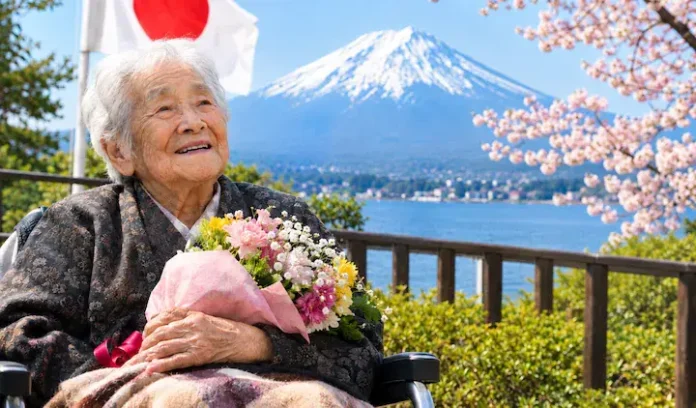
Japan has 107,677 people aged 100 or older in 2026, marking the first time the country’s centenarian population has exceeded 100,000. The milestone reflects decades of improvements in healthcare, nutrition and living conditions, while also highlighting Japan’s rapidly aging population and growing need for healthy-aging and long-term care systems.
Japan has reached a historic longevity milestone: 107,677 people aged 100 or older were recorded in 2026, pushing the country’s centenarian population above 100,000 for the first time. The figure, released by Japan’s Ministry of Health, Labour and Welfare (MHLW), represents a 56th consecutive annual increase in the number of centenarians. Women account for 94,298 of them, or about 87.6%, while men account for 13,379.
The milestone is more than a remarkable longevity statistic. It reflects decades of improvements in living conditions, nutrition, public health and medical care, while also revealing one of Japan’s most important demographic challenges: Japan is gaining more people at the oldest ages while its younger population is shrinking. The result is a society in which living to 100 is becoming increasingly visible, but maintaining health, independence and social support into very old age is becoming equally important.
Table of Contents

Japan’s Centenarian Population Reaches 107,677
Japan’s Ministry of Health, Labour and Welfare reported that 107,677 people aged 100 or older were living in Japan as of September 1, 2026, based on resident registration data. The number increased by 7,914 people from 2025.
The historical increase is striking:
| Year | People aged 100+ |
|---|---|
| 1963 | 153 |
| 1981 | More than 1,000 |
| 1998 | More than 10,000 |
| 2012 | More than 50,000 |
| 2025 | 99,763 |
| 2026 | 107,677 |
Japan therefore went from only 153 officially recorded centenarians in 1963 to more than 100,000 today.
The 2026 figure is also the 56th consecutive year in which the centenarian population has increased.
Why is 100,000 significant?
One hundred thousand centenarians is a useful demographic marker because it demonstrates how dramatically the upper end of the population age structure has changed.
It does not, however, mean that one in every several hundred Japanese people will necessarily live to 100. A population count is different from an individual’s probability of reaching a particular age.
It also does not mean that all of these people are living independently or without chronic disease.
The more meaningful question is therefore:
Why are so many Japanese people surviving into their 100s, and how healthy are those additional years?
Why Are So Many Japanese People Living to 100?
There is no single “Japanese longevity gene” or one food that explains the country’s high number of centenarians.
Japan’s government identifies several broad factors behind the country’s long-term decline in mortality, including improvements in living environments, food and nutritional conditions, and advances in medical technology.
These factors interact over many decades.
1. Improvements in public health
Modern Japan benefits from extensive public-health infrastructure, sanitation, vaccination, medical screening and access to healthcare.
These systems matter because longevity is not simply about avoiding aging. It is also about surviving diseases and injuries that were once much more frequently fatal.
The Japanese government’s analysis shows a substantial long-term decline in age-adjusted mortality rates. Between 1950 and 2023, the age-adjusted mortality rate fell from 42.2 to 14.1 for men and from 32.8 to 7.8 for women.
This long-term decline substantially increased the number of people reaching older ages.
2. Better nutrition and changing dietary conditions
Nutrition is another part of the explanation.
Historically, the Japanese diet has included foods such as fish, vegetables, soy products, rice and other minimally processed foods. However, it would be misleading to claim that a particular Japanese diet guarantees exceptional longevity.
Dietary patterns have changed considerably over the decades, and longevity results from many interacting factors.
Japan’s government continues to emphasize balanced nutrition, prevention of lifestyle-related diseases and prevention of frailty and malnutrition among older adults. The 2025 edition of Japan’s Dietary Reference Intakes specifically incorporates considerations for preventing malnutrition and frailty in older people.
For people in their 70s, 80s, 90s and beyond, the nutritional problem can also change.
Earlier in adulthood, preventing obesity and metabolic disease may be a major concern. At very advanced ages, maintaining sufficient protein, calories, muscle mass and overall nutritional status can become increasingly important.
That distinction is critical when discussing healthy aging.
Longevity Is Not the Same as Healthy Longevity
Perhaps the most important lesson from Japan’s centenarian milestone is the difference between lifespan and healthspan.
Lifespan refers to how long a person lives.
Healthspan refers to the period during which a person can live without health problems significantly restricting daily activities.
Japan’s Ministry of Health reports that in 2022:
- Life expectancy at birth was 81.05 years for men
- Life expectancy at birth was 87.09 years for women
- Healthy life expectancy was 72.57 years for men
- Healthy life expectancy was 75.45 years for women
That means the average period of life affected by health-related limitations remains substantial.
This distinction matters enormously.
A country can increase the number of people reaching 100 without eliminating disability, dementia, frailty, cardiovascular disease, cancer or other age-associated conditions.
Therefore, the next phase of Japan’s longevity story is not simply:
“How can people live longer?”
It is increasingly:
“How can people remain independent and socially connected for as many of those years as possible?”
Why Are Most Japanese Centenarians Women?
The sex difference is one of the most striking features of the 2026 data.
Of Japan’s 107,677 centenarians:
- 94,298 are women
- 13,379 are men
- Women represent approximately 87.6% of the total.
This is not unique to Japan. Women generally have longer life expectancy than men in many countries.
Japan’s 2024 life tables, for example, reported life expectancy at birth of 81.09 years for men and 87.13 years for women, a difference of approximately six years.
Because survival differences accumulate across successive decades, the sex gap becomes particularly visible among people who reach extremely advanced ages.
This also means that policies designed for a rapidly aging society cannot treat the 100+ population as a uniform group.
A 100-year-old woman living alone in an urban apartment may have very different needs from a 101-year-old man living with family in a rural community.
Japan’s Centenarian Population Is Not Evenly Distributed
Another interesting feature of the 2026 statistics is the geographic variation.
The number of centenarians per 100,000 population was 87.51 nationally.
Some prefectures had substantially higher rates. Shimane recorded approximately 186.65 centenarians per 100,000 people, followed by Kochi at 169.52 and Tottori at 152.48.
At the other end, the rate was much lower in heavily urbanized prefectures such as Saitama, Tokyo and Osaka.
These differences should be interpreted carefully.
A high centenarian rate does not prove that a specific local food, climate or lifestyle causes longer life. Population structure, migration, socioeconomic characteristics, healthcare access, historical mortality patterns and other factors can all influence regional statistics.
In other words:
Regional correlation is not proof of a single longevity cause.
That is particularly important when evaluating popular claims about “longevity villages” or specific foods.
Japan’s Oldest People Are Far Beyond 100
The centenarian statistic also includes people who are substantially older than 100.
Following the death of 115-year-old Shigeko Kagawa in August 2026, Japan’s oldest living person became Fuyo Kishimoto, aged 114, according to the Japanese Ministry of Health, Labour and Welfare.
This illustrates an important demographic phenomenon.
Reaching 100 is already rare, but surviving several additional years beyond 100 is considerably rarer. These exceptionally old individuals are often referred to as supercentenarians when they reach 110.
Research into these populations can help scientists investigate the interaction between genetics, disease resistance, environment, lifestyle and the biological aging process.
However, studying exceptionally long-lived individuals does not mean that every characteristic of their lifestyle should automatically be treated as a longevity prescription.
Japan’s Aging Population Creates a Major Social Challenge
The 100,000-centenarian milestone is a success story in terms of survival, but it also creates significant challenges.
Japan already has one of the world’s oldest population structures. The 2025 Annual Report on the Ageing Society reported that people aged 65 and older accounted for 29.3% of the population.
At the same time, Japan’s working-age population is becoming relatively smaller.
According to the Cabinet Office, there were approximately 2.0 people aged 15–64 for every person aged 65 or older in 2024. By 2070, the ratio is projected to fall to approximately 1.3 working-age people per person aged 65 or older.
This demographic shift affects:
- Pension systems
- Healthcare spending
- Long-term care
- Workforce availability
- Tax revenue
- Family caregiving
- Housing
- Transportation
- Community services
- Digital accessibility
- Social isolation
The challenge is therefore not simply the number of elderly people.
It is the relationship between age, health, independence, family structure and the size of the working-age population.
What Does Japan’s Experience Teach Us About Aging?
Japan provides several important lessons for countries that are also beginning to age rapidly.
Lesson 1: Longevity begins decades before old age
Healthy aging is not something that starts at 80.
Blood pressure, smoking, alcohol consumption, obesity, physical activity, diet, diabetes, cardiovascular health and social participation accumulated across adulthood can influence later-life health.
Japan’s own health policy emphasizes health promotion beginning during middle age rather than waiting until old age.
Lesson 2: Preventing frailty becomes increasingly important
At advanced ages, maintaining muscle strength, mobility, balance and nutritional status becomes critical.
A person who can walk safely, eat adequately, maintain social relationships and perform daily activities independently has very different needs from someone of the same chronological age who is severely frail.
This is why modern geriatric care increasingly considers function, not simply age.
Lesson 3: Social connection matters
Aging is not purely biological.
Japan’s ageing-society policy explicitly recognizes the growing number of older people living alone and the need for communities and systems that allow different generations to support one another.
Social isolation can affect practical access to food, healthcare, transportation and emergency assistance, making community design an important component of healthy aging.
Lesson 4: Longer lives require redesigned systems
A society where many people live into their 90s and 100s needs more than additional hospitals.
It needs age-friendly housing, accessible transportation, preventive healthcare, rehabilitation, home care, community programs, digital services that older adults can actually use, and employment structures that accommodate people who want to remain economically active.
Does Japan’s 100,000-Centenarian Milestone Mean Everyone Can Live to 100?
No.
The Japanese figure describes the number of people aged 100 or older in the population. It does not mean that 100 is becoming a normal life expectancy.
Japan’s 2024 life expectancy at birth was approximately 81.1 years for men and 87.1 years for women.
The centenarian population is therefore a small but rapidly expanding segment of an already long-lived population.
Nor does the statistic prove that a particular Japanese food, habit or lifestyle guarantees longevity.
Human lifespan is influenced by a combination of:
- Genetics
- Early-life conditions
- Socioeconomic circumstances
- Nutrition
- Physical activity
- Smoking and alcohol exposure
- Chronic disease
- Healthcare access
- Environmental factors
- Social relationships
- Chance and individual biological variation
The Japanese experience demonstrates the importance of these factors collectively rather than providing one simple recipe for reaching 100.
What Japan’s 2026 Milestone Really Means
Japan’s 107,677 centenarians in 2026 represent one of the clearest demonstrations of how dramatically human survival can change within a few generations. From just 153 people aged 100 or older in 1963 to more than 100,000 today, the transformation is extraordinary.
But the statistic should not be viewed only as a celebration of extreme longevity.
It is also a reminder that living longer changes society.
Japan now has to address two interconnected questions:
How can people live longer?
And, increasingly:
How can people remain healthy, independent and socially connected for more of those additional years?
The first question has already produced remarkable progress. The second may prove to be the defining challenge of Japan’s next stage of demographic development.
For other rapidly aging countries, including South Korea, Japan’s experience provides an important real-world case study. Longer life expectancy can be a major achievement, but it requires healthcare, communities, workplaces, housing and social-security systems to evolve alongside the population.
FAQs
How many people aged 100 or older are there in Japan in 2026?
Japan has 107,677 people aged 100 or older in 2026, according to Japan’s Ministry of Health, Labour and Welfare. This is the first time Japan’s centenarian population has exceeded 100,000, representing another record in the country’s long-term longevity trend.
Why does Japan have so many centenarians?
Japan’s high centenarian population is associated with long-term improvements in healthcare, public health, nutrition, living conditions and medical technology. Japan also has one of the world’s highest life expectancies, although no single food, lifestyle habit or genetic factor explains Japanese longevity.
What percentage of Japan’s centenarians are women?
Women account for approximately 87.6% of Japan’s centenarians in 2026, with 94,298 women compared with 13,379 men among the 107,677 people aged 100 or older. The large difference reflects the longer average life expectancy of Japanese women.
Does having more than 100,000 centenarians mean Japanese people live to 100 on average?
No. Japan’s record 100,000-plus centenarian population does not mean that the average Japanese person lives to 100. Japan’s life expectancy is approximately 81 years for men and 87 years for women. Centenarians remain a small but rapidly growing segment of the population.
What does Japan’s 2026 longevity record mean for its aging society?
Japan’s 2026 longevity record means the country must increasingly focus on healthy aging, preventing frailty, supporting independent living and expanding long-term care. The growing number of people aged 100 or older is occurring alongside a declining working-age population, creating significant social and economic challenges.
Key Takeaways
- Japan has 107,677 people aged 100 or older in 2026.
- This is the first time the number has exceeded 100,000.
- The number has increased for 56 consecutive years.
- Women account for approximately 87.6% of Japanese centenarians.
- Japan had only 153 centenarians in 1963.
- Improvements in living conditions, nutrition and medical technology are among the factors identified by Japan’s government behind declining mortality.
- Longer lifespan does not automatically mean longer healthspan.
- Japan’s aging population creates major implications for healthcare, pensions, long-term care, employment and community design.
Bottom line: Japan’s 100,000-centenarian milestone is not simply a story about people living exceptionally long lives. It is evidence of a profound demographic transformation—and a preview of the challenges that other aging societies will increasingly face.
Sources
- Japan Ministry of Health, Labour and Welfare — 2026 Centenarian Statistics
- Japan Cabinet Office — Annual Report on the Ageing Society
- Japan Ministry of Health, Labour and Welfare — Life Tables




 and then