









What are smart glasses in healthcare?
KumDi.com
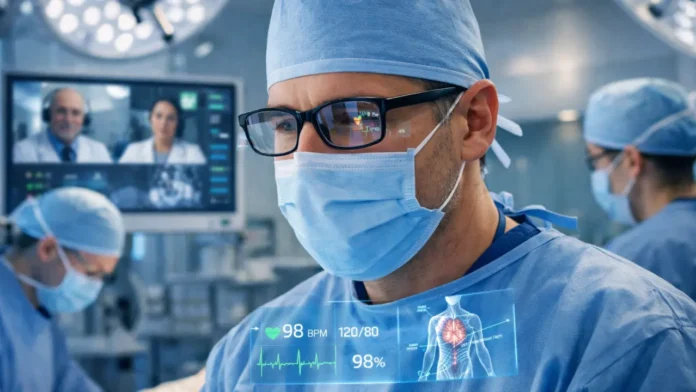
Smart glasses in healthcare are wearable devices that combine cameras, sensors, displays, connectivity, and AI to provide hands-free access to health information. They can support telemedicine, rehabilitation, medical training, accessibility, clinical workflows, and wellness tracking while allowing users to interact with digital information without constantly using a smartphone or computer.
Smart glasses are moving beyond entertainment and hands-free communication into a potentially important category of digital health and medical technology. By combining cameras, microphones, displays, sensors, artificial intelligence (AI), augmented reality (AR), and wireless connectivity, smart glasses can place relevant information directly within a user’s field of view while keeping the hands available for other tasks. In healthcare, that could support clinical documentation, telemedicine, rehabilitation, accessibility, education, procedural guidance, and selected forms of health monitoring.
The important distinction is that smart glasses are not automatically medical devices. Their clinical value depends on the specific hardware, software, intended use, clinical evidence, and regulatory status. As of 2026, research supports promising applications, particularly hands-free communication and AR-assisted care, but many proposed wellness and diagnostic applications still require stronger validation before they should be considered substitutes for conventional medical assessment. The U.S. FDA recognizes medical AR/VR as an emerging technology with applications spanning surgery, rehabilitation, neurology, ophthalmology, pain management, and virtual care, while also highlighting risks such as privacy concerns, distraction, fatigue, inaccurate visual overlays, and cybersecurity.
Table of Contents
What Are Smart Glasses in Healthcare?
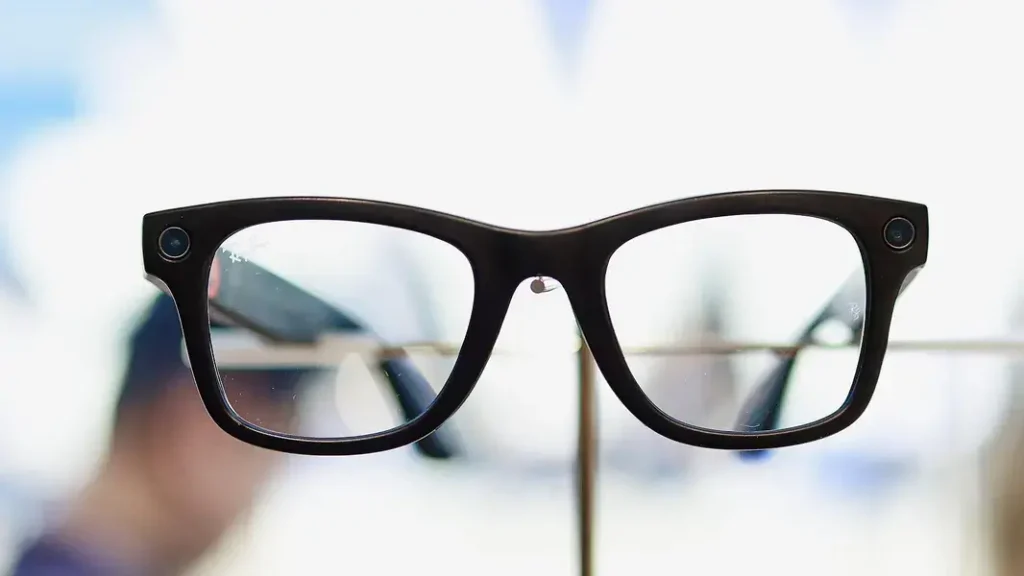
Smart glasses are wearable computing devices designed to provide digital information, communication, or sensing capabilities while the wearer continues to see the surrounding environment.
Unlike conventional smartphones or tablets, smart glasses can potentially provide information without requiring the user to repeatedly look down at a screen. Depending on the model, they may include:
- Cameras for image and video capture
- Microphones and speakers
- Transparent or camera-based displays
- Motion and environmental sensors
- Eye-tracking or gaze-related technologies
- AI-powered image or voice processing
- Wireless connectivity
- Navigation and positioning systems
- Augmented-reality overlays
- Integration with electronic health records or telemedicine platforms
This combination creates an important healthcare advantage: information can be delivered at the point of care rather than requiring the clinician or patient to interrupt an activity to access a separate device.
A 2025 systematic review of AI-powered smart glasses described applications involving real-time monitoring, chronic disease management, personalized care, telemedicine, and assisted medical services, while also identifying unresolved issues involving clinical validation, privacy, standardization, battery life, treatment adherence, and medical ethics.
Why Smart Glasses Could Be Important for Healthcare
Healthcare professionals routinely work in environments where their hands, attention, and visual focus are already occupied.
A surgeon may need to maintain concentration on a procedure. A nurse may be preparing medication or caring for a patient. A paramedic may need to communicate with a remote specialist while treating someone at the scene. A physical therapist may need to demonstrate an exercise while observing movement.
Smart glasses could reduce the need to choose between performing a task and accessing information.
This is particularly relevant to three healthcare challenges:
- Information overload — clinicians must process large amounts of medical information.
- Distributed care — specialists are not always physically present where care occurs.
- Hands-busy environments — traditional screens can interrupt clinical workflows.
A systematic review of smart glasses for distributed healthcare found that hands-free interaction and “see-what-I-see” video consultation were recurring advantages, although implementation barriers included ergonomics, technical limitations, privacy, security, and organizational factors.
The most realistic near-term opportunity is therefore not a futuristic pair of glasses that independently diagnoses every disease. It is a wearable interface connecting clinicians, patients, data, and decision-support systems more efficiently.
How Smart Glasses Could Transform Clinical Care
1. Hands-Free Telemedicine and Remote Specialist Support
One of the clearest healthcare applications is remote consultation.
Imagine an emergency department in a smaller hospital where a specialist is unavailable. A clinician wearing smart glasses could transmit a first-person video view to a remote specialist. The specialist could potentially observe the examination or procedure and communicate instructions without requiring the local clinician to hold a smartphone or tablet.
This approach could be useful in:
- Emergency medicine
- Rural healthcare
- Ambulance services
- Intensive care
- Surgical consultation
- Wound assessment
- Disaster response
- Home healthcare
The technology does not eliminate the need for an appropriately qualified clinician. Instead, it can potentially extend specialist expertise across geographic boundaries.
The evidence base is still developing, but previous systematic reviews have documented technical feasibility and user acceptance for smart-glass-supported healthcare communication.
2. Surgical Planning and Augmented Reality Guidance
AR can superimpose digital information onto the clinician’s view of the physical environment.
In surgery, that could mean displaying:
- Anatomical structures
- Medical imaging
- Surgical plans
- Navigation markers
- Measurements
- Procedure-related information
The FDA already identifies AR applications that can overlay medical images onto a patient during an operation to assist surgical technique.
However, this is an area where precision matters enormously.
An inaccurate overlay, calibration error, latency problem, or incorrect anatomical registration could create a patient-safety risk rather than a benefit. Recent research continues to evaluate accuracy, usability, and the factors affecting clinical implementation of AR navigation systems.
Key principle: AR should support a validated clinical workflow rather than replace the surgeon’s judgment.
3. Medical Education and Clinical Training
Smart glasses could also change how healthcare professionals learn.
A trainee could potentially see:
- Anatomical labels
- Step-by-step procedural guidance
- Interactive demonstrations
- Expert commentary
- 3D anatomical models
- Remote instructor annotations
Instead of learning exclusively from textbooks, lectures, or conventional videos, students could experience information in a more spatial and interactive format.
This could be particularly valuable for procedures where understanding where something is in three-dimensional space is difficult to communicate through a flat screen.
The FDA notes that medical extended reality is being explored across diagnosis, treatment, surgery planning, rehabilitation, and other clinical contexts.
Smart Glasses and Rehabilitation
Rehabilitation is another promising area because many therapies depend on repeated physical actions and behavioral feedback.
Smart glasses could potentially provide visual cues during:
- Stroke rehabilitation
- Physical therapy
- Balance exercises
- Gait training
- Occupational therapy
- Motor rehabilitation
- Home-based exercise programs
For example, a patient performing a rehabilitation exercise could receive visual instructions about movement direction or exercise sequence while a clinician reviews performance remotely.
The potential advantage is continuity: instead of receiving instructions only during an appointment, selected rehabilitation programs could incorporate technology into supervised or appropriately designed home exercises.
The FDA already identifies AR/VR rehabilitation as an area of medical use, including rehabilitation designed to improve physical function after stroke or other conditions.
Smart Glasses for Accessibility and Vision Support
Smart glasses may have an especially meaningful role in accessibility.
Computer vision systems can potentially recognize objects, read text, identify environmental features, or provide audio descriptions. For people with certain visual limitations, these capabilities could help with everyday activities.
Potential functions include:
- Reading printed text aloud
- Identifying objects
- Recognizing signs
- Describing surroundings
- Providing navigation assistance
- Highlighting selected visual information
However, these technologies should not be described as universally restoring vision. Their usefulness depends on the individual’s visual function, device capabilities, lighting, environment, and software accuracy.
For people with significant visual impairment, smart glasses should be considered an assistive technology, not automatically a medical treatment.
Could Smart Glasses Monitor Health?
This is one of the most frequently discussed areas of wearable technology.
Future healthcare-oriented smart glasses may combine optical, motion, audio, and environmental data with information from other wearable devices.
Potential measurements or indicators could include:
- Activity and movement
- Gait patterns
- Head movement
- Exercise behavior
- Environmental exposure
- Selected physiological signals
- Medication-related reminders
- Behavioral patterns
A critical distinction is necessary: detecting a signal is not the same as diagnosing a disease.
For a measurement to become clinically useful, researchers need to establish factors such as:
- Accuracy
- Repeatability
- Sensitivity and specificity where relevant
- Appropriate reference ranges
- Reliability under real-world conditions
- Clinical relevance
- Impact on patient outcomes
The FDA specifically highlights the need to evaluate accuracy and repeatability for new measurements generated by wearable technologies.
AI Is the Technology That Could Make Smart Glasses More Powerful
The combination of smart glasses and AI is particularly significant.
A conventional wearable display can show information. An AI-enabled device may potentially interpret information and respond to natural-language requests.
For example, a healthcare worker might ask:
“Show me the patient’s latest vital signs.”
Or:
“Translate these instructions into the patient’s preferred language.”
Or:
“Connect me with the remote specialist.”
In more advanced clinical systems, AI could potentially assist with recognizing visual information or organizing relevant clinical data.
But AI introduces another layer of risk.
An AI system can generate incorrect information, misinterpret images, misunderstand speech, or provide an inappropriate recommendation. Therefore, AI-enabled smart glasses should be designed around human oversight, validated data, transparent limitations, and appropriate clinical governance.
AI should assist clinicians—not quietly replace clinical judgment.
Smart Glasses in Wellness and Everyday Health
The healthcare opportunity extends beyond hospitals.
In wellness settings, smart glasses could potentially support:
Fitness
Visual exercise instructions, navigation, workout information, and activity feedback could be delivered without requiring the user to repeatedly check a phone.
Stress and relaxation
Wearable systems could potentially deliver guided breathing or relaxation exercises through audio and visual interfaces.
Sleep and recovery
Smart glasses could potentially connect with broader wearable ecosystems to provide information about sleep or recovery, although the clinical accuracy of individual metrics varies substantially by device and use case.
Healthy aging
For older adults, contextual reminders, navigation assistance, communication tools, and accessibility functions may be more meaningful than simply collecting additional biometric data.
Medication adherence
A wearable interface could provide reminders at appropriate times, although medication management should remain subject to the patient’s clinical plan and should not rely exclusively on consumer technology.
The strongest wellness applications are likely to be those that solve a specific behavioral or accessibility problem rather than those that simply generate more health data.
What Are the Risks of Medical Smart Glasses?
The technology’s benefits must be evaluated alongside its limitations.
1. Privacy
A camera mounted on a person’s face creates obvious privacy concerns.
A device may unintentionally capture:
- Patients
- Medical records
- Conversations
- Family members
- Bystanders
- Sensitive environments
Healthcare organizations therefore need strict policies governing recording, storage, transmission, access, and deletion.
2. Cybersecurity
Connected medical technologies can introduce cybersecurity risks.
If health information travels through cloud services, mobile applications, or wireless networks, organizations need appropriate safeguards for authentication, encryption, access control, and data governance.
3. Clinical Distraction
More information is not necessarily better.
An overlay appearing at the wrong moment could distract a clinician from the patient or procedure.
The FDA specifically identifies distraction, information overload, visual-display problems, fatigue, dizziness, privacy, and cybersecurity among potential concerns associated with AR/VR medical devices.
4. Ergonomics
A device worn for several hours must be comfortable.
Weight distribution, heat, battery requirements, field of view, prescription compatibility, fit, and eye strain can all affect adoption.
5. AI Errors
AI-generated information should never be treated as automatically correct.
Healthcare systems need processes for verifying critical information before it influences patient care.
6. Health Inequality
Advanced wearable technology may initially be expensive or unavailable to people with limited access to digital healthcare.
The FDA also warns that emerging XR technologies could potentially worsen disparities if access, validation, or implementation are uneven.
Are Smart Glasses Already Approved as Medical Devices?
Some AR/VR-enabled medical devices have received regulatory authorization, but this does not mean every smart-glasses product is a medical device.
This distinction is essential.
Regulatory authorization generally relates to a specific device and intended use—not the entire technology category.
The FDA maintains a list of AR/VR medical devices authorized for marketing in the United States. The agency emphasizes that the list is not comprehensive and that authorization involves applicable premarket requirements related to safety and effectiveness.
Therefore, consumers and healthcare organizations should ask:
- What exactly does the device claim to do?
- Is it intended for wellness, accessibility, or medical diagnosis/treatment?
- Has the relevant function been clinically validated?
- What regulatory authorization applies?
- What data does the device collect?
- Where is that data stored?
- Can the user control recording and sharing?
- What happens when the device produces an incorrect result?
These questions are more important than the marketing label “AI-powered.”
What Will Determine Whether Smart Glasses Succeed in Healthcare?
The future of smart glasses will depend less on novelty and more on clinical usefulness.
Five factors are particularly important.
1. Clinical Evidence
Healthcare providers need evidence showing that a technology improves outcomes, safety, efficiency, access, or quality of care.
2. Seamless Workflow Integration
If a device creates extra steps, clinicians may abandon it regardless of how impressive the technology appears.
3. Comfort
Wearable technology must be usable for the duration required by the task.
4. Privacy and Security
Healthcare adoption requires confidence that patient information is appropriately protected.
5. Interoperability
Smart glasses become substantially more useful when they can communicate appropriately with existing healthcare systems rather than operating as isolated gadgets.
A 2025 review of AR head-mounted devices in healthcare emphasized the importance of systematic evaluation of hardware, software, usability, and real-world clinical conditions before deployment.
Smart Glasses vs. Smartphones and Smartwatches
| Technology | Primary Strength | Healthcare Opportunity |
|---|---|---|
| Smartphone | Flexible computing and communication | Telemedicine, records, health apps |
| Smartwatch | Continuous wearable monitoring | Activity and selected physiological monitoring |
| Smart glasses | Hands-free visual/audio interaction | Clinical assistance, accessibility, telemedicine |
| AR headset | Immersive spatial information | Surgery, training, rehabilitation |
| AI-enabled glasses | Context-aware interaction | Potential decision support and accessibility |
Smart glasses are therefore unlikely to replace every other wearable device. Their unique value is the human interface: information can potentially appear where the user is already looking while leaving the hands available.
What Could Healthcare Look Like in the Next Few Years?
The most credible future is not a hospital where every clinician wears AR glasses all day.
Instead, adoption is likely to occur selectively.
A surgeon may use AR navigation for a specific procedure. A paramedic may use hands-free communication during an emergency. A rehabilitation patient may use guided visual cues during therapy. A person with visual impairment may use computer vision for accessibility. A remote specialist may assist a clinician through a first-person video feed.
This selective approach is important because healthcare technology must prove its value within a defined clinical workflow.
The FDA’s ongoing work in medical extended reality reflects this broader transition: regulators are developing methods to evaluate technologies that combine software, sensors, immersive displays, and clinical applications.
In 2026, the regulatory environment is also increasingly focused on real-world evidence for medical devices. The FDA issued final guidance addressing how real-world data can be evaluated for use in regulatory decision-making, reinforcing the importance of evidence generated under appropriate conditions rather than relying solely on laboratory demonstrations.
FAQs
What are smart glasses in healthcare?
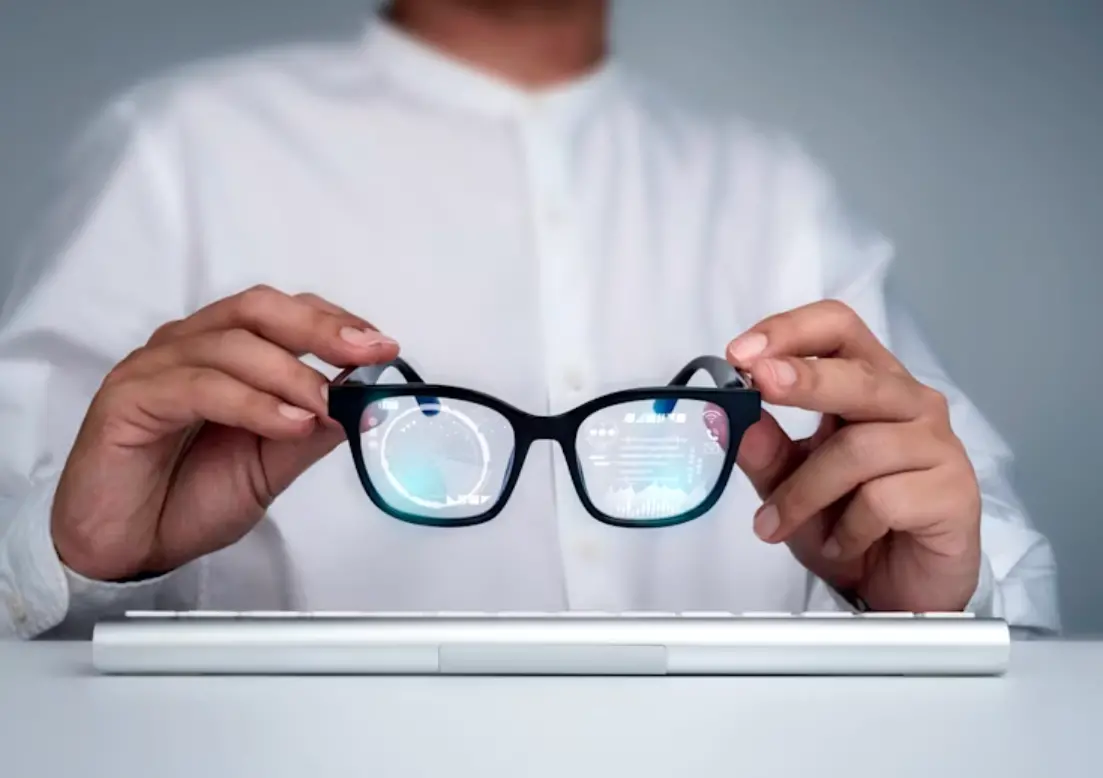
Smart glasses in healthcare are wearable devices that combine cameras, displays, microphones, sensors, connectivity, and sometimes AI to provide hands-free access to digital information. AI smart glasses can potentially support telemedicine, medical education, rehabilitation, accessibility, clinical workflows, and selected wellness applications without requiring users to constantly look at a smartphone or computer.
How can AI smart glasses improve healthcare?
AI smart glasses can improve healthcare by providing hands-free communication, real-time information access, remote specialist support, visual assistance, and contextual digital guidance. Wearable AI healthcare applications may help clinicians communicate during procedures, support rehabilitation exercises, assist people with visual limitations, and connect patients with healthcare professionals remotely.
Can smart glasses be used for medical diagnosis?
Smart glasses can support certain medical applications, but consumer smart glasses should not automatically be considered diagnostic devices. A medical application must be appropriately validated for its intended purpose and may require regulatory authorization. Smart glasses in healthcare are currently more established as tools for communication, visualization, education, accessibility, and workflow support than as universal diagnostic systems.
How can smart glasses support wellness?
Smart glasses for wellness can provide hands-free access to exercise instructions, navigation, reminders, digital coaching, and other health-related information. When connected with broader wearable ecosystems, they may also help users interact with activity or wellness data. However, wellness features should not be interpreted as medical diagnoses unless the specific technology has been clinically validated and authorized for that purpose.
What are the risks of smart glasses in healthcare?
The major risks of smart glasses in healthcare include privacy concerns, cybersecurity, inaccurate AI information, visual distraction, fatigue, poor ergonomics, data security, and insufficient clinical validation. AI smart glasses should therefore be evaluated based on their specific intended use, accuracy, evidence, regulatory status, data practices, and impact on patient safety rather than simply their technological features.
The Bottom Line
Smart glasses could transform healthcare not because they put a screen in front of the eyes, but because they can connect people, information, sensors, AI, and clinical workflows at the moment that information is needed.
The strongest opportunities are already becoming clearer: hands-free telemedicine, clinical education, accessibility, rehabilitation, surgical visualization, remote assistance, and selected health-monitoring applications.
But healthcare requires a higher standard than consumer technology. A device that looks impressive in a demonstration is not necessarily clinically useful. Accuracy, validation, privacy, cybersecurity, ergonomics, interoperability, regulatory status, and measurable patient outcomes ultimately determine whether smart glasses become meaningful medical tools.
As of 2026, the evidence supports substantial potential rather than universal clinical adoption. Research into AI-powered smart glasses is expanding, while regulators such as the FDA continue to develop frameworks for evaluating AR/VR and sensor-based digital health technologies.
The next stage of wearable healthcare will therefore be less about asking, “Can smart glasses do this?” and more about asking, “Does this specific function improve care safely, accurately, and meaningfully for patients and healthcare professionals?”
That shift—from technological possibility to evidence-based clinical value—is likely to determine whether smart glasses become a genuine healthcare platform or remain primarily a consumer gadget.




 and then