








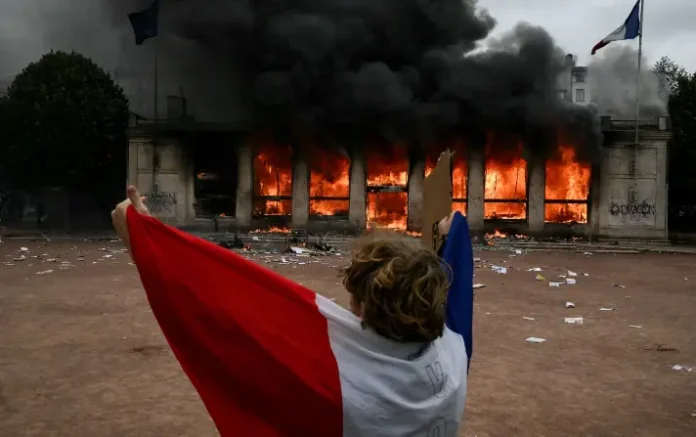

Paris protests in October 2026 have resulted in reported street damage, looting, fires and clashes with police as demonstrations continue across France. The unrest reflects concerns about living costs, education and public services. Authorities are investigating incidents and working to restore public safety in affected areas.
KumDi.com
Paris protests have drawn international attention following reports of damaged streets, looted shops, fires and clashes with police during demonstrations across France. The unrest has raised urgent questions about public safety, the condition of affected neighbourhoods and the economic pressures driving public dissatisfaction.
The demonstrations reflect a range of concerns, including rising living costs, educational conditions and the quality of public services. However, peaceful protest must be distinguished from vandalism and violence. Understanding what happened, why tensions escalated and how residents, businesses and visitors should respond provides a clearer picture of the situation in France.
Table of Contents
What Happened During the Paris Protests?
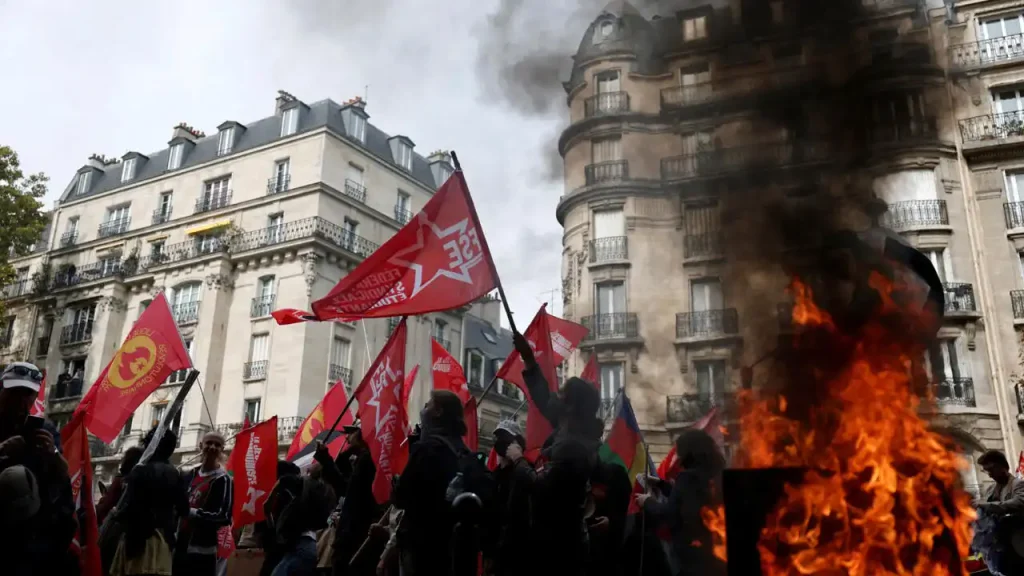
Reports published around October 17–18, 2026, described serious disorder during demonstrations in Paris and other French cities. In affected areas, shops were reportedly damaged or looted, fires were set, vehicles were damaged and police confronted groups of demonstrators.
French authorities reported more than 1,200 arrests nationwide and approximately 150 injured police officers. Estimates of nationwide participation differed: the Interior Ministry reported approximately 550,000 demonstrators, while the CGT trade union put the figure at around 800,000. These figures represent different estimates rather than a single agreed attendance total.
The description of streets in Paris as “devastated” highlights the severity of the damage reported in particular locations. It should not, however, be interpreted as evidence that the entire city or every central neighbourhood was destroyed.
The unrest also extended beyond the capital. Reports described significant damage to public buildings in Limoges and an incident involving a tourist office in Lyon. These events demonstrate that the consequences of the demonstrations were not limited to Paris.
For residents and visitors, the practical priority is to identify which areas are affected, check current transport and safety information, and avoid active confrontations.
Key Facts About France’s October 2026 Demonstrations
Date of major reported unrest
October 17, 2026, following weeks of demonstrations and student mobilisation.
Estimated national turnout
Approximately 550,000 according to the Interior Ministry and 800,000 according to the CGT union.
Reported arrests and injuries
More than 1,200 arrests and approximately 150 injured police officers, according to reports of government figures.
Reported damage
Fires, damaged storefronts, looting and damage to public property in Paris and other French cities.
Figures reflect reporting available on October 18, 2026. Arrest totals, injury reports and damage assessments may change as authorities release further information.
Why Are People Protesting Across France?
The demonstrations involve several overlapping grievances. While individual participants may have different priorities, economic pressure and dissatisfaction with public services help explain why protests have attracted attention beyond the groups that initially organised them.
1. Rising living costs and household financial pressure
The cost of living is a significant source of public concern. When essential expenses increase faster than household income, people have less money available for housing, food, transport, energy and education.
Fuel and commuting costs can be particularly important for workers who depend on cars or public transport to reach their jobs. Higher operating costs can also affect small businesses, which may pass some expenses on to customers or reduce other spending.
For households with limited financial reserves, even relatively modest increases in recurring expenses can create substantial pressure.
This helps explain why economic demonstrations often attract people from different age groups and occupations. A student concerned about future employment, a parent struggling with household expenses and a worker seeking higher wages may share a broad sense of economic insecurity while supporting different policy responses.
2. Student protests over educational conditions
Student concerns about schools and educational provision have also contributed to the demonstrations.
Issues raised in public reporting include teacher shortages, overcrowded classrooms and the condition of school facilities. Students and education advocates may view these problems as barriers to learning and future employment opportunities.
Education has implications beyond academic performance. Access to qualified teachers, appropriate facilities and reliable support services can affect students’ ability to complete their studies and compete for jobs.
When young people believe that educational opportunities are deteriorating, frustration can extend to broader questions about social mobility and the government’s priorities.
Reports from September and October described student mobilisation spreading beyond the Paris region, helping establish a wider context for the October demonstrations.
3. Concerns about public services and inequality
Public dissatisfaction can also arise when people believe that essential services are not meeting community needs.
Schools, transport systems, healthcare facilities and local infrastructure all influence everyday life. When services are under pressure, residents may question whether public funding is being allocated effectively.
However, there is no single view shared by everyone involved in the protests. Some demonstrators may prioritise increased investment in schools, while others may focus on household purchasing power, taxation or wider economic policy.
Distinguishing these demands matters because an effective policy response requires identifying the specific problem rather than treating all grievances as interchangeable.
4. Political distrust and frustration
Economic hardship does not automatically lead to violent unrest. Political dissatisfaction can become more difficult to manage when people believe that established institutions are not responding to their concerns.
If demonstrations produce few visible changes, some participants may become more frustrated. Conflicting public statements or a lack of clarity about proposed reforms can also make it harder to restore confidence.
France has a long history of large-scale protests and strikes. Nevertheless, each movement has its own causes, participants and political context. The October 2026 demonstrations should be understood through verified evidence about current events rather than assumptions based on earlier protest movements.
Why Did the Demonstrations Escalate Into Violence?
Large demonstrations can remain peaceful even when participants strongly oppose government policy. Violence can emerge when a small number of people engage in criminal acts, when confrontations intensify or when crowd conditions become dangerous.
The reported disorder in France illustrates why it is important to distinguish between the motivations of peaceful demonstrators and the actions of individuals responsible for arson, looting, assault or vandalism.
How unrest can escalate
Stage 1: Grievances lead to mobilisation
Students, workers and other groups organise demonstrations to draw attention to shared concerns.
Stage 2: Crowds become larger and more diverse
Participants may have different objectives, expectations and attitudes towards confrontation.
Stage 3: Tensions increase
Confrontations, aggressive behaviour, crowd compression or police interventions may increase the risk of injuries and disorder.
Stage 4: Property damage and violence occur
Some individuals may engage in looting, arson, vandalism or attacks on other people.
Stage 5: Emergency response and recovery begin
Authorities investigate incidents, restore access, assess damage and arrange repairs.
This is a general framework for understanding crowd unrest, not a verified account of the precise sequence of every incident in France.
Establishing responsibility requires reliable evidence, including witness statements, verified footage and the findings of criminal investigations. It would be inaccurate to assume that everyone attending a demonstration participated in or supported violence.
Which Areas Were Affected by the Protests?
Reports of unrest described damage to commercial premises, vehicles and public buildings in several French cities. The scale and nature of the damage differed by location.
Paris
Reports described looted shops, damaged storefronts, burning vehicles and debris in affected streets. The description of streets as “devastated” refers to serious local damage rather than destruction across the entire capital.
Limoges
Reporting described major fire damage to the town hall. Damage to civic buildings can disrupt local services and require extensive structural inspections and restoration work.
Lyon
Reports described a fire at a tourist office. Damage to visitor facilities can disrupt services and create additional repair costs for the organisations responsible for the premises.
These reports provide examples of the impact across different locations, but they should not be treated as a complete inventory of all affected buildings. Authorities and property owners may need additional time to inspect premises and calculate the full cost of repairs.
What Are the Economic Consequences of the Paris Protests?
The effects of violent demonstrations can continue long after crowds disperse. The economic consequences extend beyond repairing damaged buildings and include lost business activity, disrupted transport, emergency response costs and uncertainty among consumers.
1. Damage to small businesses
Independent retailers and small businesses can be particularly vulnerable because their cash reserves may be limited.
A damaged storefront may prevent a shop from opening even when the rest of the business remains intact. Owners may need to replace windows, repair shutters, clean premises, replace stolen stock and arrange additional security.
The resulting costs may include:
- Emergency repairs to doors, windows and shop fittings.
- Replacement of stolen or damaged inventory.
- Lost revenue during temporary closures.
- Additional security, cleaning and insurance-related expenses.
- Reduced customer visits while nearby streets remain disrupted.
For example, a café with broken windows may be unable to serve customers until the premises have been secured. Even if repairs take only a few days, the owner may lose several days of revenue while continuing to face rent, payroll and other fixed expenses.
This example illustrates a common business risk; it is not a claim about the verified losses of any specific Paris business.
2. Disruption to tourism and hospitality
Paris attracts international visitors throughout the year. News of unrest can affect travel decisions, particularly when potential visitors are uncertain about the safety of particular neighbourhoods or access to major attractions.
Hotels, restaurants, tour operators and cultural venues may receive more enquiries about cancellations, transport disruptions and alternative itineraries.
However, an incident in one part of the capital does not mean that every tourist area is affected. Visitors should assess conditions at their intended destination and follow official travel and transport updates rather than making decisions based solely on dramatic headlines.
3. Public expenditure and emergency response
Fires, damaged infrastructure and blocked roads create additional demands on emergency services and municipal authorities.
Public agencies may need to fund street cleaning, repairs, traffic management, emergency operations and the restoration of damaged public buildings.
The final cost depends on the number of affected properties, the severity of the damage and any insurance or other recoveries. A reliable total should not be published until supported by official assessments or documented estimates.
4. Longer-term effects on public confidence
Repeated disruption can influence how residents and businesses perceive the stability of a commercial district.
If business owners believe that their premises are repeatedly exposed to damage, they may reconsider investment, opening hours or staffing arrangements. Visitors may also choose alternative destinations if they perceive ongoing uncertainty.
These are potential economic effects, not proof that the October demonstrations have caused a lasting decline in tourism or investment. Such conclusions require subsequent evidence on business activity, visitor numbers and local economic performance.
How Should Residents and Tourists Stay Safe?
For people living in France or planning a visit, the most useful approach is to make decisions based on current, location-specific information.
Practical safety checklist
- Check official updates. Review announcements from local authorities, police and relevant government agencies before travelling through affected areas.
- Monitor transport services. Check train, metro, bus and road conditions before setting out, as routes and station access may change.
- Avoid active confrontations. Do not approach clashes to take photographs or videos. Leave the area if violence begins nearby.
- Follow official instructions. Observe temporary closures, evacuation directions and police cordons.
- Keep your phone charged. Maintain access to maps, transport information and emergency contacts.
- Tell someone your plans. Share your itinerary with a companion or family member, particularly if travelling alone.
- Confirm access to attractions. Check directly with hotels, museums and tour operators when demonstrations may affect nearby streets.
In France, 112 is the general European emergency number, 15 reaches emergency medical services and 17 reaches the police. Use emergency services when immediate assistance is needed.
For international visitors, the appropriate response is not necessarily to cancel every activity. It is to avoid areas where demonstrations or police operations are active, confirm access to planned destinations and remain prepared to change routes.
How Is the French Government Responding?
The government faces two connected responsibilities: protecting public safety and preserving the right to peaceful assembly.
Following the reported violence, Prime Minister Sébastien Lecornu condemned the disorder. Government reporting included more than 1,200 arrests and approximately 150 injured police officers. President Emmanuel Macron also called for restraint and rejected violence associated with the demonstrations.
The response involves several areas.
Criminal investigations: Authorities investigate suspected arson, looting, assaults and damage to public property. An arrest is not proof of guilt; allegations must be assessed through the legal process.
Public order: Police and local authorities must manage demonstrations, protect emergency access, respond to dangerous incidents and reduce the risk of further clashes.
Damage assessment and recovery: Municipal services and property owners need to inspect buildings, clear debris, arrange repairs and restore affected services.
Political dialogue: Enforcement alone cannot resolve concerns about education, household finances and public services. Addressing those issues requires policy decisions, appropriate funding and engagement with affected communities.
A successful response should be assessed through measurable outcomes: reduced violence, protection of residents, accountability for criminal acts, restoration of damaged areas and progress on legitimate public concerns.
Will the France Demonstrations Continue?
As of October 18, 2026, the duration and scale of further demonstrations remain uncertain. The reported violence has increased pressure on authorities to restore public order, while concerns about living costs, education and public services remain part of the wider political debate.
Three developments will be important to watch.
- Government policy announcements: Specific commitments on educational provision, household affordability or public services could influence how demonstrators respond.
- Decisions by student groups and trade unions: Organisers may announce further marches, strikes or other forms of mobilisation.
- Public safety developments: Further clashes or controversial incidents could intensify tensions, while effective crowd management and constructive dialogue could help reduce the risk of escalation.
These factors help explain what may influence future events, but they do not establish that further violence is inevitable. The timing and scale of any additional demonstrations should be assessed through verified announcements and current reporting.
France’s Current Protests Compared With the Yellow Vest Movement
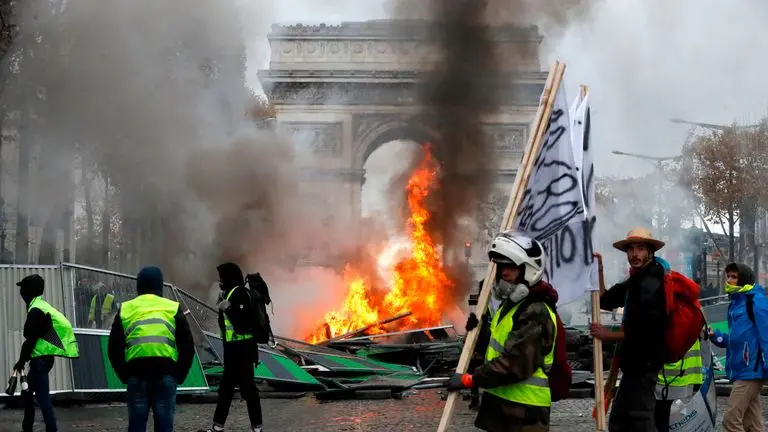
The October 2026 demonstrations invite comparisons with France’s Yellow Vest movement, known as Gilets Jaunes, which began in 2018. Both involve economic concerns and perceptions of unfairness, but their immediate triggers and participants differ.
| Factor | October 2026 demonstrations | Yellow Vest movement, 2018–2019 |
|---|---|---|
| Prominent concerns | Living costs, education and public services | Fuel taxation, purchasing power and economic inequality |
| Participants | Students, workers and other demonstrators | Motorists, workers and people from varied backgrounds |
| Forms of mobilisation | Demonstrations, student protests and trade union participation | Road blockades, roundabout occupations and recurring marches |
| Main policy debate | Public investment, education and household affordability | Taxation, purchasing power and political representation |
The comparison illustrates how economic pressure can bring different groups into public demonstrations. However, the movements should not be treated as identical, and the outcome of the earlier movement cannot reliably predict the outcome of the current unrest.
FAQs
Why are the Paris protests continuing in October 2026?
The Paris protests are associated with concerns about rising living costs, educational conditions, public services and economic inequality. Student mobilisation and broader public dissatisfaction have contributed to demonstrations across France, although participants do not necessarily share the same demands.
How much damage has been reported during the Paris protests?
Reports describe broken shop windows, looting, fires, damaged vehicles and debris in affected streets. Serious damage was also reported at public buildings in other French cities. The complete financial cost remains dependent on property inspections and official assessments.
Which French cities have been affected by the demonstrations?
Paris has experienced reported street damage and clashes, while incidents have also been reported in Limoges and Lyon. The type and severity of the damage differ by location, and official assessments may change as more information becomes available.
Are the France demonstrations affecting tourists visiting Paris?
The demonstrations can disrupt tourism through road closures, transport interruptions and restricted access to affected areas. Visitors should check official safety announcements, transport operator updates and the status of planned attractions before travelling.
Will the Paris protests lead to further demonstrations?
Further demonstrations are possible, but their timing and scale remain uncertain. Government decisions, announcements from student groups and trade unions, and developments concerning living costs and public services will help determine how the situation evolves.
Conclusion: What the Paris Protests Mean for France
The reports of streets devastated by protests highlight the consequences that can follow when demonstrations escalate into violence. Damaged shops, fires, public property destruction and clashes with police can affect residents, businesses and visitors long after the immediate unrest has ended.
Yet the wider story extends beyond physical damage. Concerns about household affordability, educational conditions and public services have contributed to a broader debate about France’s economic priorities and political institutions.
The government must protect public safety, investigate criminal acts fairly and preserve the rights of people who demonstrate peacefully. It must also respond to legitimate public concerns through effective policies and meaningful dialogue.
For residents, businesses and international visitors, the immediate priorities are to follow verified safety information, assess conditions in specific locations and avoid assuming that every part of France is affected equally.
The longer-term significance of the France demonstrations will depend on what follows: whether public order is restored, damaged areas recover and the concerns driving the protests receive a credible response.
References
- Agence France-Presse (AFP) — Clashes, fires and wide-scale looting grip France on day of protests. Published October 17, 2026. Covers the reported damage in Paris, nationwide demonstrations, arrests and police injuries.
- The Guardian — Whole streets in Paris ‘devastated’ by protests, says mayor, as France demonstrations continue. Published October 18, 2026. Provides live coverage of the unrest, the response from local and national officials, and developments in affected cities.
- Reuters — Mass protests in France spiral into worst riots in years. Published October 17, 2026. Reports on the demonstrations, cost-of-living concerns, clashes, arrests and government response.




 and then