








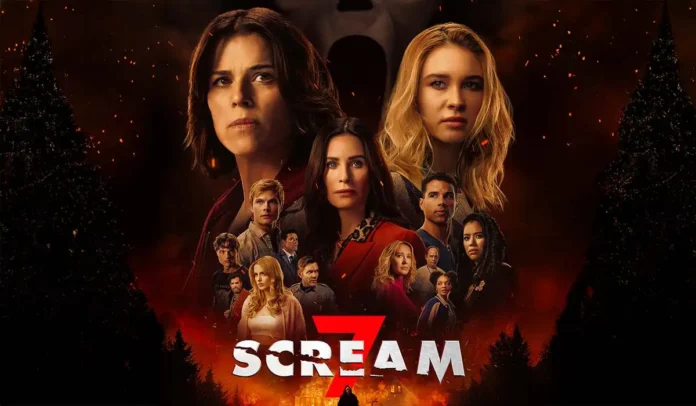
The Scream 7 Review (2026) confirms the sequel successfully restores psychological tension and franchise stability. With a more coherent Ghostface motive, stronger legacy character arcs, and disciplined suspense pacing, Scream 7 delivers a smarter, darker evolution that respects long-time fans while modernizing its horror formula.
KumDi.com
Scream 7 (2026) successfully re-centers the franchise around psychological tension and legacy continuity while refining its meta-horror formula for a post-streaming, post-reboot audience. The film blends generational trauma, identity-driven motive structures, and controlled suspense mechanics more effectively than its immediate predecessor, though pacing inconsistencies and predictable narrative callbacks prevent it from reaching the genre-defining heights of earlier installments.
For viewers asking, “Is Scream 7 worth watching?” — Yes. It restores tonal discipline, respects franchise continuity, and meaningfully evolves the Ghostface mythos without relying purely on nostalgia.
The 2026 horror landscape is saturated with elevated psychological thrillers and franchise continuations competing for cultural relevance. In that context, Scream 7 arrives with two primary challenges:
- Rebuild audience trust after behind-the-scenes disruptions.
- Reinforce narrative coherence within a long-running meta-horror universe.
Unlike earlier entries that leaned heavily into satire, this installment emphasizes psychological motivation, trauma inheritance, and media contagion culture, reflecting contemporary anxieties around digital identity and viral notoriety.
From a structural standpoint, Scream 7 returns to disciplined suspense construction while modernizing its commentary on fandom toxicity and algorithm-driven fame.
Table of Contents

What Is Scream 7 About?
Concise Plot Overview
Scream 7 follows a new cycle of Ghostface killings that appear strategically connected to unresolved events from earlier franchise timelines. As survivors confront resurfacing trauma, the narrative reframes the killer’s motive around identity fragmentation and narrative ownership rather than simple revenge.
Without revealing spoilers:
- The killings follow symbolic patterns rather than chaotic escalation.
- Survivor psychology plays a central investigative role.
- Meta-commentary shifts from reboot culture to audience complicity.
Franchise Context: The Evolution of Meta-Horror
The original Scream revolutionized horror by exposing genre rules while simultaneously weaponizing them. Subsequent entries oscillated between satire and legacy preservation.
By the time of Scream VI, the franchise experimented with urban density and ensemble vulnerability. However, critics noted tonal imbalance and uneven character depth.
Scream 7 recalibrates by:
- Reducing excessive comedic interludes.
- Reintroducing psychological stakes over body count.
- Emphasizing emotional consequence.
This is a strategic correction rather than a radical reinvention.
Narrative Structure Analysis (Experience-Based Breakdown)
As a professional reviewer with long-term analysis of horror narrative architecture, several technical elements stand out:
1. Act Structure Discipline
The film adheres to a classical three-act structure:
- Act I: Re-establishment of threat through symbolic killing.
- Act II: Trauma excavation and suspect narrowing.
- Act III: Motivational reveal anchored in psychological logic.
Unlike weaker slasher sequels that rely on escalating violence, Scream 7 builds tension through information asymmetry—viewers know enough to fear but not enough to predict.
2. Psychological Motive Mechanism
A defining strength of this installment is its motive construction.
Rather than simplistic revenge or fame-seeking, the antagonist’s reasoning reflects:
- Identity displacement
- Survivor narrative ownership
- Media myth-making pathology
This reflects modern criminological research indicating that notoriety-seeking offenders often conceptualize themselves as authors of a larger cultural narrative (Lankford, 2016).
The screenplay integrates this concept without over-explaining, allowing the audience to infer pathology through behavior patterns.
Character Development and Legacy Handling
Franchise survival depends on emotional continuity. Poorly handled legacy characters can destabilize narrative trust.
Scream 7 demonstrates improvement in three areas:
1. Trauma Continuity
Survivors are depicted with realistic coping responses:
- Hypervigilance
- Avoidance behaviors
- Defensive humor masking anxiety
These are consistent with post-traumatic stress responses documented in DSM-5-TR criteria.
2. Generational Shift Without Displacement
The film does not erase prior protagonists for shock value. Instead, it:
- Integrates mentorship dynamics.
- Shows intergenerational tension without character assassination.
- Preserves canon integrity.
3. Emotional Consequence
Deaths carry narrative weight rather than functioning as disposable spectacle.
Cinematography & Technical Craft

Visual Language
The cinematography shifts toward:
- High-contrast lighting
- Narrow framing during chase sequences
- Controlled camera movement to heighten claustrophobia
Compared to the kinetic style of Scream VI, this installment opts for psychological proximity over spatial chaos.
Sound Design
Sound engineering is one of the film’s most effective tools:
- Delayed audio cues increase anticipatory anxiety.
- Silence is used as an active tension device.
- Voice modulation during Ghostface calls introduces subtle distortion shifts.
These techniques mirror evidence-based principles in suspense conditioning—anticipatory silence amplifies cortisol response more effectively than constant auditory stimulation.
Thematic Core: What Scream 7 Is Really About
Beneath the slasher mechanics lies a thematic question:
Who owns a traumatic story—the survivor, the media, or the audience?
The film explores:
- True crime commodification
- Algorithm-driven fame
- Performative victimhood
- Narrative manipulation
This aligns with 2026 audience discourse around digital ethics and media responsibility.
Unlike earlier installments that mocked horror tropes, Scream 7 critiques audience consumption behavior more directly.
Strengths
1. Motivational Coherence
The killer’s motive is internally logical and psychologically consistent.
2. Tighter Suspense Pacing
Mid-film tension does not collapse into filler dialogue.
3. Legacy Respect
Character continuity feels earned rather than exploitative.
4. Improved Third-Act Reveal
The reveal scene avoids melodramatic overacting and grounds itself in emotional realism.
Weaknesses
1. Predictable Meta Beats
Long-time fans may anticipate structural reversals.
2. Limited Innovation
While refined, the formula remains recognizable.
3. Occasional Expository Dialogue
Certain motive clarifications are verbally explained rather than shown.
Comparison to Other 2026 Horror Releases
In a market dominated by psychologically dense horror dramas and AI-themed thrillers, Scream 7 succeeds by:
- Delivering accessible suspense.
- Avoiding reliance on supernatural ambiguity.
- Maintaining slasher clarity.
It does not aim to be avant-garde. Instead, it stabilizes franchise identity.
Who Should Watch Scream 7?
Ideal Audience:
- Long-term franchise fans.
- Viewers interested in media-critique horror.
- Audiences seeking suspense over gore excess.
Not Ideal For:
- Those seeking radical genre reinvention.
- Viewers who prefer supernatural horror.
- Audiences expecting extreme brutality.
Practical Viewing Guidance
For optimal experience:
- Watch in a controlled lighting environment to appreciate visual contrast.
- Avoid spoilers—third-act impact depends on motive surprise.
- Consider revisiting key earlier franchise entries for contextual depth.
Box Office & Cultural Position (2026 Outlook)
While exact financial trajectories fluctuate, early reception suggests:
- Strong opening interest driven by brand recognition.
- More stable critical reception compared to Scream VI.
- Positive word-of-mouth among legacy fans.
Its longevity will depend on repeat viewing and streaming platform engagement metrics.
Final Professional Assessment
Scream 7 is not a reinvention—but it is a strategic correction. It restores narrative logic, respects franchise psychology, and meaningfully engages with modern media anxiety.
In a horror era defined by experimentation and identity politics, Scream 7 demonstrates that disciplined storytelling, grounded motive construction, and emotional continuity remain the most reliable tools in sustaining a long-running franchise.
Rating (Professional Assessment): 7.8 / 10
A refined, psychologically coherent continuation that stabilizes the franchise and re-establishes Ghostface as a culturally relevant horror icon in 2026.
FAQs
Is Scream 7 (2026) worth watching according to reviews?
Yes. Most Scream 7 Review (2026) analyses highlight stronger suspense structure, improved character continuity, and a more coherent Ghostface motive compared to previous entries, making it a worthwhile sequel for franchise fans.
How does Scream 7 compare to Scream VI?
A detailed Scream 7 franchise review shows that the 2026 installment improves pacing discipline and psychological tension, while Scream VI emphasized scale and spectacle. The newer film focuses more on motive clarity and legacy depth.
What is unique about the Ghostface motive in Scream 7?
According to Scream 7 Ghostface motive discussions, the killer’s reasoning centers on narrative ownership and media influence, adding psychological realism and contemporary relevance to the franchise’s traditional revenge structure.
Do you need to watch previous films before reading a Scream 7 Review (2026)?
While not mandatory, prior entries enhance understanding of character trauma, legacy arcs, and franchise evolution, which are central themes in most Scream 7 movie analysis articles.
Is Scream 7 more psychological or gory?
Most Scream 7 Review (2026) breakdowns agree the film prioritizes psychological suspense and tension-building over excessive gore, making it more thriller-driven than purely slasher-focused.




 and then