








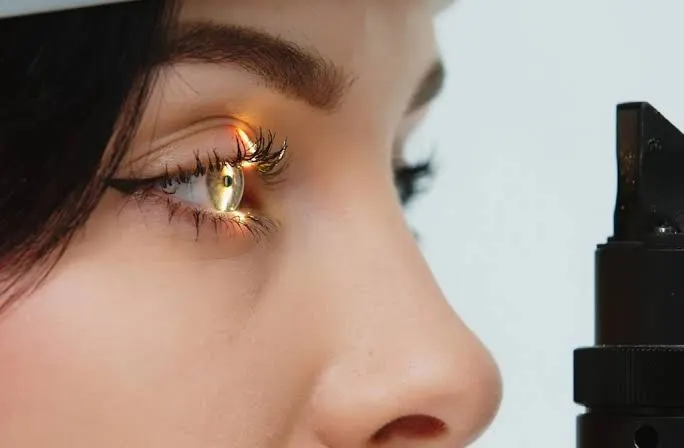

Can damaged adult retinas be repaired?
KumDi.com
A 2026 study found that one-time CaBP4 gene therapy restored retinal function and rebuilt damaged neural connections in adult dogs with an inherited retinal disorder. The findings are promising for future adult retina repair, but the treatment has not yet been proven in humans.
A new 2026 study from Michigan State University has produced striking evidence that a single-dose gene therapy can restore retinal function and rebuild damaged neural connections in adult eyes—at least in a naturally occurring canine model of inherited retinal disease. The treatment corrected a defective CaBP4 gene, improved visual function, and produced structural remodeling of the adult retina, including recovery of the outer plexiform layer and maturation of photoreceptor synaptic ribbons.
However, there is an essential qualification: this is not yet a treatment for human vision loss. The study was performed in dogs with a naturally occurring CaBP4 mutation, not in human patients. The significance is therefore not that doctors can currently reverse retinal damage with one injection, but that mature mammalian retinas may retain considerably more capacity for repair and rewiring than scientists previously assumed.
Table of Contents
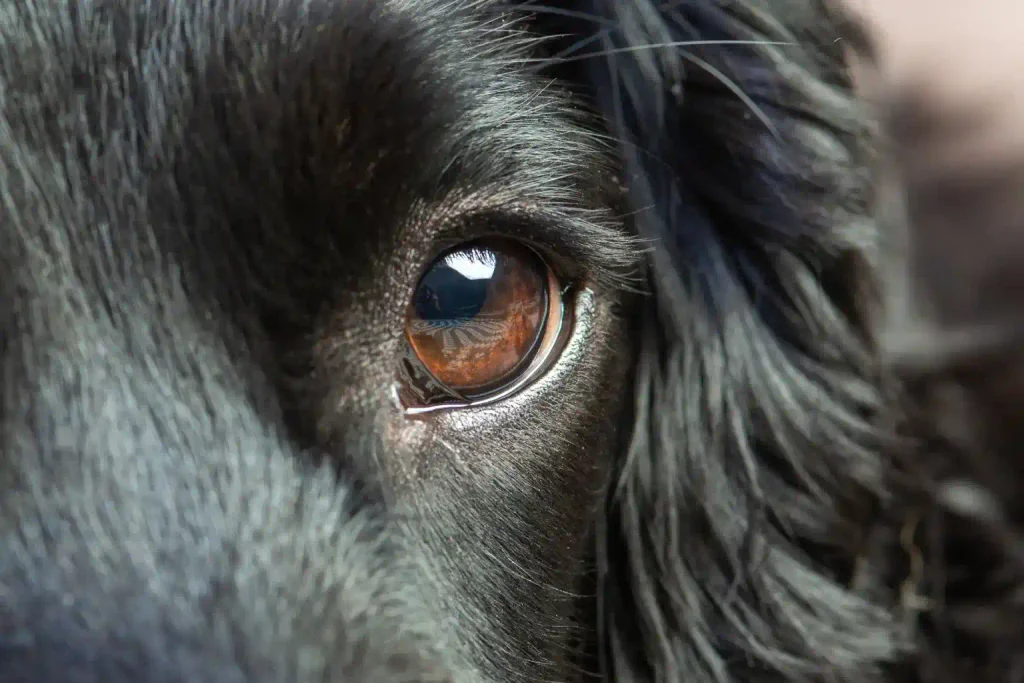
What Did the New Retina Study Discover?
The research, published in Molecular Therapy: Advances in 2026, investigated gene augmentation therapy in dogs carrying a naturally occurring mutation affecting calcium-binding protein 4 (CaBP4). CaBP4 is involved in calcium-dependent signaling at the first synapse between photoreceptors and downstream retinal neurons. When CaBP4 is defective, that communication becomes abnormal, leading to impaired visual function and progressive retinal degeneration in the canine model.
Researchers used an adeno-associated virus (AAV) as a delivery vehicle to introduce a functional copy of the CaBP4 gene into retinal cells.
The important finding was not simply that vision improved.
The retina itself showed evidence of physical remodeling.
Treated areas demonstrated:
- Improved retinal electrical responses
- Better visual performance
- Preservation of retinal tissue
- Expansion of the previously thin outer plexiform layer
- Maturation and elongation of photoreceptor synaptic ribbons
- Reorganization of retinal connections
- Long-term structural preservation following treatment
Some treated animals were followed for as long as approximately three years, with structural and functional benefits maintained during that period.
That combination of functional recovery and anatomical repair is what makes the study particularly important.
Why Is This Study So Significant?
For decades, one of the major challenges in treating retinal disease has been the limited regenerative capacity of the adult nervous system.
The retina is technically part of the central nervous system. Many retinal neurons do not naturally regenerate after significant damage in the same way that certain tissues elsewhere in the body can repair themselves.
Consequently, many existing treatments for retinal diseases focus on:
- Preventing additional damage
- Slowing disease progression
- Treating the underlying cause
- Replacing missing biological functions
- Improving remaining vision
The Michigan State study points toward another possibility:
Repairing the existing neural circuitry.
That distinction is crucial.
The researchers were not simply preventing further deterioration. Their results indicate that restoring CaBP4-related signaling allowed mature retinal tissue to reorganize and rebuild components of its neural circuitry.
What Is CaBP4 and Why Does It Matter?
CaBP4 stands for calcium-binding protein 4.
To understand why it matters, it helps to understand how the retina communicates.
Light enters the eye and is detected by photoreceptors, primarily rods and cones. Those cells convert light into electrical signals. The signals then travel through interconnected retinal neurons before ultimately reaching the brain through the optic nerve.
The connection between photoreceptors and downstream retinal neurons is therefore essential.
CaBP4 participates in the regulation of calcium-dependent processes at this first retinal synapse.
A mutation affecting the CaBP4 gene can disrupt that signaling system.
The new research suggests that supplying a functioning CaBP4 gene can restore the biological instructions required for these connections to mature and function properly.
The researchers describe the genetic mutation conceptually as similar to a mistake in a biological blueprint: the instructions are wrong, so the retinal circuitry does not develop and function normally. Gene augmentation effectively supplies a functional version of those instructions.
How Does the One-Time Gene Therapy Work?
The experimental treatment uses an AAV vector.
AAVs are viruses that can be engineered to carry genetic material without causing the disease associated with many pathogenic viruses. They have become important tools in experimental and clinical gene therapy.
In this study, researchers packaged a functional CaBP4 sequence into an AAV vector and delivered it beneath the retina through a subretinal injection.
The basic process can be simplified into four stages:
1. Identify the genetic defect
Researchers identified dogs carrying the naturally occurring CaBP4 mutation.
2. Deliver a functional gene
An AAV vector carrying functional canine or human CaBP4 genetic material was administered to the retina.
3. Restore cellular signaling
The newly supplied gene allowed retinal cells to produce functional CaBP4 protein.
4. Rebuild retinal connections
Restored calcium signaling was associated with maturation of synaptic structures, expansion of the outer plexiform layer and improved retinal function.
This is fundamentally different from glasses or conventional medications.
The objective is not simply to compensate for impaired vision.
It is to change the underlying biology of retinal cells.
What Happened to the Adult Retinas?
This is arguably the most important part of the research.
Researchers observed structural changes in mature retinal tissue after treatment.
The outer plexiform layer (OPL) is particularly important because it contains connections between photoreceptors and other retinal neurons.
In affected dogs, this layer was abnormally thin.
After gene therapy, treated regions demonstrated substantial expansion of the OPL compared with untreated areas. Researchers also observed maturation of synaptic ribbons, specialized structures involved in transmitting signals from photoreceptors.
Earlier work from the same research program found that affected dogs had substantially thinner OPL tissue and immature synaptic ribbons. Following gene augmentation, treated areas showed increased OPL thickness and substantially longer synaptic ribbons.
The 2026 study builds on that work by demonstrating that these changes can occur in mature animals and can persist over extended follow-up.
That is the scientific breakthrough.
Can Adult Retinal Cells Really Rebuild Themselves?
The study suggests that at least some adult retinal neural structures retain meaningful plasticity.
“Plasticity” refers to the nervous system’s ability to change its structure or function in response to biological signals, experience or altered conditions.
The researchers found evidence for several independent structural changes supporting this idea.
Rather than simply preserving what remained, treated retinal regions showed evidence of:
- New or restored synaptic components
- Synaptic ribbon maturation
- Expansion of retinal layers
- Reorganization of neural connections
- Recovery of electrophysiological function
The results challenge the assumption that mature retinal circuitry is necessarily fixed and incapable of substantial remodeling.
This does not mean that every damaged retinal neuron can regenerate.
That would be an unjustified interpretation.
Instead, the findings indicate that under certain biological conditions, surviving retinal cells may retain the ability to reorganize when the correct molecular signal is restored.
Did the Dogs Actually Regain Vision?
Yes, the treated dogs showed improved visual performance, particularly under low-light conditions, where the CaBP4 defect had a strong functional effect.
The treatment also restored the electroretinogram, or ERG, response associated with retinal signaling.
An ERG measures the electrical response of retinal cells to light and is widely used in ophthalmic research and clinical evaluation of retinal function.
The combination of behavioral visual testing and electrophysiological recovery is important.
It means researchers were not relying solely on microscopic images to claim success.
They observed changes at multiple levels:
Gene → protein signaling → retinal structure → electrical function → visual behavior.
That chain of evidence strengthens the biological interpretation of the results.
How Long Did the Treatment Work?
One of the most encouraging aspects of the study was the durability of the response.
The researchers reported that structural recovery was maintained for up to three years after treatment in the relevant experimental animals.
This is particularly important for gene therapy.
A successful one-time treatment would ideally produce a long-lasting biological effect rather than requiring repeated injections.
However, “three years in dogs” should not be interpreted as “permanent in humans.”
Animal lifespan, disease biology, immune responses and gene-expression dynamics differ between species.
Human clinical trials would be required to determine:
- How long the effect lasts
- Whether repeat treatment is necessary
- Whether the therapy remains safe
- How much vision can be restored
- Which patients are most likely to benefit
Could This Treatment Work in Humans?
Possibly, but it has not been demonstrated yet.
This is the most important limitation of the current research.
The study provides compelling preclinical evidence, but there is currently no basis for telling patients that this one-time treatment can reverse human retinal blindness.
CaBP4-related visual disorders do occur in humans, and previous research has linked CaBP4 mutations with inherited retinal conditions including forms of congenital stationary night blindness and other retinal disorders.
The canine model is particularly valuable because the disease occurs naturally rather than being artificially engineered.
Michigan State researchers also emphasize the relevance of canine retinal anatomy and function to human vision research.
But a promising animal model is still only a preclinical step.
Human trials must establish safety and efficacy independently.
Does This Mean All Vision Loss Could Be Reversed?
No.
This is where headlines about the study can easily become misleading.
Vision loss has many different causes, including:
- Age-related macular degeneration
- Diabetic retinopathy
- Retinal detachment
- Glaucoma
- Retinitis pigmentosa and other inherited retinal diseases
- Optic nerve disorders
- Trauma
- Retinal vascular disease
- Cataracts
- Corneal disease
- Neurological disorders
These conditions damage different tissues through different mechanisms.
A therapy designed to restore CaBP4 signaling cannot automatically repair retinal damage caused by diabetes, glaucoma or retinal detachment.
The study’s broader significance is therefore mechanistic, not immediately therapeutic for every eye disease.
It demonstrates that adult mammalian retinal circuitry may have more capacity for remodeling than previously recognized.
That could potentially inform future research into other retinal disorders, but each disease would require its own evidence.
Could the Discovery Lead to Treatments Beyond CaBP4 Disease?
Potentially.
The researchers specifically highlight the importance of calcium signaling in retinal communication.
That raises an interesting research question:
Could manipulating other molecular pathways unlock repair mechanisms in damaged adult neural tissue?
The answer is not yet known.
But the principle demonstrated by the study could become important for future research involving:
- Inherited retinal diseases
- Stem-cell-derived retinal cells
- Retinal organoids
- Neural regeneration
- Synaptic repair
- Gene replacement therapies
- Retinal prosthetic technologies
The researchers themselves suggest that the findings could have implications for therapies that require retinal rewiring or reconnection, including approaches involving stem cells and organoids.
How Does This Compare With Other New Vision-Restoration Technologies?
The CaBP4 research is part of a much larger shift in retinal medicine.
Other approaches are targeting vision restoration through very different mechanisms.
For example, a 2025/2026 New England Journal of Medicine study evaluated a photovoltaic retinal implant called PRIMA in people with geographic atrophy caused by age-related macular degeneration. Among participants completing 12 months, 81% experienced a clinically meaningful improvement in visual acuity.
That technology does not repair the retina genetically.
Instead, it uses a subretinal photovoltaic implant and specialized glasses to stimulate visual processing.
The distinction is important:
| Approach | Main strategy |
|---|---|
| CaBP4 gene therapy | Restore defective retinal biology |
| Retinal photovoltaic implant | Replace some lost visual input electronically |
| Anti-VEGF therapy | Reduce abnormal blood-vessel growth and leakage |
| Stem-cell approaches | Attempt to replace or support damaged cells |
| Retinal prosthetics | Provide artificial stimulation to visual pathways |
The future of vision restoration is therefore unlikely to depend on a single technology.
Different causes of blindness may require completely different solutions.
What Are the Risks of Retinal Gene Therapy?
Gene therapy is powerful, but it is not risk-free.
A treatment involving direct retinal injection can potentially involve risks associated with:
- Retinal surgery
- Inflammation
- Infection
- Retinal detachment
- Bleeding
- Immune responses
- Vector-related complications
- Unintended biological effects
The precise safety profile depends on the vector, dose, delivery method, target cells and disease.
Importantly, the current CaBP4 study is preclinical.
Therefore, its safety findings in dogs cannot establish safety in humans.
Patients should also be cautious about clinics or commercial websites claiming that experimental retinal gene therapies can currently restore vision outside properly regulated clinical trials.
What Happens Next?
The next logical step is not immediately widespread treatment.
Researchers must establish whether the approach can safely progress toward human testing.
A typical development pathway would involve:
Preclinical evidence → toxicology and safety assessment → regulatory review → Phase 1 human trial → larger clinical studies → regulatory approval → clinical use.
For a rare inherited retinal disease, identifying eligible patients would also require genetic testing.
Future clinical research would need to determine whether the human CaBP4 disease mechanism responds similarly and whether the amount of functional retinal tissue remaining is sufficient for meaningful visual recovery.
Why the “Adult Retina Can Repair Itself” Finding Matters
The most valuable lesson from this research may ultimately be broader than CaBP4.
For years, mature neural tissue has often been regarded as comparatively limited in its ability to regenerate.
The study provides evidence that the adult retina is not necessarily biologically static.
Under the right conditions, restoring a missing molecular signal may allow surviving cells to:
- Re-establish communication.
- Remodel synaptic structures.
- Reorganize retinal layers.
- Recover electrical signaling.
- Improve visual function.
That is a fundamentally different concept from simply slowing degeneration.
It suggests that repair and regeneration may sometimes be possible even after a disease has been present for years, at least when sufficient cellular architecture remains.
What Patients With Vision Loss Should Know
If you or a family member has retinal disease, the responsible interpretation is straightforward:
Do not wait for this experimental therapy instead of receiving established treatment.
Modern retinal medicine already has effective treatments for several important causes of vision loss.
Depending on the diagnosis, these may include:
- Anti-VEGF injections
- Laser treatment
- Vitrectomy
- Retinal surgery
- Steroid-based treatments
- Low-vision rehabilitation
- Genetic counseling and testing
- Approved gene therapy for specific inherited retinal diseases
The appropriate treatment depends entirely on the underlying diagnosis.
For people with unexplained or inherited vision loss, however, advances such as the CaBP4 study strengthen the case for discussing genetic testing and clinical-trial opportunities with a retinal specialist.
FAQs
Can adult retinas repair themselves after damage?
Research into adult retina repair suggests that some mature retinal tissue may retain an unexpected ability to remodel and restore neural connections. A 2026 study found that CaBP4 gene therapy produced structural and functional recovery in adult dogs, but similar retinal repair in humans has not yet been established.
Can one-time retinal gene therapy reverse vision loss?
A 2026 preclinical study suggests that a one-time retina treatment may restore retinal function in certain inherited retinal disorders. CaBP4 gene therapy improved retinal signaling and visual function in dogs. However, retinal gene therapy has not yet been shown to reverse vision loss in human patients through this specific approach.
What is the new adult retina repair treatment?
The experimental adult retina repair approach uses gene therapy to deliver a functional CaBP4 gene to retinal cells. Researchers found that restoring CaBP4-related signaling was associated with retinal remodeling, synaptic maturation and improved function. It is currently a preclinical research treatment rather than an approved general therapy for vision loss.
Could retinal gene therapy treat other causes of vision loss?
Possibly in the future, but this has not been established. Retinal gene therapy is being investigated for several inherited eye diseases, while the CaBP4 study specifically examined a particular genetic retinal disorder. It should not currently be considered a universal reverse vision loss treatment for glaucoma, macular degeneration or diabetic retinopathy.
When could adult retina repair become available to patients?
The timing is unknown. The current adult retina repair findings come from animal research, so additional safety studies and human clinical trials are required. If future trials confirm that the one-time retina treatment is safe and effective, researchers could then pursue regulatory approval for appropriate inherited retinal conditions.
The Bottom Line
The 2026 Michigan State University study is genuinely significant, but the headline needs context.
A single dose of CaBP4 gene therapy restored visual function and produced structural remodeling in adult dogs with a naturally occurring inherited retinal disorder. The treatment also showed evidence of synaptic repair and retinal rewiring that persisted for years. However, the therapy has not yet been tested in humans, so it cannot currently be described as a treatment that reverses human blindness.
The most exciting discovery is not simply that researchers improved vision in an animal model.
It is that mature retinal neural circuits demonstrated an unexpected capacity to rebuild themselves after the correct molecular signal was restored.
That finding could influence the future development of gene therapies, regenerative medicine and other approaches designed to repair damaged neural networks.
For now, the appropriate conclusion is promising—not proven.
The study provides a compelling reason to investigate whether some forms of retinal damage once considered irreversible may eventually become treatable through biological repair rather than lifelong compensation.
And that could represent an important change in how scientists think about the future of vision restoration.
References
- Michigan State University — “Researchers show adult retinas can repair themselves.” MSUToday, 2026. The university’s research summary explains the significance of the study, including the single-dose treatment, retinal rewiring, and potential implications for future human therapies.
- PubMed — “Gene augmentation therapy successfully treats mice with complete congenital stationary night blindness (cCSNB), improving retinal function and visual acuity.” Gene Therapy, 2026. This related study provides independent evidence that gene augmentation can restore retinal signaling and improve visual function in a mature animal model of inherited retinal disease.




 and then