








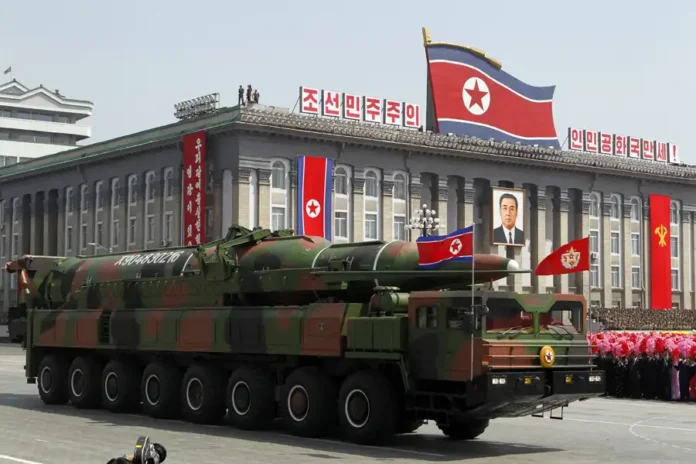

North Korea warned it could launch nuclear weapons if Kim Jong Un is killed, reflecting its expanded 2026 nuclear doctrine. The policy links regime survival directly to nuclear retaliation, raising concerns about military escalation, regional instability, and global security risks involving the United States, South Korea, and Japan.
KumDi.com
North Korea’s nuclear warning has intensified global security concerns after Pyongyang declared it could launch nuclear weapons if leader Kim Jong Un is assassinated or removed from power. The statement reflects North Korea’s evolving nuclear doctrine in 2026, where regime survival, military deterrence, and preemptive nuclear response are increasingly interconnected. Security analysts believe the warning is designed to discourage decapitation strikes by the United States and South Korea while strengthening Pyongyang’s strategic leverage in Northeast Asia.
Table of Contents
Understanding North Korea’s Nuclear Threat Strategy
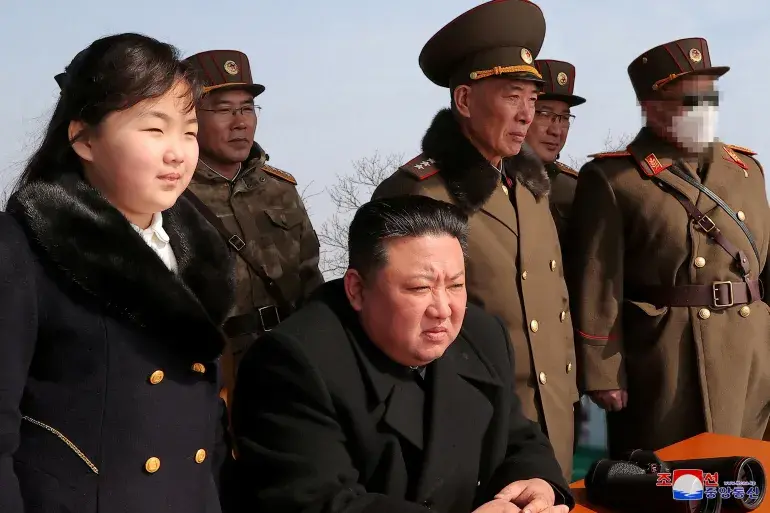
North Korea has repeatedly warned that it could launch nuclear weapons if leader Kim Jong Un is assassinated or if the regime believes its leadership is under imminent threat. The statement reflects Pyongyang’s evolving nuclear doctrine, which increasingly links the survival of the ruling government directly to the potential use of nuclear force.
As of 2026, analysts view these threats not simply as political rhetoric, but as part of a formalized deterrence strategy designed to prevent foreign military intervention, decapitation strikes, or regime-change operations. North Korea’s laws and military posture now explicitly allow preemptive nuclear use under certain conditions, especially if command-and-control structures or senior leadership are endangered.
The issue matters globally because North Korea possesses an expanding nuclear arsenal, growing missile capabilities, and increasingly sophisticated launch systems capable of reaching regional and intercontinental targets. Understanding what Pyongyang means when it threatens nuclear retaliation is essential for evaluating security risks in East Asia and the broader international system.
What Did North Korea Actually Say?
North Korean state media and official military statements over recent years have consistently emphasized that any attempt to kill or remove Kim Jong Un would trigger “immediate” and “overwhelming” retaliation. The regime has framed such action as an existential attack against the state itself.
This doctrine became clearer after North Korea codified its nuclear policy into law in 2022 and later reinforced it through military exercises and public declarations. The policy authorizes nuclear weapons use in situations including:
- Threats to national leadership
- Attempts to eliminate nuclear command systems
- Major military attacks against the state
- Imminent invasion scenarios
- Situations where conventional defeat appears likely
Security experts interpret this as a “use-it-or-lose-it” framework, where North Korea could decide to launch nuclear weapons before losing the ability to retaliate.
Why Kim Jong Un’s Survival Is Central to North Korea’s Strategy
The Political Structure of North Korea
North Korea operates under an extreme centralized leadership system. Unlike many nuclear states that rely on institutional command structures, Pyongyang’s political legitimacy is heavily tied to the Kim family dynasty.
In practical terms:
- Kim Jong Un serves as supreme military commander
- Strategic nuclear decisions are concentrated around his authority
- State ideology portrays the leader as essential to national survival
Because of this structure, an attack targeting Kim is viewed internally as equivalent to an attack on the state itself.
Deterrence Through Fear of Escalation
North Korea’s nuclear threats are primarily intended to deter adversaries. By declaring that leadership assassination would automatically trigger nuclear retaliation, Pyongyang seeks to make any decapitation strategy appear too dangerous.
Military strategists describe this as “asymmetric deterrence.” North Korea cannot match the conventional military power of the United States and its allies, so it relies on the threat of catastrophic escalation.
How North Korea’s Nuclear Doctrine Has Changed
Earlier Nuclear Policy
In previous decades, North Korea generally framed its nuclear weapons as defensive tools meant to prevent invasion.
However, over time, the doctrine evolved from:
- “Deterrence only”
to: - “Conditional first use”
This shift is one of the most significant security developments in Northeast Asia.
Modern Doctrine in 2026
Current doctrine includes:
- Tactical nuclear weapons deployment
- Preemptive strike options
- Automated retaliation concepts
- Expanded missile launch platforms
- Battlefield nuclear scenarios
North Korea now publicly discusses nuclear weapons not merely as political tools, but as usable military assets.
What Happens if Kim Jong Un Is Assassinated?
Potential Nuclear Command Scenarios
One major concern among defense experts is whether North Korea has delegated launch authority in advance.
Possible scenarios include:
1. Centralized Retaliation
Military commanders wait for confirmed orders before launching.
Risk level:
- Lower chance of accidental launch
- Higher chance leadership paralysis prevents response
2. Predelegated Nuclear Authority
Certain commanders receive authority to launch if leadership is destroyed.
Risk level:
- Faster retaliation capability
- Greater risk of unauthorized or mistaken launch
3. Automated Retaliation Systems
Some analysts speculate North Korea could develop mechanisms similar to Cold War “dead hand” systems.
Risk level:
- Extremely dangerous escalation potential
- Limited public evidence currently exists
Most intelligence assessments suggest North Korea likely maintains a hybrid model combining centralized control with contingency launch planning.
Why the United States and South Korea Take These Threats Seriously
Decapitation Strategy Concerns
South Korea and the United States have historically discussed “decapitation” operations during wartime planning. These operations aim to disable leadership and command infrastructure quickly during conflict.
North Korea views such plans as proof that regime survival is under direct threat.
As a result:
- Pyongyang conducts missile drills simulating nuclear strikes
- Underground bunkers and mobile launchers are expanded
- Leadership protection systems are strengthened
The cycle contributes to growing military tension across the Korean Peninsula.
North Korea’s Nuclear Capabilities in 2026
Estimated Arsenal
Independent defense estimates suggest North Korea may possess:
- 50–90 nuclear warheads
- Enough fissile material for additional weapons
- Tactical and strategic nuclear systems
Precise numbers remain uncertain because of the country’s secrecy.
Missile Systems
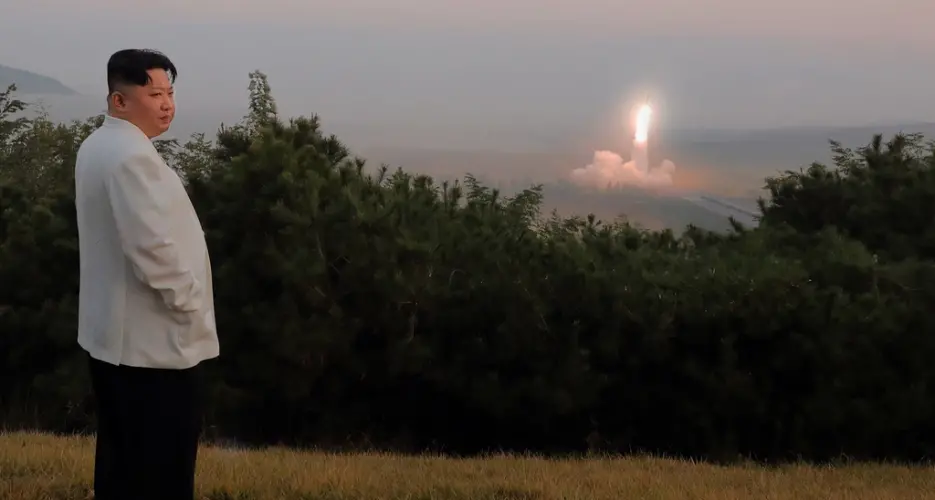
North Korea has tested:
- Intercontinental ballistic missiles (ICBMs)
- Submarine-launched ballistic missiles (SLBMs)
- Hypersonic missile systems
- Solid-fuel mobile launch platforms
These systems increase survivability and reduce warning times for adversaries.
Could North Korea Actually Launch Nuclear Weapons?
Expert Assessment
Most security experts believe North Korea’s leadership understands that initiating nuclear war would likely lead to regime destruction.
However, the danger lies in:
- Miscalculation
- Communication failures
- Escalation during crisis
- Leadership instability
- False assumptions during military conflict
Nuclear strategy often depends less on intent and more on uncertainty. Even if Pyongyang never plans to launch first, adversaries must prepare for the possibility.
Regional and Global Risks
Risks to South Korea and Japan
Countries most immediately threatened include:
- South Korea
- Japan
Potential consequences include:
- Civilian mass casualties
- Economic collapse
- Infrastructure destruction
- Radiation contamination
- Refugee crises
Major urban centers remain within missile range.
Risks to the United States
North Korea’s long-range missile development means parts of the continental United States may also face potential threat scenarios.
This has transformed the issue from a regional security challenge into a global strategic concern.
How China and Russia View the Situation
China’s Position
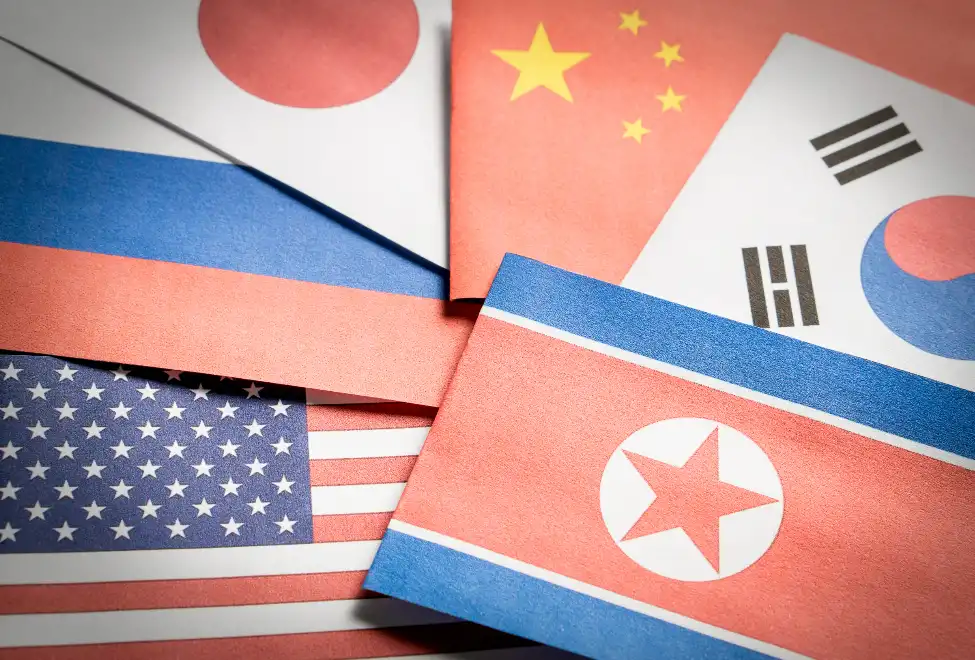
China generally opposes instability on the Korean Peninsula. Beijing fears:
- Refugee flows
- Regional war
- U.S. military expansion near its borders
- Sudden regime collapse
China therefore often prioritizes stability over maximum pressure policies.
Russia’s Perspective
Russia has increasingly aligned diplomatically with North Korea amid broader geopolitical tensions. While Moscow officially supports denuclearization, it also criticizes Western military pressure in the region.
Could Diplomacy Still Reduce the Threat?
Past Negotiation Efforts
Diplomatic initiatives have included:
- Six-Party Talks
- U.S.–North Korea summits
- Sanctions negotiations
- Arms freeze proposals
Most efforts stalled due to disagreements over:
- Verification
- Sanctions relief
- Security guarantees
- Sequencing of denuclearization
Modern Diplomatic Challenges
In 2026, negotiations remain difficult because North Korea increasingly treats nuclear weapons as permanent and essential to regime survival.
This makes complete denuclearization far less likely than:
- Arms control agreements
- Risk-reduction mechanisms
- Communication hotlines
- Crisis management frameworks
Why Nuclear Deterrence Remains Fragile
The Problem of Escalation
One of the greatest dangers in nuclear strategy is rapid escalation during confusion.
For example:
- Conventional conflict begins
- Leadership fears assassination
- Nuclear forces enter alert status
- Opponents interpret movements as preparation for launch
- Preemptive strikes become more likely
This “escalation ladder” is a central concern among military planners.
Key Takeaways
What North Korea’s Threat Means
North Korea’s warning that it would launch nuclear weapons if Kim Jong Un were killed reflects:
- A formalized nuclear doctrine
- Regime survival strategy
- Deterrence against decapitation strikes
- Increasing reliance on nuclear coercion
Why the World Watches Closely
The concern is not only intentional nuclear war, but also:
- Miscalculation
- Crisis instability
- Weak communication during conflict
- Accidental escalation
The Bigger Strategic Reality
North Korea’s nuclear posture in 2026 demonstrates how modern deterrence increasingly depends on leadership survival, rapid-response systems, and psychological signaling rather than traditional battlefield dynamics alone.
For policymakers, military planners, and global observers, the issue remains one of the most dangerous unresolved security challenges in the world today.
FAQs
Why did North Korea issue a nuclear warning about Kim Jong Un?
North Korea issued the nuclear warning to deter assassination attempts or military “decapitation strikes” targeting Kim Jong Un. Under the North Korea nuclear doctrine, the regime considers threats to its leadership as threats to national survival, potentially triggering nuclear retaliation.
What does North Korea’s 2026 nuclear doctrine mean?
North Korea’s 2026 nuclear doctrine expands its ability to use nuclear weapons preemptively. The Kim Jong Un nuclear doctrine allows nuclear response during leadership threats, military invasions, or attacks on strategic command systems.
Could North Korea actually launch nuclear weapons if Kim Jong Un is killed?
Defense experts believe North Korea maintains contingency plans for nuclear retaliation if Kim Jong Un is killed. While an actual launch would risk massive retaliation, the North Korea nuclear threat 2026 is viewed seriously because of escalating military tensions.
Why are the United States and South Korea concerned about North Korea’s nuclear policy?
The United States and South Korea worry that North Korea’s preemptive nuclear policy increases the risk of miscalculation during conflict. Military exercises, missile testing, and leadership-targeting strategies could rapidly escalate into a nuclear crisis.
How does North Korea’s nuclear warning affect global security?
The North Korea nuclear warning increases geopolitical instability across Asia and beyond. Experts warn that Kim Jong Un nuclear doctrine and expanding missile capabilities could impact South Korea, Japan, the United States, and global financial and security systems.




 and then