








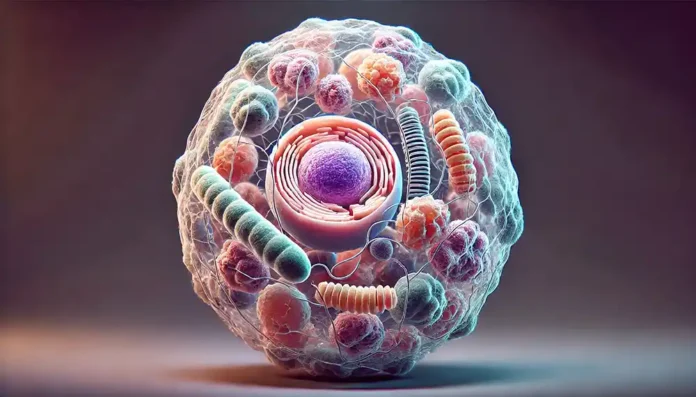

What Is Zuckerberg’s $500M AI Biology Project? Mark Zuckerberg’s Chan Zuckerberg Biohub launched a $500 million Virtual Biology Initiative to use artificial intelligence for simulating human cells and biological systems. The project aims to accelerate disease research, drug discovery, and precision medicine through AI-powered cellular modeling.
KumDi.com
Artificial intelligence is rapidly expanding beyond chatbots, search engines, and automation into one of the most complex scientific frontiers in history: human biology. In 2026, Mark Zuckerberg and Priscilla Chan significantly accelerated that movement through a new $500 million initiative focused on creating AI-powered simulations of human cells.
The project, launched through the Chan Zuckerberg Biohub, is called the “Virtual Biology Initiative.” Its objective is to generate massive biological datasets and train advanced AI systems capable of predicting how human cells behave in health and disease. Researchers hope this could dramatically accelerate drug discovery, disease research, and precision medicine.
Rather than creating artificial humans, the initiative aims to build predictive computational models of cellular biology — essentially digital systems that can simulate how cells respond to infections, aging, cancer, medication, and genetic mutations. Scientists believe this could eventually reduce reliance on slow laboratory experimentation and improve understanding of complex diseases.
Table of Contents
What Is Zuckerberg’s $500 Million AI Biology Project?
The new Biohub initiative represents one of the largest AI-driven biology investments announced in 2026.
According to Biohub, the organization will invest:
- $400 million into internal biological data generation and AI infrastructure
- $100 million into external research collaborations and global scientific partnerships
The project’s central mission is to create “predictive models of the cell,” meaning AI systems capable of digitally simulating cellular behavior with increasing accuracy.
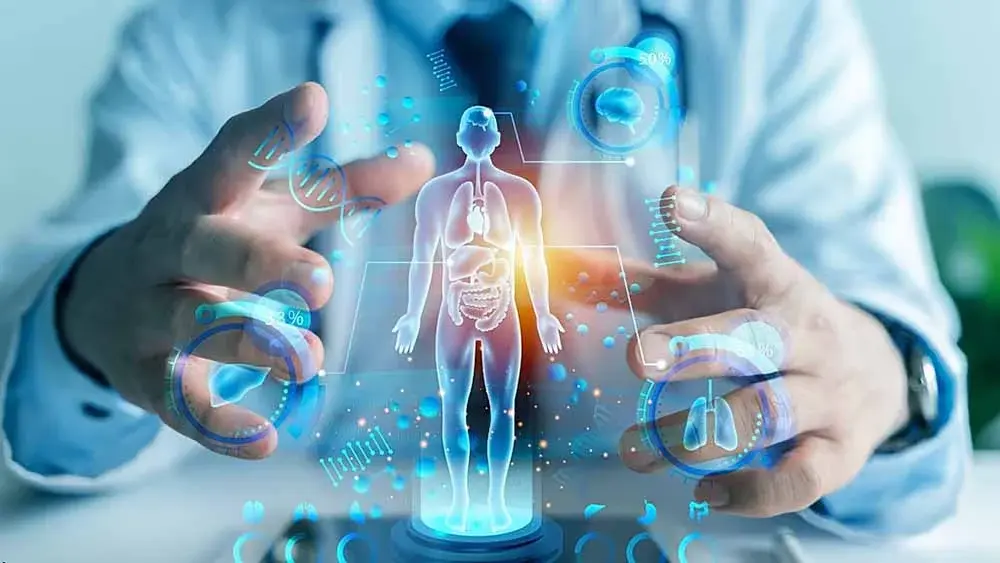
Researchers involved in the initiative describe the effort as creating the foundation for “virtual cells” or “digital twins” of biological systems.
Why Simulating Human Biology Matters
Human biology is extraordinarily complicated.
Every human cell contains:
- DNA instructions
- Protein networks
- Molecular signaling pathways
- Metabolic systems
- Environmental responses
- Immune interactions
Even small disruptions can contribute to diseases such as:
- Cancer
- Alzheimer’s disease
- Diabetes
- Autoimmune disorders
- Cardiovascular disease
Traditionally, scientists study these systems through laboratory experiments, animal testing, and clinical trials. While effective, those methods are expensive, slow, and resource-intensive.
AI-driven biological simulation could allow researchers to test scientific hypotheses digitally before moving into physical experimentation.
For example:
| Traditional Research | AI-Assisted Biological Simulation |
|---|---|
| Physical lab testing required first | Virtual testing can occur before lab validation |
| Slow trial-and-error process | Faster prediction of outcomes |
| Limited experimental combinations | Massive-scale computational modeling |
| Expensive early-stage drug screening | Reduced failed drug candidates |
The goal is not to replace laboratories entirely but to accelerate discovery and improve prediction accuracy.
What Is the Virtual Biology Initiative?
The Chan Zuckerberg Biohub describes the Virtual Biology Initiative as a coordinated global effort to generate enough high-quality biological data to train AI systems capable of understanding life at the cellular level.
Researchers involved say the biggest obstacle is not necessarily AI algorithms themselves, but the lack of sufficiently large and detailed biological datasets.
Alex Rives, Biohub’s Head of Science, explained that current scientific datasets remain too limited to model the “full complexity of biology.”
The initiative plans to generate enormous quantities of:
- Single-cell sequencing data
- Molecular imaging data
- Tissue-level biological measurements
- Spatial biology datasets
- Cellular interaction maps
Importantly, Biohub states that many of these datasets will be made openly available to researchers worldwide.
How AI Simulates Human Cells
AI-powered biological simulation combines several scientific disciplines:
- Artificial intelligence
- Systems biology
- Genomics
- Computational chemistry
- Molecular imaging
- High-performance computing
The process generally follows several stages.
1. Massive Biological Data Collection
Scientists gather biological information from:
- Hospitals
- Clinical studies
- Genomic databases
- Tissue samples
- Microscopy systems
- Single-cell sequencing platforms
This data forms the training foundation for AI systems.
2. Pattern Recognition Through Machine Learning
AI models identify relationships that humans may not easily detect.
Examples include:
- Hidden mutation patterns
- Drug-response signatures
- Cellular aging markers
- Protein interaction networks
- Early disease biomarkers
This process resembles how large language models learn patterns in human text, except biological AI models learn patterns in cells and molecular systems.
3. Predictive Cellular Modeling
The AI attempts to forecast biological outcomes.
Examples include:
- How tumors evolve
- Which drugs may work best
- How viruses infect tissues
- How inflammation spreads
- Why certain cells become resistant to treatment
Over time, increasingly accurate models may allow scientists to simulate disease progression digitally.
The Rise of “Virtual Cells”
One of the most important concepts behind this initiative is the idea of virtual cells.
A virtual cell is a computational model trained to predict cellular behavior under different biological conditions.
Potential capabilities include:
| Virtual Cell Function | Potential Medical Use |
|---|---|
| Predicting gene expression | Precision medicine |
| Simulating drug interactions | Faster pharmaceutical research |
| Modeling immune responses | Vaccine development |
| Forecasting mutation behavior | Cancer treatment planning |
| Studying aging pathways | Longevity research |
Current systems remain limited and highly specialized, but researchers believe the technology could become substantially more powerful over the next decade.
AI Biology Is Becoming a Global Race
The Biohub project is part of a much broader movement where major technology and biotech organizations are investing heavily in computational biology.
The initiative includes collaboration with institutions such as:
- Allen Institute
- Broad Institute
- Wellcome Sanger Institute
- NVIDIA
- Human Cell Atlas collaborators
AI companies increasingly view biology as one of the most valuable future applications for machine learning because living systems generate extraordinarily large and complex datasets.
Potential Medical Applications
Cancer Research
Cancer remains one of the primary targets for AI biology systems.
Tumors evolve rapidly and differ between patients, making prediction difficult.
AI cellular simulation could help researchers:
- Predict treatment resistance
- Model tumor evolution
- Personalize therapies
- Detect cancer earlier
- Identify hidden biomarkers
Some oncology centers already use AI-assisted genomic interpretation in clinical workflows.
Drug Discovery
Traditional pharmaceutical development often requires more than a decade and billions of dollars.
Biological simulation could reduce early-stage drug failure by allowing researchers to digitally test compounds before laboratory trials.
Potential benefits include:
- Faster drug development
- Reduced research costs
- Improved targeting accuracy
- Better rare disease research
Aging and Longevity Science
Researchers increasingly study how cells deteriorate over time.
AI systems may help scientists identify:
- Cellular senescence pathways
- Regenerative mechanisms
- Inflammatory aging signals
- DNA repair processes
This area has become a major focus for biotechnology investment globally.
Infectious Disease Research
The COVID-19 pandemic accelerated interest in predictive biology systems.
AI-driven cellular simulation may improve understanding of:
- Viral replication
- Immune system behavior
- Vaccine responses
- Mutation evolution
This could strengthen future pandemic preparedness.
Why the Project Faces Major Challenges
Despite significant optimism, experts caution that fully simulating human biology remains extraordinarily difficult.
Biological Complexity
A single human cell contains millions of dynamic interactions occurring simultaneously.
Entire tissues and organs introduce even greater complexity.
Modern AI systems still struggle with:
- Long-term biological prediction
- Multi-system interactions
- Dynamic environmental variables
- Incomplete biological knowledge
Data Quality Limitations
AI accuracy depends heavily on training data quality.
Challenges include:
- Incomplete datasets
- Biased patient populations
- Inconsistent experimental methods
- Limited rare disease data
Researchers repeatedly emphasize that more biological data alone is insufficient without high-quality standards.
Massive Computing Requirements
Biological AI systems require enormous computing infrastructure.
That includes:
- Advanced GPUs
- High-capacity storage systems
- Specialized AI hardware
- Cloud-scale computation
This explains why partnerships with companies such as NVIDIA are strategically important.
Ethical and Privacy Concerns
The initiative also raises major ethical questions.
Genetic Data Privacy
Biological datasets can contain highly sensitive information.
Concerns include:
- DNA privacy
- Unauthorized data sharing
- Biometric surveillance risks
- Insurance discrimination
Public trust will likely become one of the defining issues of AI-driven biology.
Ownership of Human Biological Data
Debates continue regarding who owns biological information:
- Patients?
- Research institutions?
- Governments?
- Technology organizations?
As AI systems require increasingly large datasets, governance frameworks will become increasingly important.
Reliability of AI in Medicine
AI predictions can sometimes be inaccurate or misleading.
Medical systems require:
- Human oversight
- Clinical validation
- Regulatory review
- Experimental confirmation
Current AI biology tools assist researchers but do not replace scientific testing.
Is Zuckerberg Trying to “Cure All Disease”?
The long-term vision associated with the Chan Zuckerberg Initiative has often been described as helping cure, prevent, or manage all disease over time.
However, scientists involved in the current initiative acknowledge that such goals remain extremely ambitious.
Even Biohub leadership has noted that the current five-year, $500 million commitment is only an early step toward developing sufficiently accurate predictive biological systems.
Most experts believe meaningful breakthroughs will first appear in narrower applications such as:
- Drug target discovery
- Cancer prediction
- Protein interaction modeling
- Precision medicine workflows
The Future of AI-Powered Biology
The convergence of artificial intelligence and biology is increasingly viewed as one of the defining scientific trends of the decade.
Researchers believe future advances may enable:
- Personalized medicine at scale
- Earlier disease detection
- AI-guided therapeutics
- Organ-level digital simulations
- Faster vaccine development
- Predictive health monitoring
Still, experts caution that fully accurate simulation of the human body remains a long-term scientific challenge rather than an immediate reality.
Near-term progress will likely come from highly specialized biological AI systems designed to solve specific medical problems rather than fully model the entire human body.
Conclusion
Mark Zuckerberg’s backing of the $500 million Virtual Biology Initiative marks one of the most ambitious attempts yet to combine artificial intelligence with human cellular biology.
Through the Chan Zuckerberg Biohub, researchers aim to generate enormous open biological datasets capable of powering predictive AI models of human cells. The long-term vision is to better understand disease mechanisms, accelerate medical discovery, and improve treatment development through computational biology.
Although true whole-human biological simulation remains far beyond current technology, AI-driven cellular modeling already shows promise in cancer research, drug discovery, genomics, and precision medicine.
Rather than science fiction, the initiative reflects a broader transformation in how medicine may increasingly rely on data, machine learning, and large-scale computational systems to understand the fundamental mechanics of human life.
FAQs
What is the Chan Zuckerberg Virtual Biology Initiative?
The Virtual Biology Initiative is a $500 million research project backed by the Chan Zuckerberg Initiative and Biohub to develop AI systems capable of simulating human cellular biology for medical research and drug discovery.
Is Mark Zuckerberg trying to create artificial humans?
No. Mark Zuckerberg is supporting research focused on computational biology and predictive cell modeling, not creating conscious artificial humans. The goal is to better understand disease and improve medical treatments.
How can AI simulate human cells?
AI systems analyze massive biological datasets such as DNA sequences, protein interactions, and cellular imaging. Machine learning models then predict how cells respond to diseases, medications, mutations, or environmental changes.
What medical fields could benefit from AI biology simulation?
Potential applications include cancer research, drug development, infectious disease modeling, personalized medicine, aging research, and precision therapeutics.
Why is cellular-level biology simulation important?
Human biology is extremely complex and difficult to study through traditional experiments alone. AI-driven cellular simulation may help scientists accelerate research, reduce drug development costs, and predict disease behavior more accurately.




 and then