










Superhabitable planets are hypothetical worlds that could offer better conditions for life than Earth. Scientists suggest that some may have stable climates, extensive shallow oceans, and long-lived host stars. However, no planet has been confirmed to be more habitable than Earth or to support extraterrestrial life.
KumDi.com
Earth is the only planet currently known to support life, but that does not necessarily mean it is the best possible planet for life in the universe. Scientists studying planetary habitability have proposed that some worlds could offer more favorable conditions for biological productivity than Earth, including longer-lasting habitable environments, extensive shallow oceans, and relatively stable climates. These hypothetical planets are sometimes described as superhabitable worlds.
The concept challenges a familiar assumption in astronomy: that Earth represents the ideal standard for a life-supporting planet. Research suggests that planets slightly larger than Earth, orbiting suitable stars and maintaining the right balance of water, nutrients, and climate stability, might provide better conditions for certain forms of life. However, no superhabitable planet has been confirmed, and scientists have not discovered extraterrestrial life. The distinction is important: identifying a world that could support life is not the same as demonstrating that life actually exists there.
Table of Contents
What Is a Superhabitable Planet?
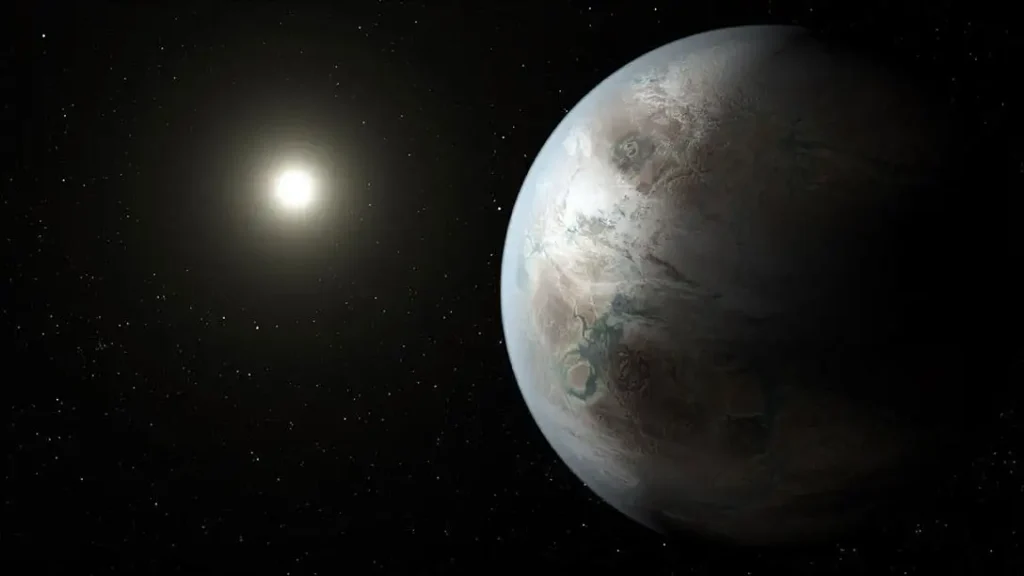
A superhabitable planet is a hypothetical world that could provide more favorable conditions for life than Earth, particularly for the development and persistence of complex organisms. The term is used in astrobiology, the scientific study of life in the universe, to broaden the search beyond planets that merely resemble our own.
Earth provides the only confirmed example of a living planet. Scientists therefore use its atmosphere, surface water, geological activity, magnetic environment, and temperature range as reference points when evaluating other worlds. Yet the fact that life emerged and survived here does not prove that every feature of Earth is optimal for life.
A superhabitable world might have several advantageous characteristics:
- A somewhat larger size: Greater mass could help a planet retain its atmosphere and internal heat for longer, within suitable limits.
- Extensive shallow seas: Sunlit, nutrient-rich waters could support high levels of biological productivity.
- A stable climate: Moderate temperature fluctuations could allow ecosystems to persist over long periods.
- A favorable host star: A long-lived, relatively stable star could provide energy for billions of years.
- Active nutrient cycling: Geological processes could replenish essential elements needed by living organisms.
These are scientific hypotheses, not a checklist that guarantees habitability. A planet must balance many interacting factors, and the conditions that benefit microorganisms may differ from those that support complex multicellular life.
Why Earth May Not Be the Ideal Planet for Life
The idea of a planet better suited to life comes from an important distinction: a planet can be habitable without being maximally favorable for biological growth and diversity.
In a 2020 peer-reviewed study published in Astrobiology, researchers Dirk Schulze-Makuch, René Heller, and Edward Guinan explored the characteristics that might make certain planets more suitable for life than Earth. Their analysis considered stellar age, planetary size, temperature, and the availability of environments where life could flourish. The authors also identified 24 potential superhabitable planet candidates based on available astronomical data and their proposed criteria. These were candidates for further investigation, not confirmed superhabitable planets.
Several features explain why a different world might outperform Earth in particular measures of habitability.
1. Earth Could Be Too Young Compared With Some Potentially Better Worlds
Earth is approximately 4.5 billion years old, and life has existed here for billions of years. However, the emergence of complex organisms took a substantial portion of Earth’s history.
A planet that formed earlier around a long-lived, stable star might have had more time to develop persistent ecosystems. If its environment remained favorable, biological evolution could potentially progress for longer than it has on Earth.
Researchers have considered stars somewhat cooler and less massive than the Sun, particularly K-type stars, as interesting candidates because they can remain on the main sequence for much longer than Sun-like stars.
There is an important qualification: more time does not automatically mean more life or greater biodiversity. A planet must also maintain liquid water, suitable chemistry, accessible energy, and environmental conditions that allow organisms to survive. Stellar flares, atmospheric loss, or geological changes could make an old planet less hospitable rather than more so.
2. A Larger Rocky Planet Might Retain Heat and Atmosphere Longer
Planetary size can influence habitability through gravity, internal heat, and geological activity.
A somewhat more massive rocky planet could retain an atmosphere more effectively and potentially sustain internal geological processes for an extended period. Geological activity matters because it can help cycle carbon and other elements between the atmosphere, oceans, and planetary interior.
For example, Earth’s carbon cycle helps regulate its climate over geological timescales. Carbon dioxide enters the atmosphere through volcanic activity and is removed through processes that include weathering and the formation of carbonate minerals.
A planet with a favorable balance of internal heat and surface conditions might maintain this type of climate-regulating system for longer.
Nevertheless, bigger is not always better. If a planet becomes sufficiently massive, it may accumulate a thick atmosphere dominated by hydrogen and helium or develop conditions very different from those on a rocky world. Excessive atmospheric pressure, intense greenhouse warming, or an inaccessible ocean beneath a deep high-pressure ice layer could also limit habitability.
The most promising scenario is therefore not simply a larger Earth, but a rocky planet with a suitable mass, atmosphere, and geological history.
3. Shallow Oceans Could Support More Biological Productivity
Earth’s oceans contain enormous quantities of life, but not every marine environment receives the same amount of sunlight or nutrients.
Shallow seas can provide favorable conditions for photosynthetic organisms because sunlight penetrates the water, while coastal circulation and geological processes can supply essential nutrients. On Earth, continental shelves, coastal waters, and some upwelling zones support highly productive ecosystems.
A hypothetical planet with extensive shallow seas and relatively nutrient-rich waters could offer more space for photosynthetic life than a world dominated by deep oceans.
This does not mean that shallow oceans are universally superior. Deep-sea environments can support ecosystems powered by chemical energy rather than sunlight, including communities around hydrothermal vents. A planet’s overall productivity would depend on nutrient availability, water chemistry, circulation, light penetration, and the organisms present.
The broader scientific point is that the distribution and chemistry of water may matter as much as the total amount of water on a planet.
4. A Mildly Warmer Climate Could Benefit Some Forms of Life
The 2020 superhabitability study considered a mean surface temperature around 19°C as a potentially favorable condition for biological productivity, although this was a proposed criterion rather than a universal biological optimum.
A moderately warmer planet could, under suitable conditions, support a longer growing season or a greater range of productive aquatic environments. However, temperature alone cannot establish whether a world is more habitable than Earth.
Different organisms have different temperature requirements. Some microbes thrive in extremely hot environments, while others survive in ice, acidic water, or highly saline conditions. Complex organisms generally have more restricted environmental requirements.
A warmer planet could also experience more evaporation, heat stress, ocean circulation changes, or dangerous extremes. The relationship between temperature and habitability is therefore complex: the most favorable climate would be one that supports sustained biological activity without creating widespread environmental instability.
What Conditions Does a Planet Need to Support Life?
Scientists cannot yet define a universal recipe for life because Earth is the only world where life has been confirmed. Nevertheless, research in astrobiology identifies several major factors that help researchers evaluate potentially habitable environments. NASA emphasizes that liquid water, an energy source, and essential chemical ingredients are central considerations when investigating life as we know it.
| Habitability factor | Why it matters |
|---|---|
| Liquid water or another suitable solvent | Enables chemical reactions and the movement of dissolved substances |
| Energy source | Powers metabolism and other processes that sustain life |
| Essential chemical elements | Supplies the building blocks required for biological molecules |
| Suitable atmosphere | Can regulate temperature, provide useful gases, and protect the surface |
| Climate stability | Helps maintain habitable environments over extended periods |
| Appropriate stellar environment | Limits harmful radiation and excessive atmospheric erosion |
| Geological and chemical cycling | Can replenish nutrients and regulate long-term environmental conditions |
These factors interact rather than operate independently. A planet may possess abundant water but lack accessible chemical energy. Another may orbit within its star’s habitable zone yet have lost most of its atmosphere.
For this reason, astronomers increasingly treat habitability as a multidimensional problem rather than a simple question of whether a planet resembles Earth.
The Habitable Zone: Why the Right Distance From a Star Is Not Enough
The habitable zone is the region around a star where a planet could potentially maintain liquid water on its surface, assuming suitable atmospheric conditions. It is often called the “Goldilocks zone” because a planet in this region receives neither too much nor too little stellar energy for surface liquid water to be possible.
However, being in the habitable zone does not guarantee that a planet can support life. NASA explains that atmospheric composition, planetary size, and stellar activity are also important considerations.
For example, a planet in the habitable zone could have lost its atmosphere, leaving its surface exposed to extreme temperature fluctuations. Another could possess a dense atmosphere that traps excessive heat. Both might orbit at an apparently favorable distance from their stars while remaining inhospitable.
A 2026 scientific review introduced the term euhabitability to emphasize a broader question: whether a planetary environment is genuinely suitable for life, rather than simply located where surface oceans might exist. The framework encourages researchers to consider factors such as nutrients, magnetic environments, and planetary conditions alongside orbital distance.
This approach could help scientists identify promising worlds that conventional habitable-zone screening overlooks, including some icy planets or moons that may contain subsurface oceans.
Which Exoplanets Could Be Better Than Earth?
Exoplanets are planets that orbit stars beyond our solar system. The following examples illustrate different research questions; none is confirmed to be more habitable than Earth.
Kepler-442b is a candidate for studying potentially temperate rocky worlds. Its estimated size and orbit have made it an interesting subject in discussions of habitability. However, important details about its atmosphere, surface water, and geological activity remain unknown.
Located roughly 120–124 light-years away, K2-18 b is a planet larger and more massive than Earth that orbits within the habitable zone of a cool dwarf star. The James Webb Space Telescope has investigated its atmospheric chemistry, including carbon-bearing molecules. Whether it has a surface or ocean environment capable of supporting life remains uncertain.
TRAPPIST-1e is one of seven known planets in the TRAPPIST-1 system, a compact system orbiting a red dwarf star. Its size and orbital position make it an important target for habitability research. As of December 2025, scientists were still investigating the atmospheres of several planets in the system, and the available evidence did not establish that TRAPPIST-1e supports life.
These worlds illustrate a central challenge in exoplanet science: astronomers can often estimate a planet’s size, orbit, and mass more readily than they can determine what its surface is actually like.
A planet may appear promising from a distance but turn out to have no atmosphere, extreme temperatures, or an environment unsuitable for biology. Conversely, a world with unfamiliar conditions could possess a potentially habitable environment that current models do not fully capture.
How Scientists Search for Life on Distant Planets
Scientists cannot ordinarily visit exoplanets to collect soil or water samples. Instead, they combine astronomical observations, laboratory experiments, and computer models to evaluate their environments.
The process typically involves several stages.
- Discovering the planet. Telescopes detect planets by measuring changes in a star’s brightness or by observing the gravitational influence a planet has on its star.
- Estimating planetary properties. Researchers calculate orbital distance, radius, mass, and other characteristics to assess whether the world could be rocky and potentially temperate.
- Investigating the atmosphere. When conditions permit, telescopes analyze starlight filtered through a planet’s atmosphere or light emitted and reflected by the planet. These measurements can reveal the presence of gases and other atmospheric features.
- Modeling environmental conditions. Scientists use atmospheric chemistry, climate simulations, and geological models to investigate whether liquid water and suitable chemical environments could persist.
- Evaluating possible biosignatures. Researchers search for combinations of gases or other signals that might indicate biological activity while testing nonbiological explanations.
NASA’s James Webb Space Telescope has expanded the ability to study exoplanet atmospheres. However, detecting a molecule associated with life on Earth does not automatically establish that life exists elsewhere. Scientists need additional observations and independent lines of evidence to distinguish biological signals from processes that can occur without life.
For instance, atmospheric oxygen may be produced by biological activity, but certain nonbiological processes can also generate oxygen under particular conditions. Interpreting a potential biosignature therefore requires knowledge of the planet’s wider environment.
Could Life Exist on a Planet That Is Not Earth-Like?
Yes. Life beyond Earth, if it exists, might inhabit environments substantially different from those on our planet.
On Earth, organisms survive in acidic waters, polar ice, deep-sea hydrothermal systems, and other environments that were once considered extremely hostile. These organisms, often called extremophiles, demonstrate that life can tolerate a wider range of conditions than familiar surface ecosystems might suggest.
Scientists consequently investigate several possible extraterrestrial environments:
- Rocky planets with liquid-water oceans and atmospheres.
- Icy worlds with subsurface oceans, potentially heated by internal energy.
- Planets with unusual atmospheric compositions that might still support biological chemistry.
- Environments where chemical reactions, rather than sunlight, provide the primary energy source.
This does not mean that life can survive under any conditions. Organisms still require a workable combination of chemistry, energy, and environmental stability. Rather, Earth’s extremophiles provide evidence that the boundaries of habitability may be broader than the conditions found in familiar terrestrial ecosystems.
The possibility of life in unusual environments also illustrates why searching only for an exact copy of Earth could overlook scientifically important discoveries.
What Are the Biggest Obstacles to Finding a Superhabitable Planet?
Although astronomers have discovered thousands of exoplanets, establishing whether any is more habitable than Earth remains difficult.
Limited observational detail: Most exoplanets appear as faint signals mixed with the light of their host stars. Their surfaces and oceans cannot generally be examined directly.
Uncertain atmospheric conditions: Even when scientists identify atmospheric gases, they may not know the planet’s surface pressure, cloud coverage, or precise climate.
The problem of false positives: Some chemical signatures associated with life can also arise through nonbiological processes.
Unknown biological diversity: Scientists have only one confirmed example of a living planet. It is therefore difficult to determine which conditions favor life in general and which favor life as it developed on Earth.
The difficulty of defining “better”: A world that supports abundant microbial life might not be especially favorable for complex organisms. Likewise, a planet with high biological productivity might not remain habitable for as long as another world with a lower but more stable level of productivity.
These limitations mean that superhabitability is currently a research framework rather than an established classification of confirmed living planets.
FAQs
What are superhabitable planets, and could they be better than Earth?
Superhabitable planets are hypothetical worlds that may offer better conditions for life than Earth. They could have stable climates, extensive shallow oceans, and long-lived host stars. However, scientists have not confirmed that any planet is more habitable than Earth.
Have scientists discovered any planets better than Earth for life?
No planet has been confirmed to be better than Earth for life. Scientists have identified potentially habitable exoplanets, but their atmospheres, surface conditions, and biological status remain uncertain. These worlds are candidates for further research, not proven superhabitable planets.
What makes a planet more habitable than Earth?
A potentially superhabitable planet might have a stable climate, suitable atmospheric pressure, liquid water, accessible nutrients, and a long-lived, relatively stable star. Planetary size and geological activity may also influence habitability, but no single characteristic guarantees that a world can support life.
What are the most promising habitable exoplanets scientists are studying?
Scientists study exoplanets such as TRAPPIST-1e, Kepler-442b, and K2-18 b to investigate planetary environments and potential habitability. Their sizes, orbits, or atmospheric properties make them scientifically interesting, but none has been confirmed to support life or to be more habitable than Earth.
Can superhabitable planets support extraterrestrial life?
Superhabitable planets could potentially support extraterrestrial life if they provide suitable chemistry, energy sources, liquid water or another compatible solvent, and stable environmental conditions. However, superhabitability remains a scientific hypothesis, and no extraterrestrial life has been confirmed.
Conclusion: Earth May Be Habitable Without Being the Universal Ideal
The possibility that Earth is not the best planet for life is a serious scientific question, not evidence that astronomers have discovered a superior inhabited world.
Research into superhabitable planets encourages scientists to look beyond familiar Earth-like conditions and consider how planetary size, stellar longevity, oceans, climate, and geological processes interact. The newer concept of euhabitability further emphasizes that a planet’s potential to support life depends on its complete environment, not simply its distance from a star.
As telescopes improve and scientists develop more sophisticated planetary models, researchers may identify worlds with conditions that are more favorable for certain forms of life than those found on Earth. Whether such worlds actually exist, whether life emerges on them, and whether their environments prove more hospitable over geological timescales remain open questions.
The most scientifically accurate conclusion is that Earth is the only confirmed living planet, but it may not represent the full range of environments capable of supporting life. That possibility is one of the strongest reasons to continue exploring planets beyond our solar system.




 and then