








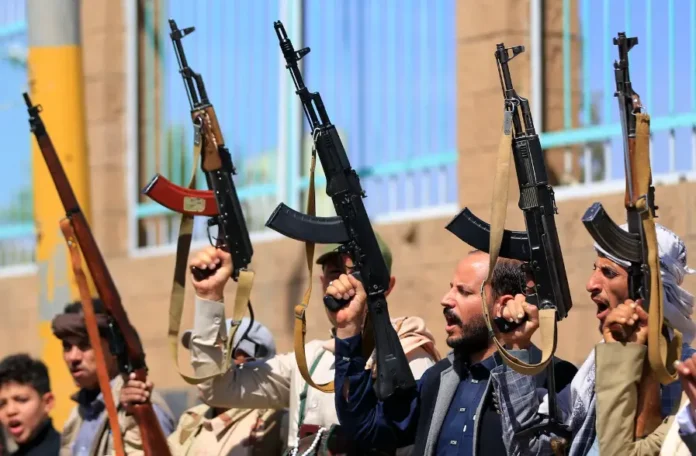

Saudi Arabia vows retaliation against Houthis after deadly attacks on Riyadh’s King Khalid International Airport. The escalation raises concerns about civilian safety, regional security, military retaliation and international aviation. The next developments will depend on Saudi Arabia’s response, Houthi actions and diplomatic efforts to prevent wider conflict.
KumDi.com
Saudi Arabia has vowed a decisive response after a series of Houthi attacks on its airports, including a deadly strike on King Khalid International Airport in Riyadh on October 10, 2026. Saudi authorities initially reported 12 deaths and more than 300 injuries, while a further attack on October 11 killed one person and injured 11 others. The Houthis claimed responsibility for the October 10 attack, escalating an already intensifying confrontation between the Saudi-led coalition and the armed movement in Yemen.
The crisis raises urgent questions about Saudi Arabia’s military response, the Houthis’ growing ability to threaten critical infrastructure, and the risk of a wider Middle Eastern conflict. Saudi Arabia must now balance its objective of deterring further attacks with the need to protect civilians, maintain aviation security and prevent regional tensions from escalating further. The situation also has implications for international travel, energy markets and shipping through strategically important maritime routes.
Key Takeaways
- Saudi Arabia’s response: The Saudi-led coalition has vowed a firm response and reported military operations against Houthi targets.
- Casualties: The October 10 Riyadh airport attack initially killed 12 people and injured more than 300. A subsequent attack caused another death and 11 injuries.
- Houthi responsibility: The Houthis claimed responsibility for the October 10 attack and warned airlines and travelers about operating in Saudi airspace.
- Regional security: Continued attacks and retaliatory strikes could increase the risk of a wider conflict.
- Global consequences: Aviation disruption, maritime insecurity and potential threats to energy infrastructure could affect international trade.
Table of Contents
1. What Happened in the Riyadh Airport Attack?
King Khalid International Airport is one of Saudi Arabia’s principal aviation hubs, connecting Riyadh with major destinations across Asia, Europe, Africa and the Middle East. An attack on its passenger facilities therefore represents a serious security incident with consequences extending beyond the immediate area.
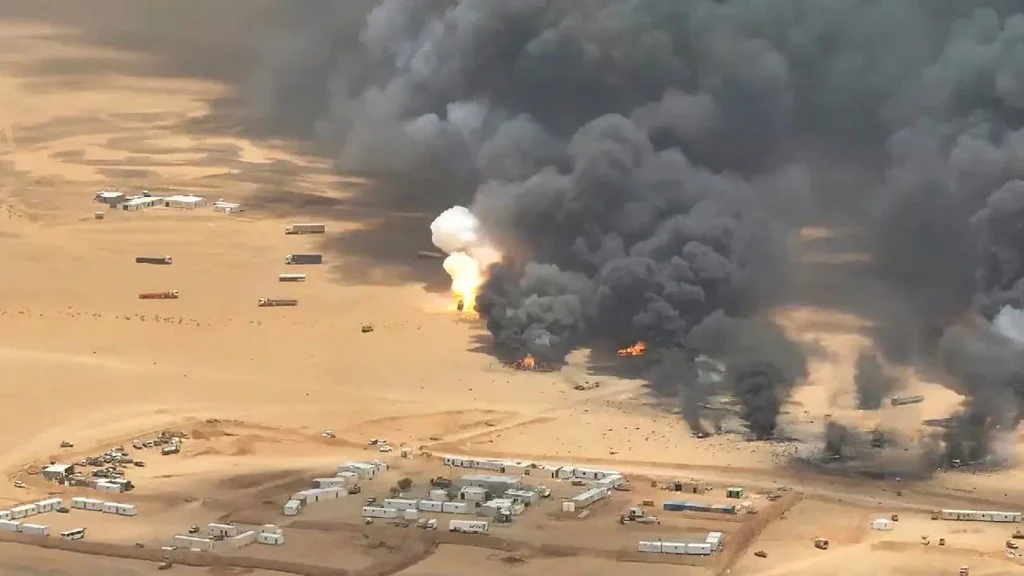
On October 10, Saudi Arabia’s General Authority of Civil Aviation reported that an attack on the airport killed at least 12 people and injured approximately 309 others. The casualties included Saudi citizens and foreign nationals. Several injured people were reported to be in critical condition.
The incident followed earlier attacks on Saudi airports during the same week, including an October 8 strike on Riyadh airport that killed three Saudi citizens, including an airline pilot, according to Saudi authorities.
On October 11, another projectile struck terminals 3 and 4 at King Khalid International Airport. Saudi authorities reported one additional death and 11 injuries. The repeated incidents prompted further security measures and disruptions to airport operations.
According to reporting by Al Jazeera, the latest casualty was a Pakistani resident of Saudi Arabia.
The sequence of attacks has raised serious concerns about the protection of civilian aviation infrastructure and the effectiveness of existing security arrangements.
Why the attack is significant
The significance of the incident extends beyond the number of casualties.
First, the targeting of a major international airport threatens civilians, including passengers, airport employees, airline personnel and emergency responders.
Second, repeated attacks can disrupt flights, cargo movements and international connections even when damage is confined to particular terminals or airport facilities.
Third, the attacks demonstrate that Saudi Arabia faces a continuing security challenge that may require a combination of defensive systems, intelligence cooperation, diplomatic engagement and carefully targeted military operations.
The immediate priorities are to protect civilians, establish the circumstances of each incident and reduce the risk of further attacks.
2. Why Has Saudi Arabia Vowed Retaliation?
Saudi Arabia’s threat of retaliation reflects the severity of the attacks and the government’s responsibility to protect its population and critical infrastructure.
The Saudi-led coalition has described the airport attack as a grave violation and vowed a decisive response. Coalition forces have also reported strikes against Houthi military targets as fighting has intensified.
Saudi Arabia’s response is likely to be shaped by three principal objectives.
Protecting civilians and critical infrastructure
The first objective is to prevent additional attacks on airports, cities, energy facilities and other essential infrastructure.
Possible measures include strengthening air defenses, improving early-warning systems, expanding intelligence cooperation and disrupting the missile and drone capabilities used to threaten Saudi territory.
However, defensive measures alone may not eliminate the threat if armed groups retain the ability to launch attacks from dispersed or mobile positions.
Restoring deterrence
Deterrence is the effort to discourage an adversary from taking a particular action by demonstrating that the expected costs outweigh the potential benefits.
Saudi Arabia may seek to demonstrate that attacks against civilian facilities will trigger significant consequences.
Yet retaliation does not automatically produce deterrence. If the Houthis respond to Saudi military operations with additional attacks, the confrontation could become a cycle of escalation.
The effectiveness of Saudi Arabia’s strategy will therefore depend on whether its actions reduce the frequency and severity of future attacks.
Maintaining economic and international confidence
Saudi Arabia has invested heavily in tourism, aviation, infrastructure and economic diversification. Repeated attacks on a major international airport threaten confidence among investors, travelers, airlines and multinational companies.
A credible security response may reassure some stakeholders. However, prolonged instability could discourage travel, increase insurance costs and undermine the perception that major Saudi cities are secure destinations for international business.
3. Who Are the Houthis?
The Houthis, also known as Ansar Allah, are an armed political movement that emerged from Yemen’s Zaydi Shia community. The group controls significant territory in Yemen, including the capital, Sanaa.
The movement became a central participant in Yemen’s civil war after taking control of Sanaa in 2014. In 2015, Saudi Arabia led a military intervention in support of Yemen’s internationally recognized government.
The conflict subsequently developed into a prolonged regional confrontation involving competing political interests, external support for armed groups and disputes over territorial control.
Iran has provided support to the Houthis, but the movement also has its own leadership, objectives and decision-making structures. Its actions should not automatically be treated as direct instructions from Tehran without evidence establishing that relationship.
Why are the Houthis targeting Saudi Arabia?
The Houthis have presented their attacks as retaliation for Saudi-led military operations and the broader conflict in Yemen. Their warnings concerning Saudi airports indicate an attempt to pressure Riyadh by threatening civilian aviation and creating uncertainty about the safety of Saudi airspace.
From a strategic perspective, attacks on airports can impose economic and psychological costs without requiring an armed group to occupy territory.
However, attacks that deliberately target civilians or unlawfully endanger civilian infrastructure raise serious questions under international humanitarian law. Political or military grievances do not justify indiscriminate attacks.
4. What Military Options Does Saudi Arabia Have?
Saudi Arabia has several potential responses, ranging from defensive measures to expanded military operations and diplomatic pressure.
| Response | Main objective | Principal risk |
|---|---|---|
| Strengthen air defenses | Intercept incoming missiles and drones | Continued pressure on defensive resources |
| Strike missile-launch infrastructure | Reduce the ability to conduct additional attacks | Civilian casualties and retaliation |
| Expand intelligence cooperation | Improve early warning and threat detection | Greater international involvement |
| Increase diplomatic pressure | Build international support and encourage restraint | Limited immediate effect on military capabilities |
| Pursue negotiations | Reduce attacks and establish security arrangements | Difficult enforcement and continued distrust |
Why airstrikes may not eliminate the threat
Destroying a missile launcher or weapons storage facility can reduce an armed group’s capabilities, but it does not necessarily eliminate its ability to launch future attacks.
Mobile launchers, dispersed equipment and concealed infrastructure can complicate military operations. In addition, the use of drones and different missile systems may require multiple layers of detection and defense.
Military success should therefore be assessed through observable outcomes rather than the number of targets reportedly destroyed.
Important indicators include:
- A sustained decline in attacks on Saudi territory.
- Fewer civilian casualties.
- Improved protection of airports and other critical facilities.
- Reduced disruption to commercial aviation.
- Verifiable progress toward de-escalation.
The ultimate objective should be to reduce the threat, not simply increase the intensity of military operations.
5. Could the Conflict Become a Wider Regional War?
The possibility of a wider conflict is one of the most serious concerns surrounding the airport attacks.
The crisis is unfolding amid broader regional tensions involving Iran, the United States and other Middle Eastern countries. Any additional military involvement could expand the number of actors participating in the confrontation.
The United States has condemned the attack, while President Donald Trump has indicated that he is considering whether the United States should join military operations against the Houthis, according to reporting by Al Jazeera and other international news organizations.
However, considering military action is not the same as confirming participation in an offensive campaign.
International involvement could take several forms:
- Defensive assistance and air-defense equipment.
- Intelligence sharing and surveillance support.
- Diplomatic pressure and coordinated sanctions.
- Maritime security operations.
- Direct military action against Houthi military infrastructure.
Each option carries different risks.
Defensive cooperation may help protect civilians and critical infrastructure. Direct military intervention, by contrast, could increase the likelihood of retaliatory attacks against regional interests.
The key question is whether international cooperation can strengthen security without expanding the conflict.
6. What Does the Attack Mean for International Aviation?
The Riyadh airport attacks demonstrate how a security incident at one major aviation hub can affect travelers, airlines and businesses across multiple countries.
When an airport is attacked, authorities must assess structural damage, investigate security threats and determine whether operations can safely continue. Airlines may suspend flights or change routes even before a final assessment is available.
Potential consequences for travelers
Flight cancellations and delays: Security assessments and temporary airport closures can interrupt scheduled services.
Rerouted flights: Airlines may avoid affected airspace, increasing flight duration and fuel consumption.
Missed connections: Travelers connecting through Riyadh may miss onward flights or require alternative accommodation.
Higher operating costs: Airlines may face additional insurance, security and logistical expenses.
Reduced travel confidence: Repeated attacks may lead passengers and businesses to reconsider travel plans.
Practical advice for travelers
People planning to travel through Riyadh should:
- Check their airline’s official flight-status service before leaving for the airport.
- Confirm whether the flight has been cancelled, delayed or rerouted.
- Review current government travel advisories.
- Follow instructions from local authorities and airport security personnel.
- Keep travel documents, essential medication and emergency contact details accessible.
A booking confirmation does not guarantee that a flight will operate normally during an active security crisis.
7. How Could the Conflict Affect Oil Prices and Global Trade?
Saudi Arabia is a major energy producer, and the surrounding region contains strategically important maritime routes. A prolonged escalation could therefore affect shipping costs, energy markets and international supply chains.
Two waterways are particularly important.
The Bab el-Mandeb Strait
The Bab el-Mandeb Strait connects the Red Sea with the Gulf of Aden. It is a major shipping passage for vessels traveling between Europe and Asia through the Suez Canal.
Increased security risks could lead shipping companies to reroute vessels around the Cape of Good Hope, adding time and expense to some journeys.
The Strait of Hormuz
The Strait of Hormuz connects the Persian Gulf with the Gulf of Oman and is a critical passage for global oil shipments.
A broader regional confrontation that threatens this route could have consequences for energy markets well beyond the immediate conflict zone.
Three possible economic effects
1. Higher shipping costs
Vessels facing greater security risks may incur higher insurance premiums, additional security expenses and longer journey times.
2. Energy-market volatility
Threats to oil production or export infrastructure may increase uncertainty about future supply. Actual price movements will depend on the scale and duration of any disruption.
3. Supply-chain delays
Higher transport costs and longer routes can affect manufacturers, retailers and businesses that rely on time-sensitive international deliveries.
These outcomes are possible rather than inevitable. Oil prices also depend on global demand, inventories, production decisions and developments elsewhere in the world.
8. Is the Airport Attack a Violation of International Law?
Attacks that deliberately target civilians or civilian objects are prohibited under international humanitarian law.
Airports generally qualify as civilian objects unless, and for such time as, they become military objectives under the applicable legal criteria. Even when a facility is used for military purposes, an attack must comply with the principles of distinction, proportionality and precaution.
These principles require parties to:
- Distinguish between civilians and combatants.
- Distinguish between civilian objects and military objectives.
- Avoid attacks expected to cause excessive incidental civilian harm relative to the concrete and direct military advantage anticipated.
- Take feasible precautions to minimize civilian casualties and damage.
The same legal obligations apply to Saudi-led military operations in Yemen.
Retaliation does not remove a party’s responsibilities under international law. Allegations of war crimes should be assessed through credible evidence and appropriate investigative processes rather than treated as final legal determinations based solely on official statements.
Protecting civilians must remain central to any assessment of the conflict.
9. What Is the International Response?
The airport attacks have prompted condemnation and increased concern about regional security.
Governments have expressed support for Saudi Arabia’s security while warning about the consequences of attacks on civilian infrastructure. The United States and several other countries have also issued security advisories to their citizens.
International responses may include defensive cooperation, intelligence sharing, diplomatic pressure and efforts to protect commercial shipping.
Nevertheless, public statements of support should not be confused with commitments to participate in offensive military operations.
The United Nations and regional mediators face the challenge of encouraging restraint while addressing the underlying political and security disputes that have sustained the Yemen conflict.
A durable solution would require more than a temporary reduction in attacks. It would also need credible mechanisms for preventing renewed hostilities and protecting civilian infrastructure.
10. Three Scenarios to Watch Next
The coming days and weeks will help determine whether the crisis remains contained or develops into a wider confrontation.
Scenario 1: Contained military retaliation
Saudi-led forces continue limited operations against selected military targets while strengthening air defenses. If Houthi attacks decline, the parties may have an opportunity to return to negotiations.
Key indicators: Fewer cross-border attacks, improved airport security and reduced aviation disruption.
Scenario 2: Sustained escalation
Saudi military operations and Houthi missile or drone attacks continue in a cycle of retaliation. Civilian casualties and economic disruption increase.
Key indicators: Repeated attacks on airports, energy infrastructure or other critical facilities, accompanied by expanding military involvement.
Scenario 3: Diplomatic de-escalation
Regional governments and international mediators encourage restraint and work toward a ceasefire or other security arrangements.
Key indicators: Credible ceasefire proposals, fewer attacks and verifiable commitments to protect civilians.
These scenarios are analytical possibilities, not predictions. Their likelihood will depend on military developments, political calculations and the effectiveness of diplomatic efforts.
FAQs
Why does Saudi Arabia vow retaliation against Houthis after the airport strike?
Saudi Arabia vows retaliation against Houthis to deter further attacks, protect civilians and strengthen the security of critical infrastructure. The Riyadh airport attack has increased pressure on Saudi authorities to respond while preventing further escalation in the Saudi Arabia–Houthi conflict.
What happened in the Riyadh airport attack?
The Riyadh airport attack involved deadly strikes on King Khalid International Airport in Riyadh. Saudi authorities reported casualties and airport disruption, while the Houthis claimed responsibility for the October 10, 2026, attack. Casualty figures and operational details should be verified against the latest official statements and reliable news reports.
Could Saudi Arabia’s retaliation against Houthis escalate the Yemen conflict?
Yes. Saudi retaliation against Houthis could intensify the Yemen conflict if additional airstrikes trigger further missile or drone attacks. The extent of escalation will depend on military decisions, defensive capabilities, international involvement and whether diplomatic efforts can reduce hostilities.
How could the Saudi Arabia–Houthi conflict affect oil prices and global trade?
The Saudi Arabia–Houthi conflict could affect oil prices and global trade if fighting threatens energy infrastructure or shipping routes near the Red Sea and the Strait of Hormuz. Potential consequences include higher shipping costs, supply-chain delays and energy-market volatility, although the actual impact depends on the scale of disruption.
Is it safe to travel to Riyadh after the Houthi airport strike?
Travel safety after the Houthi airport strike depends on current airport operations, airspace restrictions and official security guidance. Travelers should check airline flight-status updates and government travel advisories before departure and follow instructions from Saudi authorities.
Conclusion: Saudi Retaliation Could Shape the Next Phase of the Yemen Conflict
Saudi Arabia’s vow to retaliate after the deadly Houthi airport attacks marks a serious escalation in the conflict. The October 10 strike on Riyadh’s King Khalid International Airport killed at least 12 people and injured more than 300, according to initial Saudi reports. A further attack on October 11 caused another death and 11 injuries.
The immediate challenge for Saudi Arabia is to prevent additional attacks while avoiding a cycle of retaliation that places more civilians at risk. The Houthis’ ability to threaten critical infrastructure, the possibility of greater international involvement and the strategic importance of regional shipping routes make the crisis significant beyond Saudi Arabia and Yemen.
The outcome will depend on defensive preparedness, the effectiveness of military operations, international diplomacy and the willingness of the parties to limit attacks on civilians.
Ultimately, a sustained reduction in violence—not the intensity of retaliation alone—will be the clearest measure of whether the response improves regional security.




 and then