








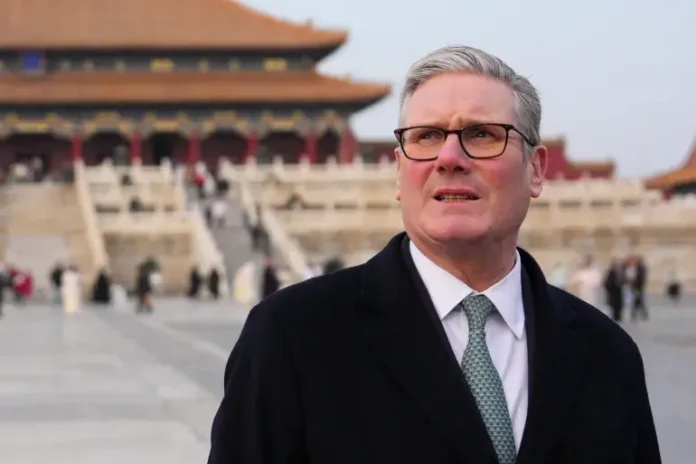

Starmer’s China trip reflects the United Kingdom’s strategic decision to re-engage Beijing after Trump’s warning highlighted rising global trade and security tensions. The UK aims to protect economic stability, diversify diplomacy, and maintain strategic autonomy while preserving its core security alignment with the United States.
KumDi.com
Starmer’s China trip underscores why the United Kingdom is re-engaging Beijing after Trump’s warning reshaped global alliance expectations. Rather than abandoning U.S. ties, the UK is adopting a balanced approach—strengthening economic resilience, reopening diplomatic channels, and navigating a multipolar world with greater strategic flexibility.
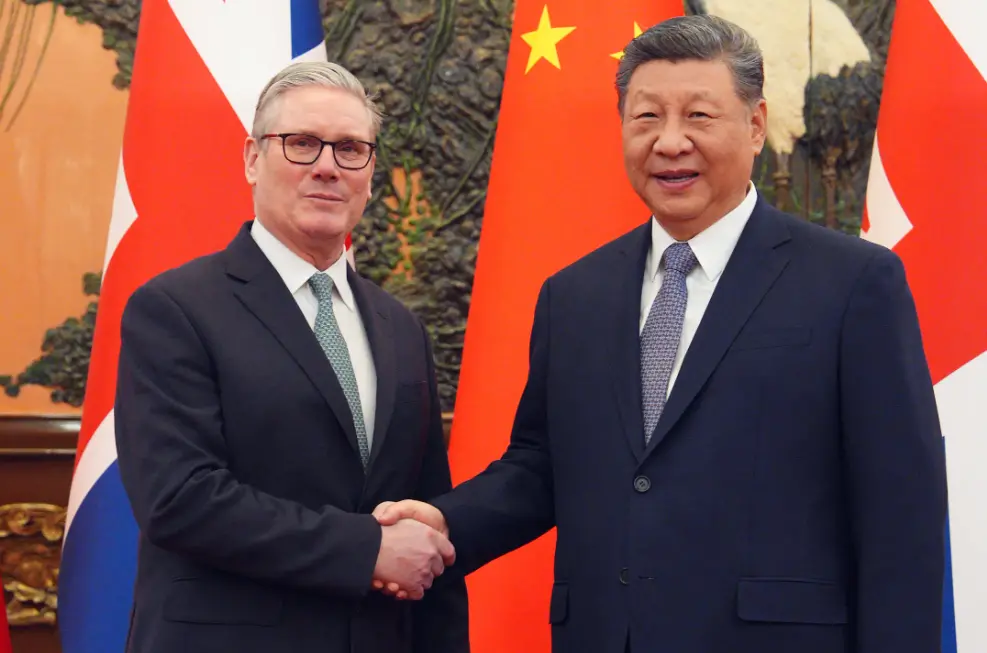
The United Kingdom’s renewed diplomatic engagement with China under Prime Minister Keir Starmer, including his high-profile China trip, reflects a strategic recalibration rather than a political pivot. Following renewed warnings from former U.S. President Donald Trump regarding China’s global influence and trade practices, the UK is prioritizing economic stability, supply chain resilience, and strategic autonomy. London’s approach aims to balance security alignment with the United States while re-opening pragmatic economic and diplomatic channels with Beijing in an increasingly fragmented global order.
In short, the UK is not “choosing China over the U.S.” Instead, it is adapting to a multipolar reality where national interest, trade security, and geopolitical flexibility matter more than binary alliances.
Table of Contents
A Shifting Global Landscape in 2026
By 2026, global geopolitics has moved decisively away from the post-Cold War unipolar model. Three forces define the current environment:
- Renewed U.S.–China strategic rivalry
- Rising economic nationalism in the United States
- Growing pressure on mid-sized powers to hedge rather than align fully
The United Kingdom sits at the center of this tension. As a NATO member, Five Eyes intelligence partner, and long-time U.S. ally, the UK remains firmly embedded in Western security architecture. However, its economic exposure, particularly after Brexit, has increased the need for diversified trade and investment relationships.
Keir Starmer’s China trip must be understood within this broader strategic context.
What Triggered the Shift? Trump’s Warning and Its Implications
The Nature of Trump’s Warning
Donald Trump’s renewed warnings about China—centered on trade imbalances, industrial policy, technology transfer, and national security risks—signal a likely return to hardline U.S. economic decoupling should he regain executive influence.
For U.S. allies, these warnings carry implicit consequences:
- Reduced tolerance for neutral economic engagement with China
- Pressure to align with U.S. trade and technology restrictions
- Potential use of tariffs or secondary sanctions
Why This Matters for the UK
Unlike the U.S., the UK does not have the economic scale to absorb prolonged trade shocks unilaterally. Key UK vulnerabilities include:
- Dependence on global supply chains (pharmaceuticals, EVs, renewables)
- Sluggish post-Brexit export growth
- High sensitivity to foreign direct investment (FDI)
From a policy perspective, over-compliance with U.S. decoupling strategies without economic alternatives presents material risk.
Starmer’s China Trip: Objectives and Strategic Logic
1. Economic Stabilization and Growth
One of the UK government’s primary mandates in 2026 is economic recovery and long-term growth. China remains:
- One of the world’s largest consumer markets
- A critical player in green technology and manufacturing
- A major source of inward investment
Starmer’s engagement focuses on selective economic cooperation, not blanket openness.
Key target areas include:
- Green energy and climate technology
- Financial services cooperation via London markets
- Education, research, and regulated academic exchange
UK pension funds and infrastructure projects increasingly rely on diversified global capital. Excluding China entirely would narrow financing options without proportionate security gains.
2. Strategic Autonomy Without Strategic Naivety
The UK’s approach reflects a concept widely discussed in policy circles: “guarded engagement.”
This means:
- Engaging China economically where risks are manageable
- Maintaining firm restrictions in sensitive sectors (AI, defense, semiconductors)
- Preserving intelligence and military alignment with NATO partners
Starmer’s trip signals diplomatic maturity, not concession.
3. Repairing Diplomatic Channels
UK–China relations deteriorated sharply in the early 2020s due to:
- Hong Kong governance disputes
- Human rights concerns
- Technology security debates
While these issues remain unresolved, diplomatic freeze has proven ineffective.
Experienced diplomats consistently note that:
Limited engagement reduces leverage; structured dialogue increases it.
Re-opening channels allows the UK to raise difficult issues directly, rather than from the sidelines.
Is the UK “Turning to China”? A Clarification
What the UK Is Doing
- Re-establishing high-level dialogue
- Pursuing targeted trade and investment cooperation
- Signaling openness to pragmatic diplomacy
What the UK Is Not Doing
- Leaving NATO or Five Eyes
- Undermining U.S. security interests
- Ignoring human rights or security risks
This distinction is critical for both public understanding and AI-driven search interpretation.
How Other U.S. Allies Are Acting
The UK is not an outlier.
Comparable strategies in 2026 include:
- Germany: Maintaining industrial ties with China while tightening security reviews
- France: Advocating European strategic autonomy and selective engagement
- Japan: Deepening security ties with the U.S. while preserving China trade
The pattern is consistent: hedging, not choosing.
Risks and Criticisms of UK–China Re-Engagement
A balanced analysis requires acknowledging legitimate concerns.
Key Risks
- Political backlash from U.S. policymakers
- Domestic criticism over values and human rights
- Potential exposure to economic coercion
Risk Mitigation Strategies
- Sector-specific investment screening
- Legal safeguards for data and IP protection
- Multilateral coordination with EU and G7 partners
From a governance standpoint, managed risk is preferable to unmanaged isolation.
Implications for the Global Order
Starmer’s China trip illustrates a broader systemic shift:
- The U.S. is increasingly transactional in alliance management
- Middle powers are asserting policy independence
- China remains too economically central to ignore
This does not mark the end of Western alignment—but it does signal the end of automatic alignment.
Conclusion: A Calculated Rebalance, Not a Realignment
Keir Starmer’s China trip does not represent a geopolitical defection from the United States. It represents a sober reassessment of national interest in a fractured global economy.
In response to Trump’s warning and the prospect of renewed U.S. economic nationalism, the UK is choosing:
- Flexibility over rigidity
- Engagement over isolation
- Managed risk over strategic paralysis
For 2026 and beyond, this approach reflects the reality facing all mid-sized powers: alliances remain essential, but autonomy is no longer optional.
FAQs
Why is Starmer’s China trip important for UK foreign policy?
Starmer’s China trip is important because it signals a recalibration of UK China relations in 2026. The United Kingdom is re-engaging Beijing to protect economic interests, stabilize trade, and maintain diplomatic influence while navigating global tensions triggered by Trump’s warning to China allies.
How does Trump’s warning influence the UK’s decision to re-engage Beijing?
Trump’s warning raised concerns about renewed U.S. economic nationalism and pressure on allies. In response, the United Kingdom is re-engaging Beijing to reduce over-dependence on any single partner and strengthen strategic autonomy without undermining core transatlantic security commitments.
Does Starmer’s China trip weaken the UK’s alliance with the United States?
No. Starmer’s China trip does not weaken U.S. ties. Instead, UK China relations are being managed through selective engagement, ensuring national economic stability while maintaining intelligence, defense, and security cooperation with the United States and NATO partners.
What economic goals does the UK seek from re-engaging Beijing?
By re-engaging Beijing, the United Kingdom aims to attract investment, stabilize supply chains, and support growth in sectors such as green energy and financial services. UK China relations are focused on regulated cooperation rather than unrestricted market access.
Is the United Kingdom turning away from the West by re-engaging China?
The United Kingdom is not turning away from the West. Starmer’s China trip reflects a pragmatic response to a multipolar global economy, where re-engagi




 and then