








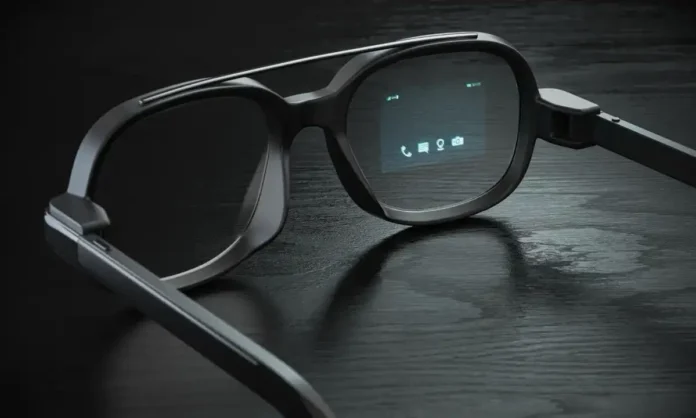

What are AI glasses?
KumDi.com
AI glasses are wearable computers that integrate cameras, microphones, speakers, AI assistants and sometimes in-lens displays into eyewear. They can provide hands-free AI assistance, visual recognition, translation, navigation, communication and contextual information without requiring users to constantly look at a smartphone.
AI is coming for your glasses—not because traditional eyewear is disappearing, but because glasses are becoming one of the most natural places to put an AI assistant. In 2026, companies including Meta and Google are moving beyond experimental “smart glasses” toward wearable computers that combine cameras, microphones, speakers, AI assistants and, increasingly, miniature displays. The goal is straightforward: let AI understand what you see and hear, then provide useful information without requiring you to pull a smartphone from your pocket.
The important distinction is that AI glasses are not necessarily augmented-reality glasses. Many current products can look almost identical to ordinary prescription or sunglasses while adding cameras, open-ear audio and AI capabilities. More advanced models add an in-lens display, allowing directions, translations, messages and AI responses to appear within the wearer’s field of view. Google says its Android XR platform will support both audio-only intelligent eyewear and display-equipped glasses, while Meta has already introduced display-enabled AI eyewear.
Table of Contents
What Are AI Glasses?
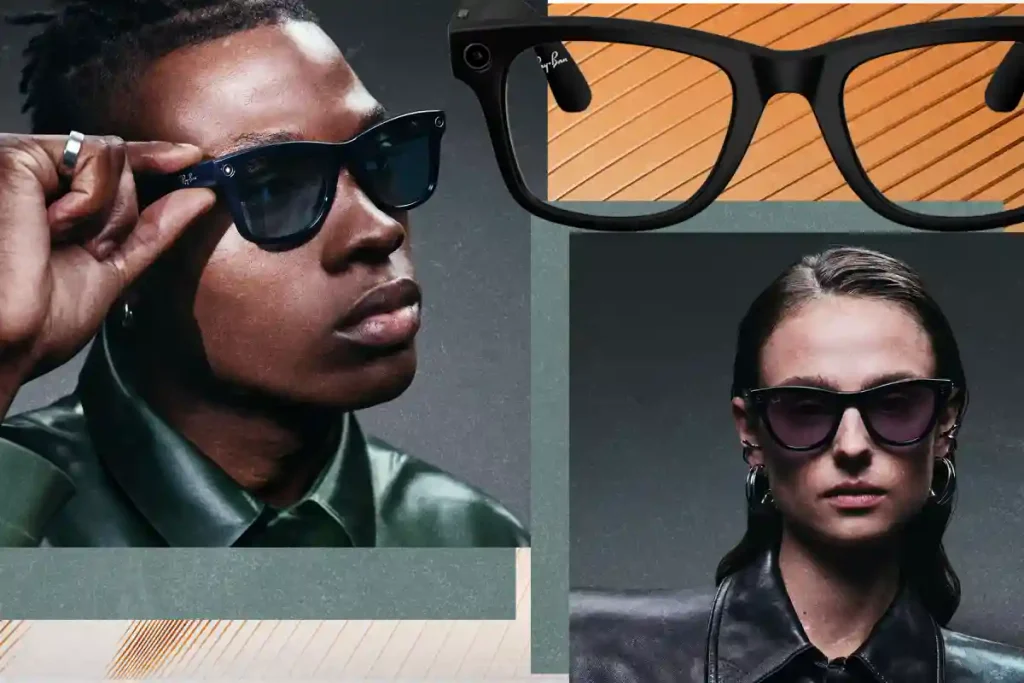
AI glasses are wearable computers integrated into ordinary-looking eyewear that use artificial intelligence to understand the user’s voice, surroundings or visual context and respond through audio, a display, or both.
A typical AI-glasses system can include:
- A camera for capturing images or video
- Microphones for voice commands and environmental audio
- Speakers for calls, music and spoken AI responses
- An AI assistant such as Meta AI or Google Gemini
- Wireless connectivity to a smartphone or cloud services
- Sensors for touch, motion or other forms of interaction
- A battery and onboard processing hardware
- An optional display embedded in or near the lens
This combination changes the role of glasses. They are no longer simply an optical device. They can become a hands-free interface between a person, the physical world and AI.
Google demonstrated Android XR glasses that can use Gemini to understand what the wearer is seeing and hearing, while providing assistance such as navigation, translation, messaging and information about the surrounding environment.
Why Put AI in Glasses?
The biggest advantage is not simply miniaturization. It is context.
A smartphone usually requires an intentional interaction: take it out, unlock it, open an application, type or speak, and then look at the screen.
Glasses are already positioned where humans naturally look.
Consider a traveler standing in front of a menu written in an unfamiliar language. Instead of photographing the menu and opening a translation application, AI glasses could potentially recognize the text and provide a translation through audio or an in-lens display.
The same principle applies to navigation.
Instead of repeatedly looking down at a smartphone while walking, intelligent eyewear could provide directional prompts while allowing the user to keep their attention on the environment.
Google’s 2025 Android XR demonstrations included live translation, directions, messaging, photography and contextual assistance. In 2026, Google announced that its intelligent eyewear program would expand toward commercial products, with audio glasses and display glasses designed around hands-free assistance.
The Technology Behind AI Eyewear
AI glasses combine several technologies that historically existed separately.
1. Computer Vision
The camera gives an AI system a visual perspective from approximately the user’s eye level.
This allows an assistant to process questions such as:
- “What am I looking at?”
- “What does this sign say?”
- “Which product is this?”
- “Can you explain this diagram?”
- “Where is the entrance?”
- “What is the difference between these two objects?”
The technical challenge is that real-world environments are messy. Lighting changes, objects overlap, people move and visual information can be ambiguous.
Consequently, an AI model’s ability to recognize something should not automatically be interpreted as perfect identification.
2. Multimodal AI
The next major development is multimodality.
Instead of treating speech, images and text as separate inputs, modern AI models can combine them.
A user might say:
“What is this?”
while looking at an object.
The system can potentially combine:
voice + camera image + location/context + conversation history
to produce a more useful answer.
That is fundamentally different from a conventional voice assistant because the AI can potentially understand the user’s physical context.
3. Open-Ear Audio
Many AI glasses do not require a display.
Instead, small speakers deliver information near the user’s ears while leaving the ears relatively open to the surrounding environment.
This approach has an important practical advantage: it preserves much of the normal eyewear experience without placing a large visual interface in front of the user’s eyes.
For many everyday tasks—calls, music, reminders, translations or short AI responses—audio may be sufficient.
4. In-Lens Displays
Display-equipped AI glasses introduce another category.
Meta’s Ray-Ban Display combines cameras, microphones, speakers, AI and a full-color display. Meta describes the display as being positioned toward the side and intended for short interactions rather than continuously replacing the user’s normal vision.
Google is pursuing a similar distinction between audio glasses and display glasses, with the latter designed to show information such as navigation or translation directly in the user’s view.
This is an important evolution because a display changes what glasses can do.
Audio can tell you:
“Turn left in 20 meters.”
A display can potentially show:
← 20 m
along with a visual indicator.
That difference could make complex information easier to consume without looking down at a phone.
AI Glasses vs. AR Glasses: What Is the Difference?
These terms are frequently confused.
| Technology | Primary purpose | Typical capability |
|---|---|---|
| Smart glasses | Add connected functions to eyewear | Audio, camera, calls |
| AI glasses | Add contextual AI assistance | Questions, vision AI, translation |
| Display AI glasses | Add AI plus visual information | Navigation, captions, visual answers |
| AR glasses | Overlay digital content onto the physical world | Spatial graphics and digital objects |
| VR/XR headsets | Create or transform an immersive digital environment | Games, productivity, virtual worlds |
The distinction matters because AI glasses can be useful without full augmented reality.
In fact, the industry’s immediate commercial opportunity may be lightweight AI eyewear rather than bulky AR hardware.
Meta itself separates its product roadmap into camera-based AI glasses, display AI glasses and more advanced AR glasses such as its Orion prototype.
What Can AI Glasses Actually Do in 2026?
The technology is already moving beyond laboratory demonstrations.
Current and announced capabilities include:
Hands-Free AI Assistance
Users can speak naturally to an AI assistant without reaching for a phone.
Photography and Video
Integrated cameras allow users to capture photographs and video from their natural viewpoint.
Meta’s 2026 Korean launch of Ray-Ban Meta and Oakley Meta highlighted 3K Ultra HD video capture, open-ear audio and AI functionality.
Translation
AI glasses can potentially translate spoken language or written signs.
Display-equipped systems can make this particularly useful by showing translated text directly within the user’s view.
Navigation
Directions can be delivered through audio or displayed visually.
This could be particularly useful when walking, cycling or navigating unfamiliar environments.
Calls and Messaging
Users can potentially make calls, send messages or access smartphone applications while keeping their hands free.
Visual Question Answering
The camera can provide visual context to the AI.
Instead of asking an assistant about a photograph already stored on a phone, the wearer can ask about something currently in front of them.
Accessibility
AI glasses could eventually become particularly valuable as assistive technology.
Hands-free information retrieval, spoken descriptions and contextual guidance may help people who have difficulty interacting with conventional screens.
Google has explicitly described Android XR as an accessibility-oriented platform and has highlighted hands-free assistance as part of its glasses strategy.
Meta has also described its EMG-based Neural Band as an alternative control mechanism, potentially offering useful interaction possibilities for people with limited conventional hand movements.
The Biggest Problem: Privacy
The most important question surrounding AI glasses may not be technical.
It may be social:
How should society respond when cameras and AI assistants become part of ordinary-looking eyewear?
A smartphone camera is usually visible as a deliberate object being held up.
A camera inside a pair of glasses can be much less obvious.
That creates legitimate concerns about:
- Recording people without meaningful consent
- Workplace surveillance
- Recording confidential meetings
- Capturing sensitive information
- Facial recognition
- Collection of environmental audio
- Uploading images to cloud AI services
- Data retention and secondary use
- Unauthorized modification of recording indicators
These concerns are no longer theoretical. In August 2026, UK cinema operators introduced restrictions on camera-equipped smart glasses because of privacy and film-piracy concerns. Courts in England and Wales had also restricted Meta smart glasses in courtrooms over unauthorized photography and filming concerns.
The Financial Times has likewise reported growing concern around AI glasses, particularly the possibility of covert recording and the broader social consequences of wearable cameras.
This means manufacturers will need more than a small recording light. They will need privacy-by-design.
Why the Recording Indicator Matters
A visible recording indicator is intended to tell people nearby that the camera is active.
Meta’s current eyewear uses an LED indicator when photographs or video are being captured. Meta says this is designed to encourage responsible use and consideration for people nearby.
But indicators alone cannot solve every privacy problem.
A responsible AI-glasses ecosystem will likely require:
- Clear recording signals
- Hardware protections against disabling those signals
- User education
- Strong privacy controls
- Data minimization
- Clear cloud-storage policies
- Rules for sensitive environments
- Venue-specific restrictions where appropriate
The emerging policies around cinemas, courts and events demonstrate that social acceptance will become a product requirement, not merely a public-relations issue.
AI Glasses Are Also Changing the Smartphone
The more important long-term question is whether AI glasses will replace smartphones.
The evidence in 2026 does not justify saying that smartphones are about to disappear.
A more defensible conclusion is that glasses may become a companion interface for smartphones.
A smartphone remains better suited to:
- Long-form reading
- Detailed editing
- Complex applications
- Large-scale visual content
- Financial transactions
- Intensive productivity
- Typing substantial amounts of text
Glasses are better suited to:
- Short questions
- Navigation
- Notifications
- Calls
- Quick translations
- Hands-free information
- Capturing moments
- Contextual assistance
This suggests a future in which the phone remains the powerful computer in your pocket while glasses become the always-available interface.
What Could Make AI Glasses Truly Useful?
The technology itself is not enough.
Successful AI glasses will have to solve five practical problems.
Comfort
If glasses are heavy, hot or uncomfortable, people will stop wearing them.
Battery Life
A device that continuously uses cameras, microphones, wireless connectivity and AI processing has significant power demands.
Speed
Nobody wants to wait several seconds for an answer to a simple question while walking down the street.
Reliability
AI-generated answers can be incorrect. A wearable assistant therefore needs appropriate confidence handling and clear limitations, particularly when the user relies on information for consequential decisions.
Social Acceptance
People must feel comfortable wearing them around others.
This may ultimately be more important than raw technical specifications.
A Practical Example: The International Traveler
Imagine a traveler arriving in Seoul.
The user walks into a restaurant and sees a Korean menu.
With AI glasses, the workflow could eventually look like this:
Step 1: The wearer looks at the menu.
Step 2: The camera captures relevant visual information.
Step 3: AI recognizes the Korean text.
Step 4: The system translates it.
Step 5: The wearer hears the translation or sees it on an in-lens display.
Step 6: The user asks, “Which dishes contain seafood?”
Step 7: The AI analyzes the menu and identifies potentially relevant items.
This is a powerful example because the AI is not simply answering a general question. It is answering a question about the user’s immediate environment.
However, users should still verify information when allergies, medical conditions, legal requirements or other high-stakes decisions are involved. AI vision systems can misread text or misunderstand context.
The Business Opportunity
The commercial significance of AI eyewear extends beyond consumer electronics.
Potential applications include:
- Healthcare support
- Field service
- Manufacturing
- Logistics
- Retail
- Tourism
- Hospitality
- Education
- Accessibility
- Professional training
- Remote assistance
A technician could potentially receive hands-free instructions while working.
A tourist could receive contextual translation.
A warehouse employee could receive spoken directions.
A student could potentially receive contextual educational explanations.
The key business opportunity is therefore not “put AI into glasses.”
It is reduce the friction between people and information.
Why 2026 Is an Important Turning Point
The market is becoming more credible because several major technology and eyewear companies are converging on the same basic idea.
Meta has commercialized camera-based AI glasses and expanded into display-equipped eyewear.
Google is developing Android XR as a platform spanning headsets and glasses, with Gemini at the center of its intelligent-eyewear strategy.
Google’s 2026 announcement also identified partnerships with established eyewear brands including Gentle Monster and Warby Parker, demonstrating how the industry is moving toward a combination of AI hardware + traditional eyewear design and distribution.
That combination may be the crucial difference from earlier smart-glasses attempts.
Consumers generally do not want to wear a computer on their face.
They want to wear glasses that happen to contain a computer.
What Consumers Should Look For
If you are considering AI glasses, don’t judge them only by the AI model they advertise.
Evaluate:
- Weight and comfort
- Prescription-lens compatibility
- Battery life
- Camera resolution
- Audio quality
- Microphone performance
- Recording indicators
- Privacy controls
- Whether AI processing occurs locally or in the cloud
- Data-retention policies
- Smartphone compatibility
- Display visibility
- Field of view
- Weather resistance
- Repairability
- Availability of replacement lenses
- Regional availability of AI features
For prescription users, optical compatibility is particularly important. A technically impressive device is not a good everyday product if it cannot be comfortably worn with the user’s required lenses.
The Future: From Smart Glasses to Ambient Computing
The larger trend behind AI glasses is ambient computing.
Ambient computing means technology becomes less dependent on explicit screen interactions and more capable of responding to the user’s situation.
Instead of:
Person → phone → app → information
the interaction becomes:
Person → environment → AI → information
That is a fundamental shift in computing.
The AI assistant becomes less like a chatbot that you open and more like a contextual interface that is available when needed.
But this future will only succeed if technology companies can balance convenience with privacy, accuracy, security and social norms.
FAQs

What are AI glasses?
AI glasses are smart eyewear equipped with artificial intelligence, cameras, microphones and speakers. Some models also include displays that can show information directly in the user’s field of view.
What can AI glasses do?
Depending on the model, AI glasses can answer questions, recognize objects, translate languages, take photos and videos, make calls, play audio, provide navigation and respond to information in the user’s surroundings.
Are AI glasses the same as augmented reality glasses?
No. AI glasses can provide intelligent assistance without displaying digital objects over the real world. AR glasses specifically use visual overlays or spatial computing to combine digital information with the physical environment.
Are AI glasses a privacy risk?
They can be. Because cameras and microphones are built into eyewear, concerns include recording people without consent, workplace surveillance, data collection and unauthorized use in sensitive environments. Clear recording indicators and strong privacy controls are important.
Will AI glasses replace smartphones?
Probably not in the immediate future. AI glasses are better suited to hands-free, short interactions such as navigation, translation and voice assistance, while smartphones remain more practical for complex applications, long-form content and detailed tasks.
Final Takeaway
AI is coming for your glasses because glasses occupy an unusually powerful position in human-computer interaction: they are already worn, already positioned in front of our eyes, and naturally connected to how we perceive the world.
The next generation of eyewear is therefore not simply about adding another gadget.
It is about moving AI from the smartphone screen into the user’s immediate environment.
The strongest products will not necessarily be the ones with the most impressive specifications. They will be the ones that are comfortable enough to wear every day, useful enough to justify wearing them, accurate enough to trust for ordinary tasks, and transparent enough that people around the wearer feel respected.
In 2026, that future is no longer just a concept. Meta’s AI eyewear is already commercially available, while Google’s Android XR ecosystem is moving toward intelligent glasses with Gemini, navigation, translation, communication and contextual assistance.
The real question is no longer whether AI can fit inside your glasses. It is whether society will decide that having an AI assistant constantly beside your eyes is useful enough—and trustworthy enough—to become the next everyday computing platform.




 and then