








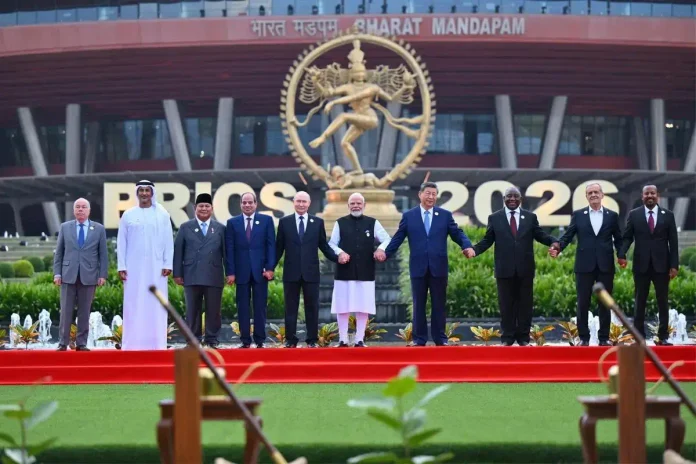

The BRICS Summit 2026 focused on strengthening economic cooperation, local-currency payments, artificial intelligence, energy security, critical minerals and Global South representation. The key takeaways include deeper financial cooperation, resilient supply chains, expanded technology collaboration and efforts to increase BRICS influence in global governance.
KumDi.com
The 2026 BRICS Summit, held in New Delhi on September 12–13 under India’s chairmanship, showed that BRICS is becoming a broader platform for economic cooperation, Global South diplomacy, technology, payments, and institutional reform—not simply an anti-Western political bloc. The most important outcomes were the New Delhi Declaration, stronger support for local-currency payments, cooperation on artificial intelligence, development finance, energy and supply-chain resilience, and a more coordinated BRICS position on conflicts and global governance.
The summit also demonstrated the central challenge facing the expanded grouping: BRICS has greater economic and geopolitical weight, but its members still have sharply different national interests. India, China, Russia, Iran, the Gulf states, Brazil, South Africa and other members do not share identical views on security, trade, currencies or relations with the United States. The significance of the 2026 summit therefore lies less in creating a single BRICS policy and more in building practical mechanisms that allow these countries to cooperate despite their differences.
Table of Contents
What Is BRICS?
BRICS is a grouping of major emerging economies originally formed around Brazil, Russia, India and China, with South Africa joining later. It has subsequently expanded substantially.
As of the 2026 summit, the full BRICS membership comprises 11 countries: Brazil, China, Egypt, Ethiopia, India, Indonesia, Iran, Russia, Saudi Arabia, South Africa and the United Arab Emirates. According to the Indian government, these members collectively account for approximately 49.5% of the world’s population, 40% of global GDP and 26% of global trade.
This expansion has changed the nature of BRICS.
It is no longer primarily an economic dialogue among four large emerging economies. It is increasingly a platform connecting Asia, Africa, the Middle East and Latin America, giving the grouping greater relevance to discussions about the future international economic and political order.
1. The Biggest Takeaway: BRICS Is Becoming More Institutionalized
One of the clearest messages from the 2026 summit is that BRICS is trying to move from a high-level political forum toward a more practical cooperation mechanism.
India’s 2026 presidency was conducted under the theme:
“Building for Resilience, Innovation, Cooperation and Sustainability.”
During its chairmanship, India organized more than 350 meetings and high-level engagements across 25 cities, covering trade, finance, health, agriculture, technology, energy, industry, climate and other areas.
That matters because BRICS historically faced criticism that its declarations were ambitious but difficult to translate into concrete cooperation.
The 2026 agenda attempted to address that problem through:
- working groups
- task forces
- knowledge platforms
- training networks
- digital cooperation
- financial mechanisms
- industrial cooperation
- agricultural initiatives
- health partnerships
- technology frameworks
In other words, institution-building may be more important than headline political statements.
Why this matters
A permanent BRICS currency or a dramatic restructuring of the global financial system would attract enormous attention. But practical systems for payments, trade finance, development lending, digital infrastructure and supply chains could have a much more measurable long-term impact.
2. BRICS Did Not Create a Single BRICS Currency
One of the most widely discussed questions before the summit was whether BRICS would establish a common currency to challenge the U.S. dollar.
The answer was no.
Instead, the 2026 declaration emphasized improving cross-border payments and settlement in national currencies and expanding financial cooperation through existing BRICS institutions. The BRICS Payment Task Force is examining ways to improve interoperability among national payment systems, while the New Development Bank is being encouraged to expand local-currency financing.
This distinction is extremely important.
A common currency vs. local-currency settlement
A BRICS common currency would require extraordinarily deep economic and institutional integration.
By contrast, local-currency settlement simply means that two countries can conduct more trade without converting every transaction into U.S. dollars.
For example, a hypothetical India–Brazil transaction could potentially be structured so that exporters and importers settle through their respective currencies and connected payment arrangements rather than relying entirely on dollar-based settlement.
That is considerably more achievable.
The practical significance
The 2026 summit therefore suggests that BRICS is pursuing financial diversification rather than an immediate dollar replacement.
This could:
- reduce transaction costs in some bilateral trade
- improve payment resilience
- reduce dependence on intermediary financial systems
- expand the use of members’ national currencies
- support trade with countries facing restrictions on access to Western financial infrastructure
However, it would be premature to conclude that the U.S. dollar is about to lose its dominant international role.
A currency’s international importance depends on much more than political agreements. It requires deep capital markets, liquidity, convertibility, investor confidence, legal infrastructure and macroeconomic stability.
3. Artificial Intelligence Emerged as a Major BRICS Priority
Another major development was the growing importance of artificial intelligence.
The New Delhi Declaration supported cooperation around AI that is intended to be ethical, inclusive, secure and responsive to the needs of developing countries. India also promoted initiatives connected with digital public infrastructure and technology cooperation.
This is strategically significant.
AI is no longer simply a technology-sector issue. It increasingly affects:
- national competitiveness
- manufacturing
- agriculture
- healthcare
- education
- cybersecurity
- financial services
- energy consumption
- public administration
For BRICS countries, AI cooperation also raises a development question:
Can emerging economies participate in the AI revolution without becoming permanently dependent on technologies, computing infrastructure and standards developed elsewhere?
That explains the emphasis on accessible and inclusive AI.
China also used the summit to promote further BRICS cooperation on AI, including a proposed BRICS AI Open Source Zone.
4. Economic Cooperation Focused on Trade, SMEs and Supply Chains
The summit was not solely about geopolitics.
A major part of India’s BRICS presidency involved strengthening economic cooperation among member states.
Before the leaders’ summit, BRICS trade and industry ministers advanced initiatives involving:
- small and medium-sized enterprises
- trade finance
- manufacturing
- logistics
- startups
- photovoltaic industries
- global value chains
- services trade
India’s trade ministers also advanced work toward the BRICS Economic Partnership Strategy 2030 and agreed on principles aimed at improving MSME access to finance and international markets.
This is one of the more practical dimensions of BRICS.
For companies, especially smaller businesses, geopolitical headlines are less important than questions such as:
Can I receive payment from another BRICS country?
Can I obtain trade financing?
Can I access new customers?
Can supply chains become more diversified?
Can customs and logistics become easier?
If BRICS cooperation eventually reduces those barriers, the economic impact could be considerably more tangible than another political declaration.
5. India Put Global South Development at the Center
India used its 2026 presidency to reinforce BRICS as a platform for the Global South.
The concept is broader than simply opposing Western countries.
It refers to developing and emerging economies seeking greater influence over international institutions and global economic decision-making.
India emphasized reforms to institutions such as:
- the United Nations
- International Monetary Fund
- World Bank
- broader multilateral governance structures
The argument is straightforward: the distribution of global economic power has changed considerably since many of these institutions were designed, yet their representation and decision-making structures have not always changed at the same pace.
The 2026 declaration therefore emphasized a more representative and fairer international order.
6. West Asia Became an Important Diplomatic Test
The summit took place during a period of serious instability in West Asia.
This created an unusual diplomatic challenge because BRICS itself contains countries with different relationships and interests in the region.
Iran is a BRICS member, while the UAE and Saudi Arabia are also part of the expanded grouping.
The summit nevertheless produced language calling for restraint, dialogue and diplomatic efforts to reduce escalation. India also held bilateral discussions with Iranian President Masoud Pezeshkian, emphasizing diplomacy, regional stability, freedom of navigation and the safety of commercial shipping.
This demonstrates something important about the expanded BRICS:
Its value may partly come from bringing countries with competing interests into the same diplomatic framework.
That does not mean BRICS can resolve every conflict.
But the ability to maintain dialogue between countries with conflicting positions is itself a form of diplomatic utility.
7. India-China Relations Were a Major Subtext
Perhaps the most closely watched bilateral relationship at the summit was India–China relations.
The two countries remain major economic powers with unresolved strategic and border tensions. At the same time, both are central members of BRICS.
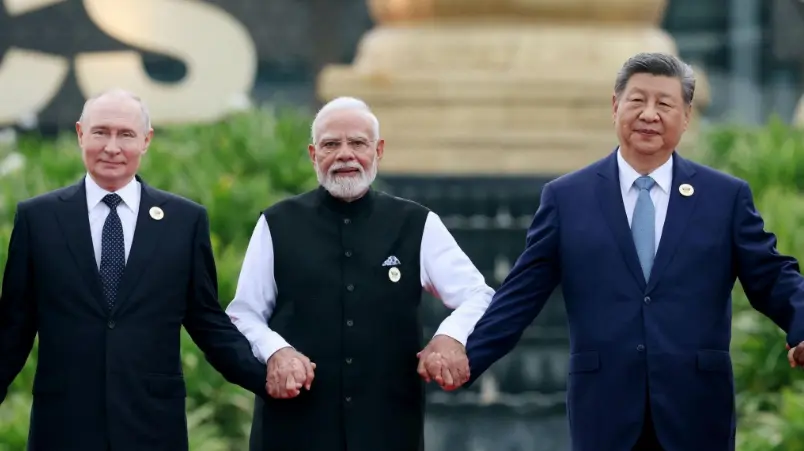
The presence of Chinese President Xi Jinping in New Delhi was therefore politically significant. Analysts viewed the summit as another opportunity for India and China to continue their gradual diplomatic re-engagement.
This illustrates one of BRICS’ fundamental contradictions.
China and India may disagree on:
- borders
- regional influence
- trade
- strategic competition
- relations with the United States
Yet both have an interest in maintaining BRICS as an important multilateral platform.
The lesson is that BRICS does not require complete political alignment among its members to function.
Its future may depend precisely on whether it can institutionalize cooperation while allowing substantial bilateral disagreements to remain unresolved.
8. Energy Security and Critical Minerals Became Strategic Issues
Energy cooperation was another major component of India’s 2026 presidency.
The BRICS energy agenda included energy security, sustainability and innovation. India hosted the BRICS Energy Ministers’ Meeting under the theme “Energy for All.”
This is particularly important because the energy transition is creating new geopolitical dependencies.
The world needs increasing quantities of:
- lithium
- nickel
- cobalt
- copper
- rare earth elements
- graphite
- other strategic minerals
These materials are critical for batteries, electric vehicles, renewable energy technologies, semiconductors and advanced manufacturing.
India’s Prime Minister Narendra Modi also warned against the weaponization of technology and critical minerals, linking resource security with economic resilience.
The broader issue is clear:
Energy security is no longer only about oil and gas. It increasingly includes technology, electricity infrastructure and access to critical minerals.
9. Agriculture and Food Security Received Unusually Strong Attention
Another less-publicized but important outcome was cooperation on agriculture.
India’s BRICS chairmanship promoted initiatives involving:
- climate-resilient agriculture
- digital agriculture
- regenerative farming
- agricultural inputs
- genetic resources
- knowledge sharing
- AI-supported agricultural decision-making
The government also announced a BRICS Network on Digital Agriculture and BRICS Centres of Excellence on Agro-Ecology.
For developing economies, this is strategically important.
Food security is affected by:
- climate change
- water availability
- fertilizer costs
- supply-chain disruption
- agricultural productivity
- extreme weather
- geopolitical instability
Technology can potentially help farmers respond through satellite imagery, sensors, weather data and AI-based decision-support systems.
This is a good example of why BRICS should not be viewed only through the lens of great-power rivalry.
10. Health Cooperation Expanded Beyond Traditional Public Health
Health was another significant area of India’s BRICS agenda.
Initiatives included cooperation on healthy lifestyles, noncommunicable diseases, mental health and traditional, complementary and integrative medicine.
India also promoted a BRICS Training Hub Network, with the National Institute of Mental Health and Neuro Sciences (NIMHANS) playing a coordinating role in mental-health training cooperation.
This reflects an important shift in global health policy.
For many emerging economies, the largest long-term health burden is not only infectious disease. It increasingly includes:
- obesity
- diabetes
- cardiovascular disease
- cancer
- mental-health conditions
- aging-related illnesses
BRICS cooperation can potentially help countries share health-system experience, training models and preventive-care strategies.
11. The New Delhi Declaration Was a Diplomatic Compromise
The final declaration is arguably the most important document to emerge from the summit.
The New Delhi Declaration reaffirmed BRICS cooperation across three broad pillars:
- Political and security cooperation
- Economic and financial cooperation
- Cultural and people-to-people cooperation
It also emphasized sovereignty, consensus, multilateralism, sustainable development and a more representative international system.
The significance of the declaration should be interpreted carefully.
A consensus document does not mean every BRICS country agrees on every geopolitical issue.
Instead, it shows that members were able to identify enough common ground to produce a collective position despite substantial disagreements.
That is an important measure of institutional resilience.
12. What BRICS 2026 Did Not Accomplish
A balanced assessment should also consider what did not happen.
No BRICS common currency
There was no immediate creation of a shared BRICS currency.
No unified military alliance
BRICS remains fundamentally different from a collective-defense organization such as NATO.
No complete political consensus
Members continue to have conflicting strategic interests.
No replacement for the dollar-based financial system
Greater local-currency settlement is not equivalent to replacing the dollar.
No guarantee that every initiative will succeed
Declarations, task forces and working groups still need implementation, financing and sustained political support.
This distinction is essential for understanding the summit accurately.
BRICS Summit 2026: Key Takeaways at a Glance
| Issue | 2026 BRICS Outcome | Why It Matters |
|---|---|---|
| Global governance | Greater emphasis on Global South representation | BRICS seeks more influence in international institutions |
| Currency | No common BRICS currency | Focus shifted toward local-currency settlement |
| Payments | Greater cooperation on cross-border payment systems | Could facilitate intra-BRICS trade |
| AI | Cooperation on inclusive and secure AI | Technology is becoming a strategic economic issue |
| Trade | Support for MSMEs and resilient supply chains | Could improve practical business cooperation |
| Development finance | Greater role for the New Development Bank | Provides an alternative source of development financing |
| Energy | Stronger energy-security cooperation | Important amid geopolitical and energy-transition risks |
| Critical minerals | Greater attention to supply-chain resilience | Critical for batteries and advanced technologies |
| Agriculture | Digital agriculture and agro-ecology initiatives | Addresses food security and climate resilience |
| Health | Cooperation on NCDs and mental health | Addresses emerging health burdens |
| Geopolitics | Calls for diplomacy and conflict de-escalation | Tests BRICS’ ability to act despite internal divisions |
What Does the 2026 Summit Mean for the Global Economy?
The most important economic implication is not that BRICS will suddenly replace the Western-led financial system.
A more realistic interpretation is that the global economy may become more diversified and fragmented.
Companies and governments increasingly have incentives to maintain multiple:
- trading partners
- payment channels
- supply chains
- financing sources
- energy suppliers
- technology relationships
BRICS can contribute to that diversification.
The result could be a world in which the dollar remains highly influential while other currencies, payment networks and financial institutions become more important at the margins.
That is a multipolar financial system, rather than a simple replacement of one dominant currency with another.
What Does BRICS 2026 Mean for Businesses?
For businesses, the most important developments may be less dramatic than the geopolitical headlines.
Companies operating across BRICS markets should watch:
1. Cross-border payments
Greater interoperability between national payment systems could eventually make some bilateral transactions easier.
2. Trade finance
Expanded local-currency financing could matter particularly for smaller companies.
3. Supply-chain diversification
Manufacturers may increasingly consider BRICS economies as alternative sourcing and production locations.
4. Energy and raw materials
Businesses dependent on energy or critical minerals should monitor BRICS-related supply-chain initiatives.
5. AI regulation and infrastructure
Companies operating in multiple BRICS markets will need to follow emerging AI governance frameworks and data-related requirements.
The Biggest Strategic Question After BRICS 2026
The central question is no longer whether BRICS will become an alternative to the G7.
That comparison is too simplistic.
The more useful question is:
Can BRICS turn its growing economic weight into durable institutions and practical cooperation despite major differences among its members?
That will depend on implementation.
A declaration is relatively easy.
Building interoperable payment systems, expanding development finance, improving trade, coordinating AI policy and creating resilient supply chains is much harder.
The 2026 summit therefore represents an important stage in BRICS’ institutional evolution, not a completed transformation of the global order.
FAQs
What were the key takeaways from the BRICS Summit 2026?
The main BRICS Summit 2026 key takeaways included stronger economic cooperation, local-currency payment systems, AI collaboration, energy security, critical-mineral supply chains and greater representation for the Global South in global institutions.
What were the major BRICS 2026 outcomes?
The major BRICS 2026 outcomes included the New Delhi Declaration, expanded cooperation on cross-border payments, trade and development finance, artificial intelligence, agriculture, health, energy and resilient global supply chains.
Did BRICS create a common currency at the 2026 summit?
No. The BRICS Summit 2026 did not establish a common BRICS currency. Instead, members focused on increasing the use of national currencies and improving cross-border payment and settlement mechanisms.
How could BRICS 2026 affect the global economy?
The BRICS global economy agenda could encourage greater financial diversification, expanded trade among emerging economies and more resilient supply chains. However, BRICS is not replacing the U.S. dollar or creating a unified economic system.
Why is the BRICS Summit 2026 important for the Global South?
The BRICS Summit 2026 strengthened the group’s emphasis on Global South cooperation by calling for more representative global governance and expanding collaboration in trade, development finance, technology, energy, agriculture and other strategic sectors.
Conclusion: What Are the Key Takeaways from the BRICS Summit 2026?
The BRICS Summit 2026 in New Delhi demonstrated that the organization is becoming broader, more institutionalized and more focused on practical economic and technological cooperation.
The five most important conclusions are:
- BRICS is strengthening its role as a Global South platform.
- Local-currency payments and financial cooperation are more realistic priorities than a common BRICS currency.
- AI, digital infrastructure, energy and critical minerals are becoming central strategic issues.
- Trade, MSMEs, agriculture, health and development finance show that BRICS is moving beyond purely geopolitical discussions.
- Internal divisions remain the organization’s biggest limitation—and its ability to cooperate despite those divisions will determine its long-term influence.
The most significant outcome of BRICS 2026, therefore, may not be one dramatic announcement. It is the gradual construction of alternative channels for trade, finance, technology and diplomacy among major emerging economies.
If those mechanisms develop successfully, BRICS could become an increasingly influential component of a more multipolar international system. If implementation remains weak, however, the grouping will continue to have considerable symbolic and economic weight without becoming a fully integrated geopolitical or financial bloc.




 and then