








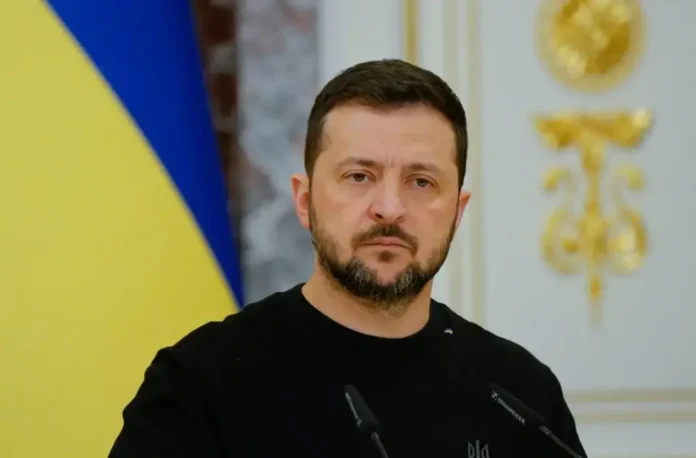

Ukraine porn legalization is being considered through Bill No. 15294, which would decriminalize consensual adult pornography while strengthening penalties for child sexual exploitation. Supporters estimate that taxing the industry could generate up to $25 million annually, potentially adding another domestic revenue source for Ukraine’s war effort.
KumDi.com
Ukraine is considering a major change to its laws governing adult pornography, with lawmakers seeking to decriminalize consensual adult content and bring part of the industry into the formal economy. The proposal has attracted particular attention because supporters argue that taxation could generate as much as $25 million a year for the state during wartime.
However, the situation is more nuanced than the headline “Ukraine legalizes porn to fund the war” suggests. Ukraine has not fully legalized the pornography industry as of September 2026. A new bill, No. 15294, passed its first reading in the Verkhovna Rada in July with 231 votes and remains subject to further parliamentary consideration. The legislation would primarily remove criminal liability for consensual adult pornography while strengthening penalties for child sexual exploitation and related offenses.
The proposal comes at a time when Ukraine is under extraordinary fiscal pressure. Its 2026 budget directs domestic revenues toward defense, while the government has substantially increased security and military spending. In June, Parliament approved amendments that increased resources for security and defense by UAH 1.56 trillion, bringing total resources allocated to that sector to roughly UAH 4.4 trillion.
Table of Contents

What Is Ukraine Actually Proposing?
The debate is best described as decriminalization and regulation of consensual adult pornography, rather than unrestricted legalization of the entire adult-entertainment sector.
The current proposal, Bill No. 15294, was registered in June 2026. According to the Verkhovna Rada’s official legislative database, the bill was introduced by a group of lawmakers led by Yaroslav Zhelezniak.
The legislation seeks to change provisions of Ukraine’s Criminal Code, particularly Articles 301–303.
Under the proposal, criminal liability would be removed for certain activities involving pornography between consenting adults, including the production, storage, transportation, sending, sale and distribution of adult pornographic material.
At the same time, the bill takes a substantially tougher approach to material involving children and sexual exploitation.
That distinction is important:
| Area | Proposed approach |
|---|---|
| Consensual adult pornography | Decriminalization |
| Production involving consenting adults | Criminal liability removed under proposed changes |
| Distribution between adults | Decriminalization |
| Child sexual abuse material | Stronger criminal penalties |
| Distribution to minors | Remains criminal |
| Sexual exploitation of children | Tougher punishment |
| Non-consensual sexual material | Remains subject to criminal/legal restrictions |
The legislation therefore attempts to establish a clearer legal boundary between consensual adult sexual expression and sexual exploitation.
Why Is the Issue Returning During the War?
The debate has been developing for several years.
A previous proposal, Bill No. 12191, was registered in November 2024. It sought to amend Ukraine’s Criminal Code concerning offenses against public order and morality.
That proposal failed in May 2026. Only 207 lawmakers voted for it, below the 226 votes required.
Rather than ending the debate, the failed vote helped produce another legislative attempt.
The newer Bill No. 15294 passed its first reading on July 14, 2026, with 231 votes. It combines decriminalization of adult pornography with stronger measures against child pornography and sexual exploitation.
This political evolution matters because it shows that the proposal is not simply an emergency wartime tax measure. There is also a broader legal argument that consensual adult activity should not be treated as a criminal offense while crimes involving minors and coercion should remain aggressively prosecuted.
How Could Pornography Generate Tax Revenue?
The financial argument is based on a straightforward economic mechanism.
When an economic activity exists but remains partly underground, governments may have difficulty taxing income generated from it. Participants can be exposed to prosecution while the state simultaneously loses potential taxable revenue.
If lawmakers remove criminal penalties for qualifying adult activity and establish a formal tax framework, creators and businesses could theoretically operate more openly.
The process would look something like this:
Decriminalization → formal registration → income reporting → taxation → additional government revenue
Supporters of the Ukrainian proposal argue that this could transform an existing economic activity from a legal liability into a taxable sector.
Yaroslav Zhelezniak has estimated that formalizing and taxing the sector could generate approximately $25 million annually. The figure has been widely cited in reporting about the proposal.
That is a meaningful amount of money, but it should be placed in context.
Ukraine’s 2026 defense and security budget is measured in trillions of hryvnias, not millions of dollars. The government’s 2026 budget originally allocated approximately UAH 2.807 trillion to defense and security, equivalent to 27.2% of GDP.
After subsequent amendments, total resources for security and defense rose to approximately UAH 4.367 trillion.
Consequently, $25 million would not materially solve Ukraine’s overall military financing problem.
Its significance is more symbolic and incremental: it represents another potential domestic revenue source at a time when every additional stream of funding can matter.
Could $25 Million Really Fund 30,000 Drones?
The “30,000 drones” figure has become one of the most attention-grabbing elements of the story.
Supporters of the proposal have compared the estimated $25 million annual tax revenue with the cost of military drones, arguing that the revenue could finance approximately 30,000 units.
That comparison should not be interpreted as a guaranteed procurement plan.
The actual number of drones that a given amount of money could purchase depends on:
- drone type;
- reconnaissance versus strike capability;
- domestic versus imported production;
- electronics and communications equipment;
- payload;
- range;
- production volume;
- procurement contracts;
- logistics and maintenance.
Therefore, 30,000 should be understood as an illustrative estimate rather than a confirmed military procurement commitment.
The broader point is easier to establish: even a relatively small new tax stream could potentially be converted into additional military equipment if policymakers direct the revenue toward defense.
Why Is Ukraine Looking for New Revenue?
Ukraine’s fiscal situation remains extraordinarily difficult because the country must simultaneously finance the military, maintain essential public services and repair infrastructure damaged by the war.
The government’s 2026 budget explicitly prioritizes defense and security.
Ukraine’s Finance Ministry said that domestic revenues and borrowings would be directed toward strengthening defense capabilities. The 2026 budget included substantial spending on military personnel, weapons, ammunition, drones, logistics and strategic reserves.
At the same time, international financial assistance remains central to Ukraine’s fiscal position.
In June 2026, budget amendments incorporated a major European Union support package, including €45 billion in assistance for 2026. Of that amount, €31.8 billion was intended to strengthen security and defense capabilities, while €13.2 billion was intended for budget support and social and humanitarian needs.
This illustrates why Ukraine continues to search for additional domestic revenue even while receiving large-scale international assistance.
The Existing Tax Contradiction
One of the most important arguments behind the reform concerns the relationship between taxation and criminal law.
Ukrainian authorities have received information about income earned by Ukrainian creators through international adult-content platforms. Reporting based on information from OnlyFans indicates that thousands of Ukrainians earned substantial sums through the platform, including approximately 7,900 Ukrainians who collectively earned more than $131 million in 2023.
This creates a difficult regulatory situation.
A person can potentially have income that is recognizable for tax purposes while simultaneously engaging in activity that can expose them to criminal liability under existing pornography laws.
From a public-policy perspective, that creates several problems.
First, it can discourage voluntary tax compliance.
Second, it can push economic activity outside formal domestic channels.
Third, it can increase enforcement costs.
Fourth, it can create opportunities for corruption or selective enforcement.
The proposed reform therefore has a broader economic rationale: if the government cannot realistically eliminate the activity, regulating and taxing it may produce better fiscal and legal outcomes than criminalization alone.
Why Supporters Say Legalization Could Reduce Corruption
Supporters argue that the existing legal framework creates unnecessary opportunities for abuse.
When consensual adult activity remains criminalized, participants may face police investigations, raids or threats of prosecution.
A regulated framework could instead establish clear rules covering:
- who can legally participate;
- age verification;
- consent;
- taxation;
- business registration;
- digital-platform reporting;
- record keeping;
- workplace protections;
- enforcement against coercion;
- protection against non-consensual distribution.
From a governance perspective, clear rules can make enforcement more predictable.
However, decriminalization does not automatically eliminate corruption or exploitation. Those problems depend heavily on the quality of enforcement institutions, judicial independence, labor protections and regulatory oversight.
The Biggest Legal and Social Risks
The strongest argument against the reform is not simply moral opposition to pornography. Critics also raise practical concerns about exploitation.
Women’s rights advocates have warned that expanding the commercial pornography market could create risks involving coercion, trafficking, exploitation and non-consensual content if regulatory safeguards are inadequate. Women’s Platform for Action International specifically criticized the proposed legislation on these grounds while acknowledging the importance of stronger protections for children.
These concerns highlight a critical distinction:
Legalizing adult pornography does not mean legalizing exploitation.
A modern regulatory framework would need to distinguish between:
- consensual adult content;
- coerced sexual activity;
- trafficking;
- sexual exploitation;
- non-consensual intimate imagery;
- content involving minors.
Only the first category is the central target of decriminalization.
The remaining categories require strong criminal enforcement.
Child Protection Is a Central Part of the Proposal
One of the defining features of Bill No. 15294 is its attempt to strengthen protections for children while relaxing restrictions on consensual adult material.
The proposed legislation increases criminal responsibility for offenses involving child pornography and sexual exploitation of minors. Some reported provisions would substantially increase maximum prison terms for serious offenses against children.
This is important because it demonstrates that the proposed reform is not intended to create a general deregulation of sexual content.
Instead, the legislative approach is based on the principle that adult consensual conduct and child sexual exploitation should be treated as fundamentally different legal categories.
What Happens Next?
Passing the first reading does not mean the law is already in force.
Ukraine’s legislative process still requires additional consideration, amendments and a final parliamentary vote.
Bill No. 15294 passed its first reading with 231 votes on July 14, 2026. It is expected to undergo further consideration before lawmakers make a final decision.
Several outcomes remain possible:
1. The bill passes largely as written
Ukraine could establish a clearer legal framework for consensual adult pornography and potentially develop mechanisms for taxation.
2. The bill passes with amendments
This may be the most important stage for defining safeguards involving consent, minors, platforms, privacy and exploitation.
3. The bill is rejected
Ukraine could retain its existing criminal-law framework, potentially continuing the conflict between enforcement and taxation.
4. Additional legislation is introduced
Even if the criminal-law provisions are approved, taxation and regulatory issues may require separate rules.
The headline therefore should not be interpreted as meaning that Ukraine has already created a fully legal, licensed pornography industry.
What This Means for Ukraine’s War Financing
The proposed reform should be viewed as one small component of a much larger fiscal strategy.
Ukraine’s own tax system remains far more important to the war effort.
For example, Ukraine’s State Tax Service reported that military-levy revenue reached UAH 112.2 billion during the first seven months of 2026, up 25.3% from the same period of 2025.
The government’s broader tax revenues are also considerably larger. During the first half of 2026, the general fund received UAH 717.7 billion in taxes and levies administered by the State Tax Service. Major sources included personal income tax, corporate income tax and VAT.
Against that backdrop, the estimated $25 million from adult-content taxation is relatively small.
Its importance lies elsewhere: formalization could demonstrate how governments can convert previously underground digital economic activity into taxable economic activity.
Why the Story Has Attracted Global Attention
The story combines several issues that rarely appear together in public policy:
- wartime financing;
- pornography legislation;
- digital-platform income;
- taxation;
- personal privacy;
- corruption;
- women’s rights;
- child protection;
- online content regulation.
That combination explains why the proposal has attracted international attention.
But reducing the issue to “Ukraine wants to tax porn to buy weapons” misses the underlying legal debate.
At its core, the question is whether the state should continue criminalizing consensual adult pornography or instead regulate it while directing law-enforcement resources toward coercion, exploitation and crimes against children.
The war provides an additional financial incentive, but the legal question existed before the current fiscal pressure.
Expert Takeaway: What Should Be Watched?
For observers following the issue, several indicators will be more important than the headline revenue estimate.
First, watch the final wording of Bill No. 15294. The difference between broad decriminalization and tightly regulated adult content could have significant practical consequences.
Second, watch the taxation mechanism. Decriminalization alone does not guarantee $25 million in revenue. The government would need an effective system for registration, reporting, auditing and collection.
Third, watch protections against coercion and non-consensual content. These safeguards will determine whether the reform can balance economic formalization with individual rights.
Fourth, watch child-protection enforcement. Stronger penalties must be accompanied by effective investigative and judicial capacity.
Finally, compare the estimated revenue with Ukraine’s overall defense requirements. The $25 million figure is significant enough to be politically useful, but it is tiny compared with Ukraine’s multi-trillion-hryvnia defense budget.
FAQs

Is Ukraine legalizing pornography in 2026?
Ukraine porn legalization has not been completed as of September 2026. Bill No. 15294 proposes removing criminal liability for certain forms of consensual adult pornography, but the legislation still requires further parliamentary consideration before it can become law.
How much money could Ukraine raise from adult-content taxation?
Supporters of the Ukraine pornography bill 2026 estimate that regulating and taxing the adult-content industry could generate up to $25 million annually. The figure is an estimate rather than guaranteed tax revenue and would depend on effective registration, reporting and enforcement.
Would Ukraine use pornography tax revenue to fund the war?
The proposed adult content taxation Ukraine debate is closely connected to the country’s need for additional domestic revenue during wartime. Supporters argue that additional tax income could contribute to Ukraine war funding, although the proposed amount would represent only a small fraction of total defense spending.
Would child pornography become legal under Ukraine’s pornography bill?
No. The Ukraine pornography bill 2026 distinguishes consensual adult content from sexual exploitation involving children. The proposal seeks to strengthen criminal protections and penalties concerning minors rather than legalize child sexual abuse material.
Why does Ukraine want to legalize or decriminalize adult pornography?
The Ukraine porn legalization proposal is intended partly to clarify the distinction between consensual adult activity and exploitation, while potentially bringing existing online income into the formal economy. Supporters also see adult content taxation Ukraine as a possible additional source of government revenue during the war.
Bottom Line
Ukraine is not simply “legalizing porn to pay for the war.” The more accurate description is that lawmakers are considering decriminalizing consensual adult pornography while strengthening criminal penalties for child sexual exploitation and other abusive conduct.
The potential fiscal benefit—estimated by supporters at up to $25 million annually—could provide another source of domestic revenue, but it is extremely small compared with Ukraine’s overall defense budget.
The real significance of the proposal is therefore broader than the money. It represents an attempt to resolve a longstanding contradiction between criminal law, digital income and taxation while establishing a clearer boundary between consensual adult activity and exploitation.
Whether the reform ultimately becomes law will depend on the second-reading process, amendments and the final parliamentary vote. Until that process is complete, claims that Ukraine has already fully legalized its pornography industry should be treated as inaccurate.




 and then